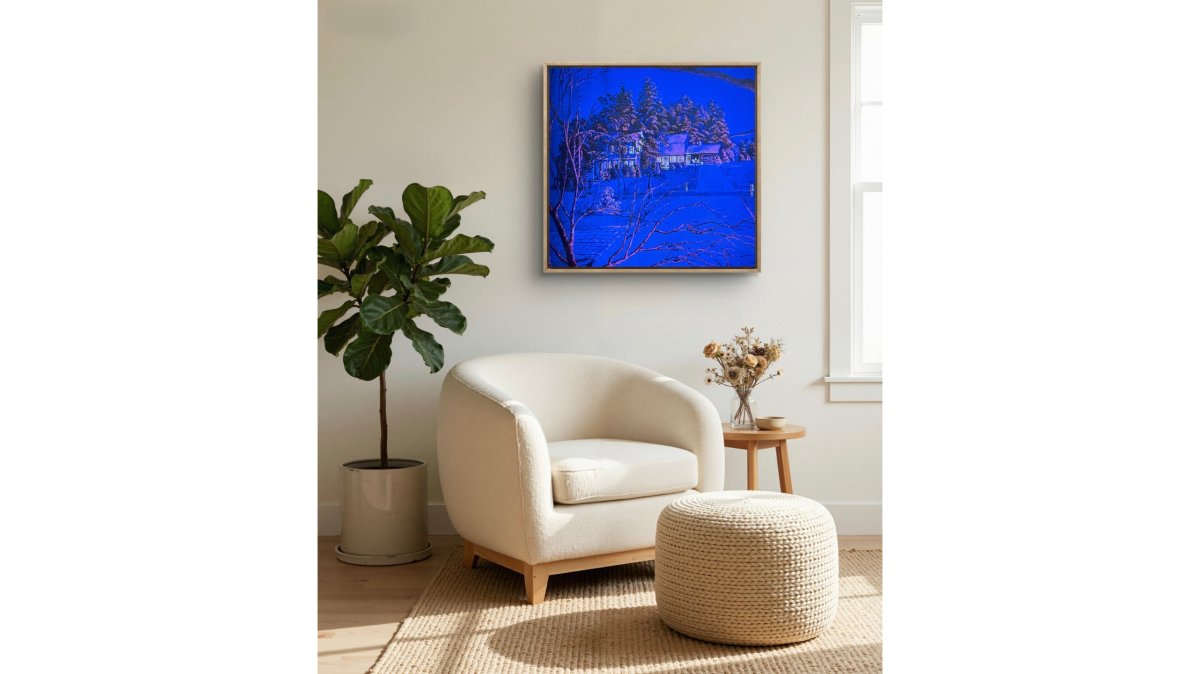
How Can You Create a Cozy Modern Space With Art?
Last Updated: November 19, 2026
Quick Summary
You create cozy modern spaces by measuring first: span art across two-thirds to three-quarters of the furniture width below it and center it at 57 to 60 inches from the floor. Leave 6 to 10 inches between the frame's bottom edge and the desk or sofa back, and repeat one thread such as a frame finish or muted palette across pieces.
- Measure the clear wall span between obstructions, not the room width, before buying art.
- A 48-inch desk pairs with art 32 to 36 inches wide under the two-thirds rule.
- Keep at least 9 inches between the frame bottom and desk surface for clearance.
- Limit a mixed wall to two or three styles tied by one shared element.
- Adhesive strips rated for the frame's weight let renters hang art without losing a deposit.
Table of Contents
- Start With a Measured Layout Plan for Your Space
- Wall Art Size and Placement: The Measurements That Make a Room Feel Cozy
- Choosing Art That Reflects Personal Style and Supports How You Work
- How to Mix Art Styles Without Creating Visual Clutter
- Gallery Wall Ideas for Small Spaces
- Home Office Wall Art Ideas for Video Calls, Lighting, and Focus
- Renter-Friendly Hanging, Accessibility, and What to Budget
- Build Your Cozy Modern Wall With a Hand-Embellished Piece
- Frequently Asked Questions
Start With a Measured Layout Plan for Your Space
Learning how to create cozy modern spaces with art starts with a tape measure, not a shopping cart. Collectors often fall for a piece online only to find it swallows a small wall whole. Cozy modern spaces depend on proportion, and proportion is measurable before you spend a dollar.
Map Your Walls Before You Buy
Walk your room with a notepad and record three numbers for every wall: total width, total height, and the clear span between obstructions like outlets, switches, and door swings. Note where furniture sits, because art should relate to what's below it, not float alone.
Then sketch a simple elevation of each wall on paper. Mark sightlines from the doorway and from your desk chair. Walls you face daily deserve your best piece; walls you pass through can carry quieter work.
A Measured Layout Method for Small Offices
A small office often rewards a stricter measuring routine than a living room, because every inch of clearance matters. Use this sequence before you buy or hang anything:
- Measure the clear wall span, not the room width. Run the tape from the nearest door casing, outlet cover, or return wall to the next obstruction. A 60-inch wall with a light switch 8 inches in from one edge gives you a 52-inch usable span, not 60.
- Measure furniture width and height. Record the desk or shelf width and the height of its back edge from the floor. Art should relate to the furniture below it, so these two numbers set your horizontal and vertical anchors.
- Apply the two-thirds rule. Artwork should span roughly two-thirds to three-quarters of the furniture width below it. A 48-inch desk pairs with art 32 to 36 inches wide; a 36-inch console pairs with art 24 to 27 inches wide.
- Set the vertical anchor. Center the art at eye level, generally 57 to 60 inches from the floor to the artwork's midpoint. Above furniture, leave 6 to 10 inches between the frame's bottom edge and the desk or sofa back.
- Check clearance. Keep at least 9 inches between the bottom of the frame and the desk surface so nothing blocks your reach, and leave 2 to 3 inches of side clearance from outlets, switches, and door swings.
Sample Layouts You Can Copy
- Narrow wall beside a desk (24 to 36 inches wide): one vertical piece 16 to 20 inches wide, centered at 57 to 60 inches, with the bottom edge 9 to 12 inches above the desk. A single vertical format uses height that a horizontal piece cannot.
- Wall directly behind a desk (48 to 60 inches wide): one horizontal piece 32 to 40 inches wide, centered on the desk, bottom edge 6 to 10 inches above the monitor's top edge or the desk back, whichever is higher.
- Long wall with a low shelf (72 inches or more): a row of two or three pieces sharing a frame finish, total width 48 to 54 inches, aligned to the shelf's centerline rather than the wall's centerline.
The woman is American.
Watch out: measuring the room's width instead of the clear span between obstructions can leave a piece that looks right on paper but crowds a switch plate or door swing in real life.
Wall Art Size and Placement: The Measurements That Make a Room Feel Cozy
Wall art size and placement follow one reliable rule: artwork should span roughly two-thirds to three-quarters of the furniture width below it. A sofa or desk that's 48 inches wide pairs well with art 32 to 36 inches wide.
Hanging Height, Scale, and Proportion
Center art at eye level, generally 57 to 60 inches from the floor to the artwork's midpoint. In a home office, sit in your chair and have someone hold the piece at eye height before you commit to a hook. Above furniture, leave 6 to 10 inches of breathing room between the frame's bottom edge and the desk or sofa back.
Scale matters more than quantity in a small space.
Choosing Art That Reflects Personal Style and Supports How You Work
Art you choose for a workspace should do two jobs: reflect who you are and support the way you think. A common mistake is buying for the room's palette alone and ignoring how the piece makes you feel at 9 a.m. on a Tuesday.
Start with subject matter that settles you. If your work is analytical, a restrained abstract may quiet the noise; if your days are chaotic, a familiar landscape can ground you.
Cozy modern spaces work best when every piece has a reason to be there. Ask yourself whether you'd still want the artwork in five years, not just whether it matches the rug.
How to Mix Art Styles Without Creating Visual Clutter
Mixing styles succeeds when one element repeats across every piece. Choose a shared thread, such as a muted palette, a consistent frame finish, or a recurring shape, then let subject matter vary.
Minimal abstraction sits comfortably beside nature photography when both share cool undertones. A hand-embellished floral can hang near a geometric print if the frame color ties them together.
If you're weighing layout approaches, our guide to symmetrical vs asymmetrical gallery walls walks through which arrangement suits which wall shape.
Gallery Wall Ideas for Small Spaces
Gallery wall ideas for small spaces work best when you plan the arrangement on the floor first. Trace each frame onto paper, tape the outlines to the wall, and live with them for a day before hammering anything.
One Statement Piece Versus Several Small Prints
A single statement piece suits narrow walls, low ceilings, and rooms where calm matters. Several small prints suit long horizontal walls and add personality without dominating. In a compact office, one larger piece usually wins: fewer holes, less clutter, and a stronger focal point.
For layouts built around tight corners and short walls, browse our gallery wall ideas for small spaces for arrangements you can copy.
Home Office Wall Art Ideas for Video Calls, Lighting, and Focus
Home office wall art ideas should account for your camera before your décor. Position your desk so the wall behind you holds one intentional piece centered in the camera frame, roughly at shoulder height when you're seated. Busy gallery walls behind a webcam read as visual noise on screen.
Camera Backgrounds, Glare, and Screen Reflections
Glass-glazed frames can catch overhead light and bounce glare into your camera. Hang art on a wall that faces away from windows, and test a video call before finalizing placement.
Lighting Direction and Screen Reflections
The light that makes art look good in person is often the light that ruins it on camera. Work through these mechanics before you hang:
- Window direction: A window behind the camera lights your face and the art evenly. A window behind the art backlights the frame and turns it into a silhouette on screen. If your only window sits behind the art wall, angle the desk so the window is at your side rather than directly behind the piece.
- Overhead and task lighting: Recessed ceiling lights and desk lamps create hot spots on glass. A canvas or a matte-finish print under the same light reads more evenly. If you keep glass, tilt the frame slightly downward at the top so the reflection angle misses the camera lens.
- Screen reflections: A glossy monitor reflects bright art behind you, and a bright piece behind you can wash out your face on camera. Test by opening a video preview and looking for a bright rectangle in the screen. If you see one, move the piece off the camera's centerline or swap to a darker, lower-contrast work.
A Quick Pre-Call Checklist
- Open your video app's preview and check that the art is centered and fully in frame.
- Turn on your usual task lamp and overhead light, then look for glare on the frame and reflections on the monitor.
- Confirm the bottom edge of the art clears your monitor and chair back by at least a few inches so nothing crowds your seated view.
- If the piece reads as visual clutter on screen, remove one item from the wall rather than adding another.
For deeper guidance on styling a workspace, see our article on styling a modern office with canvas prints.
Watch out: hanging art directly opposite a bright window is the most common cause of a washed-out camera background, because the backlight overpowers the piece and the person in front of it.
Renter-Friendly Hanging, Accessibility, and What to Budget
Renters can hang art without losing a deposit by using adhesive strips rated for the frame's weight, or by leaning larger canvases on a shelf or ledge.
Accessibility matters too. Keep the bottom edge of art at least 9 inches above a desk so nothing blocks your reach, and avoid hanging pieces where a chair back or monitor will crowd them.
Budget realistically by category:
| Art Type | Typical Price Range | Best For |
|---|---|---|
| Open edition framed print | Under $150 | First apartments, renters |
| Hand-enhanced small canvas | Around $95 | Gifts, shelf styling |
| Hand-enhanced collector edition | $400-$600 | Statement walls, collectors |
| Multi-piece hand-enhanced set | $400-$500 | Large walls, curated looks |
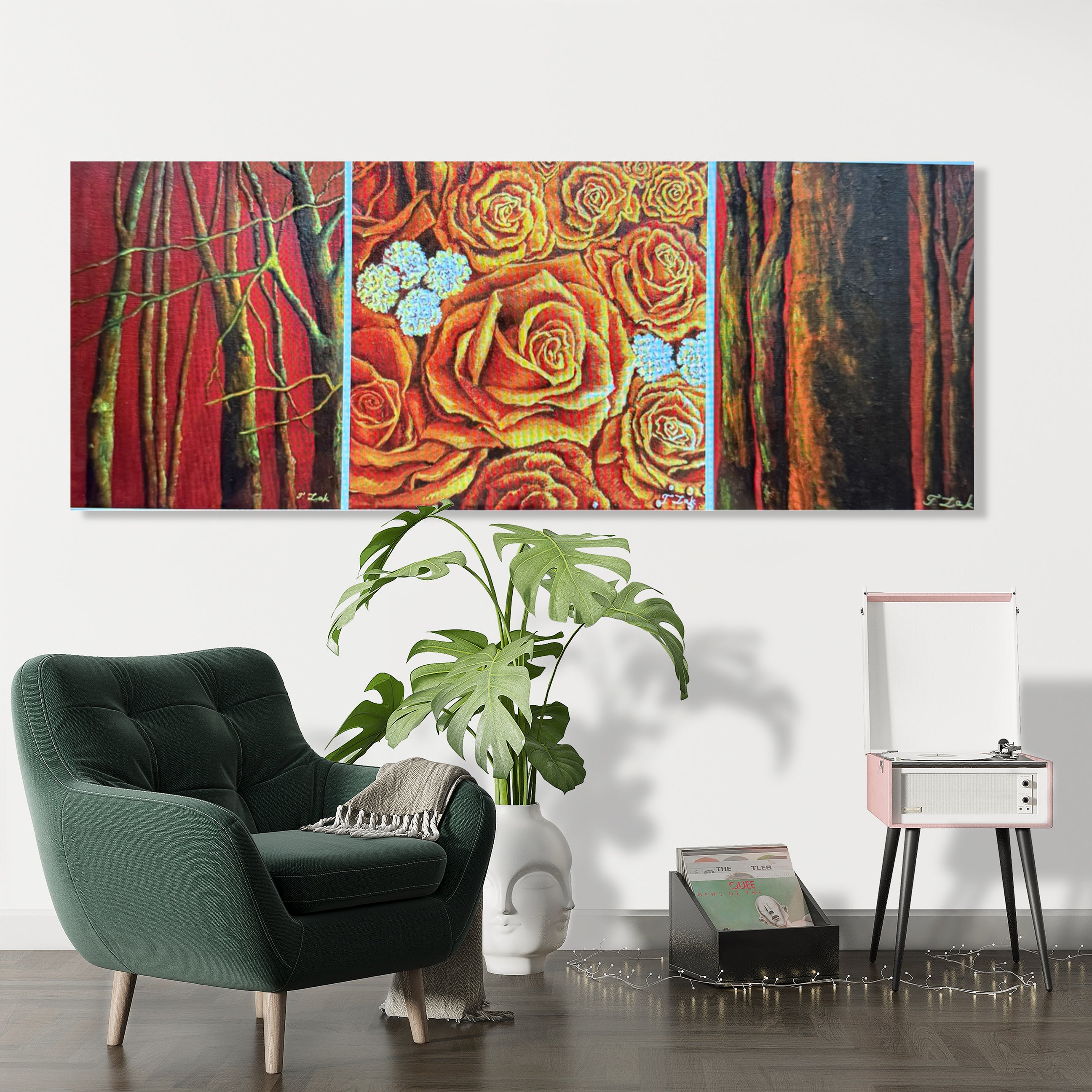
Our own collection reflects these tiers: The Suburbs 6" x 6" hand-enhanced canvas print is $95, the Three-Piece Set of Roses and Trees is $465, and Night Blues of the Suburbs 24" x 24" collector edition is $595.

Typical Price Ranges by Art Type
Build Your Cozy Modern Wall With a Hand-Embellished Piece
The final step is choosing the piece that anchors the room.
If you're building a minimalist, cozy modern wall, our guide to hand-embellished art in minimalist decor shows how these pieces settle into restrained rooms. When you're ready to choose, browse the full hand-enhanced collector's edition prints collection.
Creating a cozy modern space asks you to measure first, choose with intention, and let one meaningful piece carry the wall.
Frequently Asked Questions
What is the best artwork for a home office?
The best home office artwork is whatever you can look at for hours without distraction. Muted tones and minimal abstraction keep the eye calm, while a single piece with personal meaning gives the room character. Size matters too: a 24 by 24 inch canvas centered behind a desk fills the wall without crowding it. If your desk faces a window, place art on a side wall so screen glare stays off the surface.
How do you mix different art styles in one room?
Pick one thread that ties the pieces together: a shared color, a repeated shape, or matching frame finishes. Then vary everything else. A bold abstract can sit beside a nature photograph if both pull from the same muted palette. Keep the count odd, usually three or five pieces, and give each one room to breathe. When you mix art styles, hang the largest piece first and build outward.
How can you arrange a gallery wall in a small space?
Measure the wall and mark a boundary at least 6 inches inside each edge. Lay the frames on the floor first and photograph the arrangement before any nail goes in. In small spaces, a vertical column of three prints uses height instead of width, which suits narrow walls beside a door or desk. Keep gaps between frames to 2 to 3 inches so the group reads as one unit. Renter-friendly adhesive strips hold lightweight frames without wall damage.
How high should you hang art above furniture?
The center of the artwork should sit at roughly 57 to 60 inches from the floor, which is eye level for most adults. Above a sofa or desk, leave 6 to 8 inches of wall between the furniture top and the bottom of the frame. In a small office, going slightly lower, around 55 inches, makes the piece feel connected to the desk rather than floating. Test the height by holding the piece in place before hanging.