How to Choose Art for a Small Home Office in 2026
Table of Contents
- Start With a Measured Layout Plan for Your Small Office
- Small Office Wall Art Ideas That Work With Limited Wall Space
- Home Office Art Size and Placement: The Numbers That Matter
- Art Above Desk Ideas for Video Calls and Camera Backgrounds
- Home Office Wall Art Trends 2026: Muted Tones and Intentional Pieces
- Lighting, Glare, and Renter-Friendly Hanging
- Shop the Collection for Your Small Office Wall
- Frequently Asked Questions
Last Updated: November 18, 2026
Start With a Measured Layout Plan for Your Small Office
Learning how to choose art for a small home office in 2026 starts with a tape measure, not a shopping cart. A small office gives you very little wall space, so every piece has to earn its spot. The advice for collectors is the same: measure first, buy second. A quick plan prevents the most common mistake we see, which is falling for a print that turns out to be too large for the only free wall you have.
Measure the Wall, the Desk, and the Sightline
Write down five numbers before you browse, not three. First, the clear width of each free wall, measured corner to corner at the height where art will hang, not at the floor where baseboards and furniture interfere. Second, the height from the desk surface to the ceiling. Third, the distance from your chair back to the wall you face, because that distance sets how much of the wall your seated view actually takes in. Fourth, the width of the desk or shelf the art will sit above. Fifth, the height of your monitor's top edge, so you know where the art can begin without crowding the screen.
A common pattern is that people measure the wall once and forget the furniture. Measure the desk, the monitor, and the chair position together, because the art has to relate to all three. If your desk is 48 inches wide and your monitor occupies the center 24 inches, the art above it should span roughly 32 to 34 inches, about two-thirds of the desk width, and sit high enough that the bottom frame edge clears the monitor by at least 6 inches.
Build a Paper Template Before You Buy
Cut a paper or cardboard template to the exact dimensions of the piece you are considering, tape it to the wall with painter's tape, and live with it for a day. This is the cheapest reality check available, and it catches proportion problems that a product photo never shows. A template can reveal whether a piece is too small for the wall or competes with the monitor or window.
Sample Layouts for the Three Small-Office Wall Types
For a wall directly behind the desk, center one medium piece or a tight two-piece stack over the desk's midpoint, with the bottom edge 6 to 9 inches above the desk and the center at seated eye level, usually 57 to 60 inches from the floor. For a narrow strip between a door and a corner, use a single vertical piece under 16 inches wide, centered at standing eye level, and resist the urge to fill the strip edge to edge. For the wall beside a bookshelf, align a small square print with the shelf's midpoint and keep the frame tone close to the shelf tone so the two read as one unit rather than two competing objects.
Watch out: hanging art before you finalize desk and monitor placement usually means redrilling, because moving a monitor two inches can throw off the whole composition. Place the furniture first, then the template, then the hook. For a broader planning method, see our guide on how to display art in small offices.
Small Office Wall Art Ideas That Work With Limited Wall Space
Small office wall art ideas work best when they respect the wall you actually have. Narrow strips between a door and a corner, the space above a monitor, and the sliver beside a bookshelf are all usable, but each calls for a different format.
Vertical Formats and Small Prints for Narrow Walls
A vertical format is the workhorse of limited wall space. Tall, narrow pieces fill height without demanding width, which suits the thin walls common in converted bedrooms and apartment corners. A small print also lets you rotate pieces seasonally without redrilling. Group two or three small prints in a tight column rather than spreading them out, and the arrangement reads as one intentional unit instead of clutter.
Home Office Art Size and Placement: The Numbers That Matter
Home office art size and placement follow a few reliable rules. Hang the center of the artwork at eye level while seated, usually about 57 to 60 inches from the floor. Above a desk, leave 6 to 9 inches of breathing room between the desk surface and the bottom edge of the frame. As a starting point, the art should span about two-thirds of the furniture below it.
| Wall Situation | Suggested Size | Hanging Height | Notes |
|---|---|---|---|
| Above a desk | 60-70% of desk width | Center at seated eye level | Leave 6-9 inches above desk |
| Narrow wall strip | Vertical, under 16 inches wide | Center at standing eye level | Stack two pieces if tall |
| Full empty wall | One large piece or a small grid | Center at 57-60 inches | Keep 2-3 inches between frames |
| Beside a bookshelf | Small square print | Align with shelf midpoint | Match frame to shelf tone |
If you want a deeper walkthrough of sizing, our guide on choosing the right art print size for your wall breaks down the math.
Art Above Desk Ideas for Video Calls and Camera Backgrounds
Art above desk ideas should account for your camera, not just your taste. A webcam crops a narrow band behind your head, so the piece directly behind your chair matters more than anything on the side walls. Hang one calm, medium-scale piece centered in the camera frame, and keep busy patterns out of that zone.
How the Camera Crop Changes What You Hang
A typical laptop webcam captures roughly a 60- to 78-degree field of view, which means it sees far less wall than your eyes do when you sit back. Before you hang anything, open your video app's preview and look at what the camera actually frames. The safe zone is the area from the top of your head to about a foot above it, and from shoulder to shoulder plus a few inches on each side. Art centered in that zone reads as intentional; art half-cut by the frame edge reads as an accident. If your camera sits low, tilt the screen slightly and recheck, because a small angle change can push a piece out of frame entirely.
Framing, Glare, and Screen Reflections
Glare is the most common video-call art problem, and it comes from two directions: windows behind the art and the monitor itself. A glossy frame or glass glazing opposite a window will throw a bright rectangle into the camera, and a monitor facing the art can bounce its own glow onto the wall. Matte canvas and matte glazing handle side light far better than glass, and a piece hung on a wall perpendicular to the window, rather than facing it, avoids the worst reflections. If you cannot move the art, move the lamp: a task light aimed at the wall rather than the frame reduces hot spots without changing the composition.
Keeping the Background Calm Without Making It Empty
Muted tones and simple compositions read cleanly on camera and keep attention on you. A single piece with a quiet palette, or a tight pair of small prints, gives the camera something to rest on without turning the background into a distraction. Avoid high-contrast patterns, dense text, and reflective surfaces in the camera zone, and keep shelves behind you sparse, since clutter on a shelf competes with the art for the viewer's attention. For statement pieces in that exact spot, our guide on arranging statement art above a desk covers spacing and proportion. If video presence is your main goal, read our rules for choosing professional art for video call backgrounds.
Home Office Wall Art Trends 2026: Muted Tones and Intentional Pieces
Home office wall art trends 2026 lean toward restraint. Muted tones, minimal abstraction, and nature photography dominate because they calm a space rather than compete with it. A restrained palette lets one accent color carry the room, and it keeps a small office from feeling visually loud.
Intentional pieces matter more than volume. One original art piece or a hand-embellished limited edition print says more than five mass-produced posters. Soft shapes and quiet color harmony are often chosen for calmer rooms. The American Institute of Stress notes that cluttered surroundings can add to mental load, and a calm wall works in the opposite direction.
Lighting, Glare, and Renter-Friendly Hanging
Lighting decides whether art looks rich or washed out. Hang pieces away from direct window glare, and never place glossy frames opposite a monitor, where reflections bounce into your eyes. Canvas prints with a matte finish handle side light well and avoid the mirror effect that glass frames create.
Renters have options that leave no trace. Adhesive strips and picture-hanging hooks can hold light pieces without nails. Watch out: adhesive strips fail on textured or freshly painted walls, so test a hidden corner first. The canvas prints in our collection include mounting brackets.
Shop the Collection for Your Small Office Wall
The right piece for a small office is one you will still enjoy in five years. Our hand-embellished limited edition prints are individually enhanced with acrylic paint by the artist, so no two collector editions are identical. Each is signed, numbered, and comes with a Certificate of Authenticity.
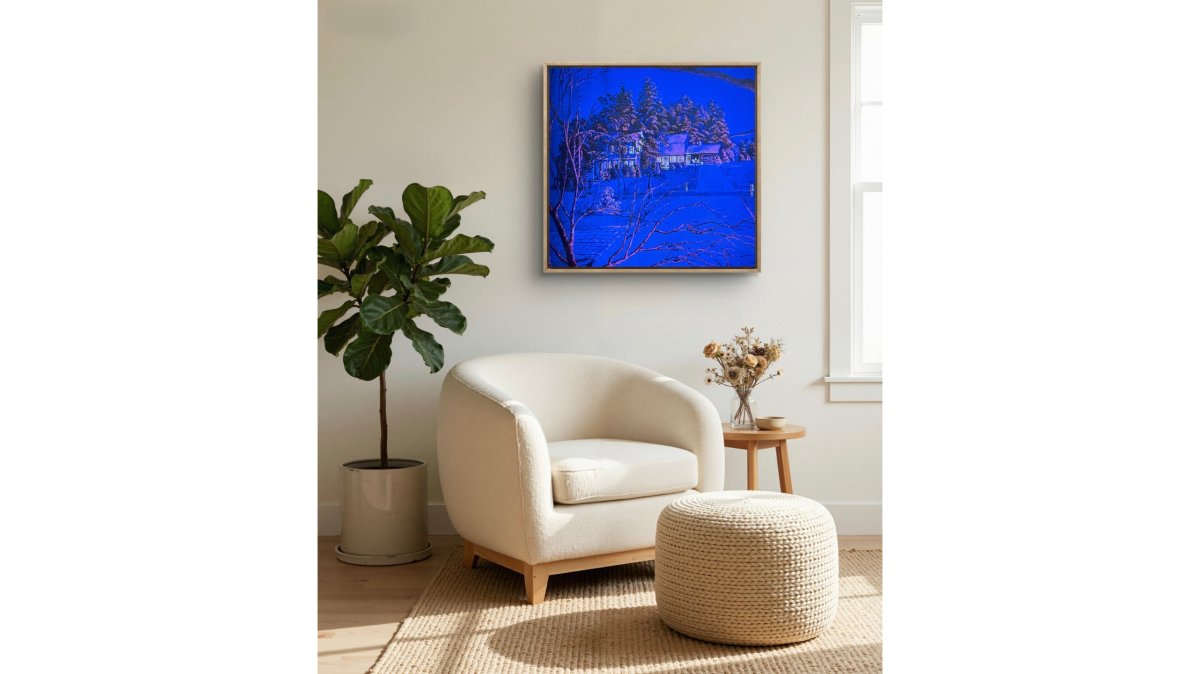
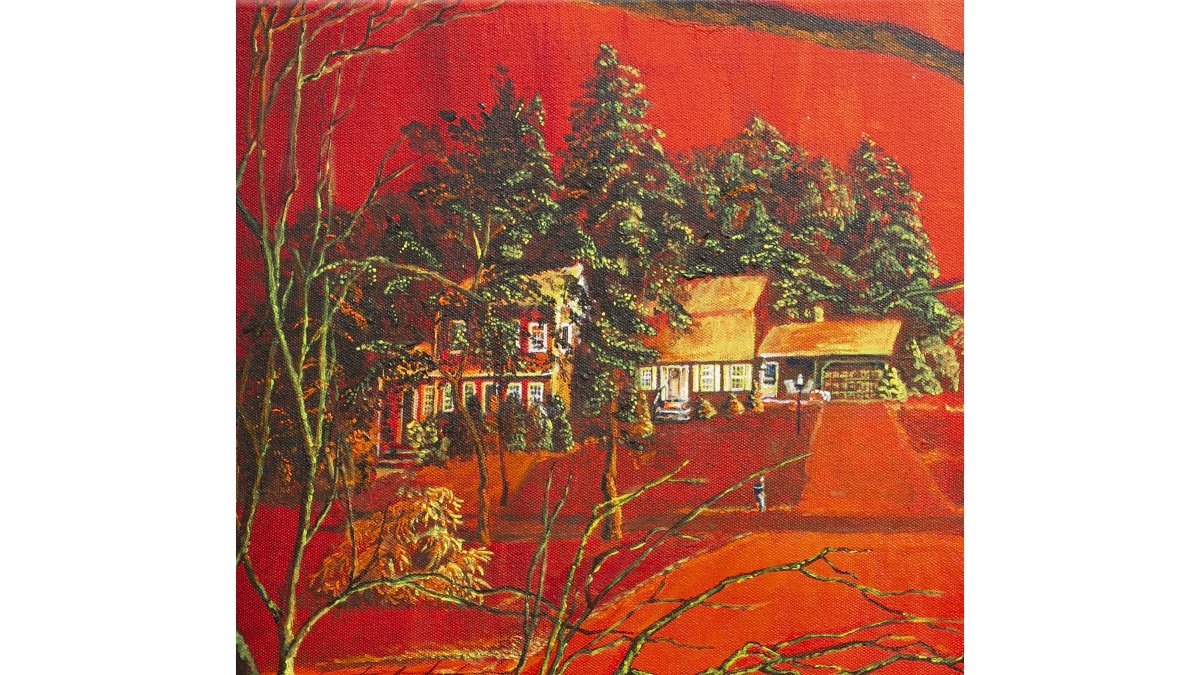
For a compact wall, the Night Blues of the Suburbs 24" x 24" hand-enhanced limited collector edition print on canvas gives you a square statement piece with cool blues and muted tones that suit a calm workspace. Smaller spots work well with The Suburbs, a 6" x 6" hand-enhanced canvas at $95, or the open-edition Night Blues of the Suburbs canvas print at $22.

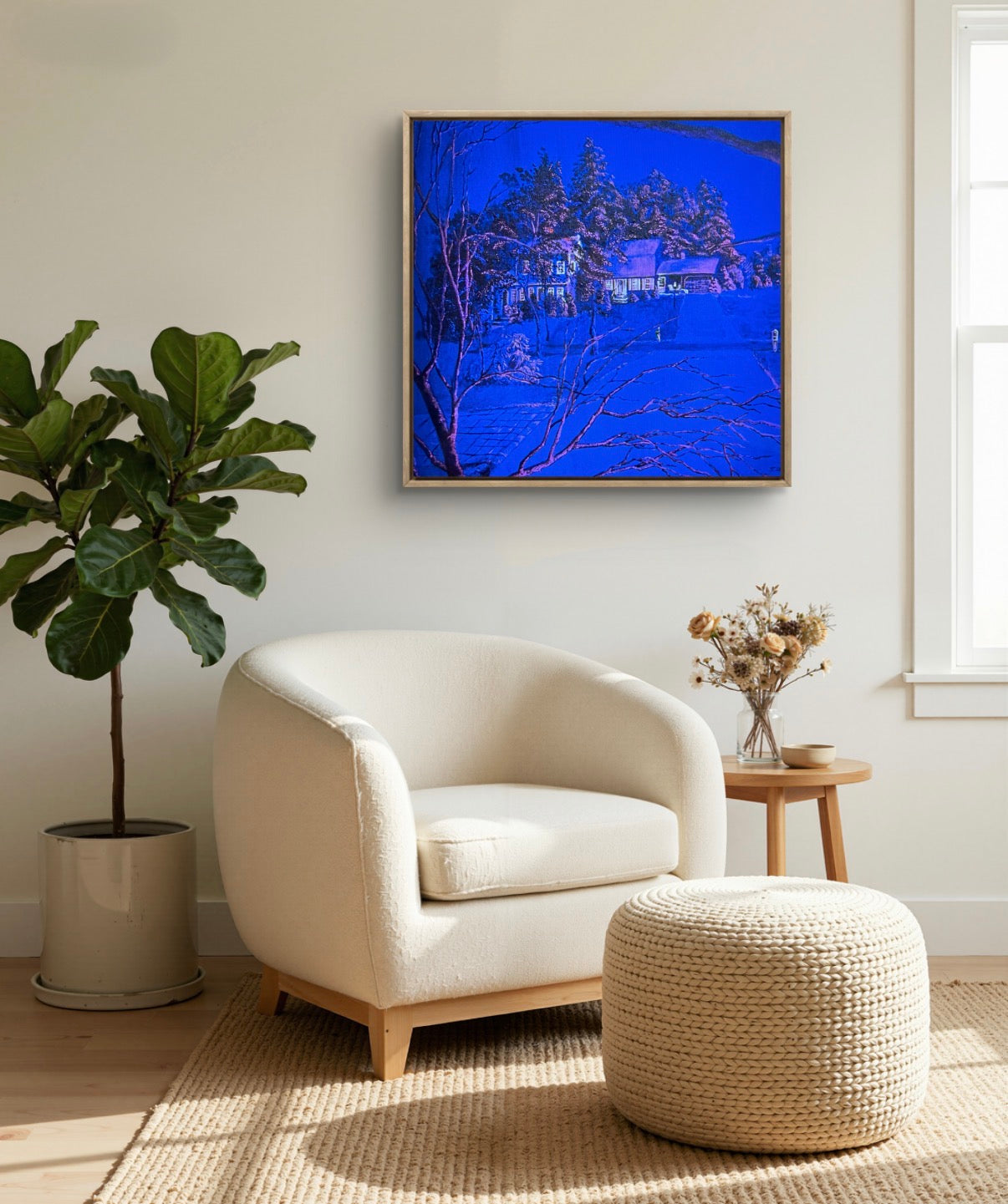
Choosing art for a small office is really a test of restraint: fewer pieces, measured placement, and a palette that lets you think. Tatyana Zak makes that easier with hand-embellished limited edition prints, each one individually finished with acrylic paint, signed and numbered, and shipped with mounting brackets included. Start with one measured wall, pick a single intentional piece, and let the room breathe. Explore the collection and find the piece that fits your space.
Frequently Asked Questions
How do I choose the right size art for a small office wall?
Measure the wall width and aim for art that fills roughly 60 to 75 percent of the space above your desk or console. For a narrow wall, a vertical format between 12 and 24 inches tall keeps proportion without crowding. Hang the center of the piece at eye level, about 57 to 60 inches from the floor, and leave at least 6 to 8 inches between the frame and the desk surface. Small home office art works best when scale matches the furniture below it, not the whole room.
Can wall art make a small home office look bigger?
Yes, when it is chosen with intent. A single large-scale piece or a tight cluster of small prints draws the eye upward and adds depth without cluttering the wall. Vertical formats stretch the perceived height of a low-ceilinged room. Muted tones and restrained palettes keep the space feeling open, while one accent color adds energy without visual noise. Avoid many small, scattered frames on limited wall space, which fragments the wall and makes the room feel tighter.
What colors are best for home office art?
Cool blues, soft greens, and muted neutrals are a common choice for a calm workspace. Match the artwork to your wall undertone: warm whites pair with cream and ochre accents, cool grays pair with blue and slate. Add one accent color pulled from something already in the room, like a chair or rug, so the piece feels intentional. A restrained palette reduces visual distraction and keeps the room feeling harmonized rather than busy.
How should I arrange art above a desk?
Center a single piece over the desk or the monitor, not the chair, and keep the bottom edge 6 to 8 inches above the desk. For a pair, leave 2 to 3 inches between frames and treat them as one unit. If you are on video calls, place the art so it sits in the camera frame behind you, roughly shoulder height or slightly higher. Keep cords and clutter out of the shot, and check for glare from a window or lamp before you commit to the spot.