Hand-Embellished Art in Minimalist Decor: A Guide
Table of Contents
- Understanding Hand-Embellished Prints and Minimalist Design
- How to Choose Art for a Minimalist Home
- Minimalist Wall Art Ideas for Different Rooms
- Art Placement Above a Sofa and Other Key Furniture
- Minimalist Gallery Wall Ideas and Clustered Displays
- Lighting, Framing, and Presentation for Hand-Embellished Work
- Styling Hand-Embellished Art with Minimalist Accessories
- Care, Durability, and Living with Hand-Embellished Pieces
- Frequently Asked Questions
Last Updated: October 21, 2026
Understanding Hand-Embellished Prints and Minimalist Design
Hand-embellished art minimalist design brings texture and depth to spaces when chosen with intention. At Tatyana Zak, we create hand-embellished prints that prove restraint and richness aren't opposites, they're partners. A hand-embellished print is a canvas or paper artwork where an artist adds acrylic paint, texture, or other materials by hand after the base image is printed, making it closer to an original.
What Hand-Embellished Prints Are
A hand-embellished print combines the consistency of a printed base image with the uniqueness of hand-applied details, bridging the gap between mass-produced prints and originals.
The process creates several advantages:
- Each piece becomes one-of-a-kind due to individual hand-application
- The texture and dimension add visual interest impossible with flat prints
- The cost sits between standard prints and full original artwork
Why They Work in Minimalist Spaces
Minimalist design thrives on restraint, negative space, and intentional choices. Hand-embellished art fits this philosophy because it does one thing exceptionally well instead of demanding attention through color or pattern. A single hand-embellished canvas print becomes a focal point without clutter, and the artist's hand creates subtle depth that changes how light hits the wall throughout the day.
How to Choose Art for a Minimalist Home
Selecting the right hand-embellished print starts with understanding your space, not just your taste. The best piece enhances your room's existing calm rather than competing with it.
Evaluating Color Palette and Embellishment
Your room's color story determines whether a hand-embellished print will feel like part of the space or like an outsider. Minimalist interiors typically anchor in neutral tones: whites, grays, beiges, soft blacks.
Consider these approaches:
- Neutral-on-neutral: A hand-embellished print in whites and grays on a light wall creates subtle dimension without visual weight
- Single accent color: One hand-embellished piece in navy, terracotta, or deep green becomes the room's color statement
- Textural focus: Pieces with heavy embellishment in monochromatic tones add visual interest through texture alone, not color
The embellishment itself matters as much as the base image. Heavy layering and thick acrylic details work best in rooms with good natural light.
Assessing Scale, Texture, and Visual Weight
Size and texture determine whether a hand-embellished print anchors a room or disappears into it. A small print (16" x 16" or smaller) works well in tight spaces or a grouped display. A larger piece (24" x 24" and above) needs wall space to breathe, and since minimalist rooms typically have plenty of empty wall, a substantial artwork often feels more intentional than a tiny one.
Ask yourself:
- How much wall space can I dedicate to this piece without crowding the room?
- Does my room get natural light that will showcase texture?
- Do I want the artwork to be a quiet presence or a clear focal point?
Minimalist Wall Art Ideas for Different Rooms
Hand-embellished art serves different purposes in different spaces. The same piece might feel perfect in a bedroom and overwhelming in a hallway.
Living Room and Bedroom Displays
Living rooms need artwork that anchors seating without demanding constant attention. A single large hand-embellished canvas above a sofa works better than a cluster of smaller pieces, becoming a visual resting point for the eye. Bedrooms benefit from art that feels calming and personal: soft color palettes, gentle imagery, and moderate embellishment create a restful atmosphere.
For both rooms:
- Choose one substantial piece rather than multiple smaller ones
- Position the artwork at eye level when seated
- Leave generous negative space around the piece
Office and Workspace Solutions
Office spaces need artwork that inspires without distracting. A hand-embellished print that reflects your values or interests can transform how you feel about your workspace. Minimalist offices work best with a single focal point artwork, whether above your desk, on the wall facing your chair, or on a wall you see during video calls.
Office artwork should:
- Reflect your work values or creative interests
- Avoid overly busy imagery or heavy embellishment
- Provide visual interest during focused work
Art Placement Above a Sofa and Other Key Furniture
Where you place a hand-embellished print determines how it functions in your room. The wrong placement weakens even a strong piece.
Height, Distance, and Viewing Angles
Artwork above a sofa should hang 8-12 inches above the back of the sofa, creating visual connection without feeling too close. The center of the artwork should be at eye level when you're standing in front of the sofa, roughly 57-60 inches from the floor. For larger hand-embellished pieces (36" or larger), measure from the sofa's back to where you typically stand in the room.
Key placement considerations:
- Center the artwork horizontally on the furniture piece
- Position the artwork's center at 57-60 inches from the floor
- Leave 8-12 inches between the sofa back and the artwork
Creating Visual Balance with Negative Space
Minimalist design relies on negative space, the empty area around objects. A hand-embellished print should be surrounded by calm, empty wall. In a minimalist living room, a single large artwork often feels more balanced than clustered pieces; the empty wall around it becomes part of the design, not wasted space.
For other furniture pieces:
- Above a bed: center the artwork, leave substantial wall space on each side
- On an office wall: position it as the sole focal point of that wall
- In an entryway: place it where it's the first thing you see, with clear wall around it
Minimalist Gallery Wall Ideas and Clustered Displays
Gallery walls feel contradictory in minimalist spaces, but they work when approached with restraint, treating a grouped display as intentional rather than a way to fill wall space.
Spacing, Grid Patterns, and Restraint
A minimalist gallery wall uses fewer pieces, more space between them, and a clear organizing principle, creating a structured composition with intentional gaps.
Consider these approaches:
- Linear arrangement: 3-4 hand-embellished pieces in a horizontal line with 6-12 inches between each
- Grid pattern: 4 pieces arranged in a 2x2 square with equal spacing, leaving substantial wall around the entire group
- Asymmetrical balance: 2-3 pieces at varying heights, positioned to feel intentional rather than random
The space between pieces matters as much as the pieces themselves. In minimalist design, that empty wall is design. Aim for spacing that feels deliberate, either matching gaps or a clear mathematical relationship.
When to Use Single Focal Point Instead
Most minimalist rooms benefit from a single hand-embellished art minimalist approach rather than a gallery wall. One substantial piece creates a focal point without visual noise, anchoring the room and giving the eye a clear place to rest.
Choose a gallery wall approach only if:
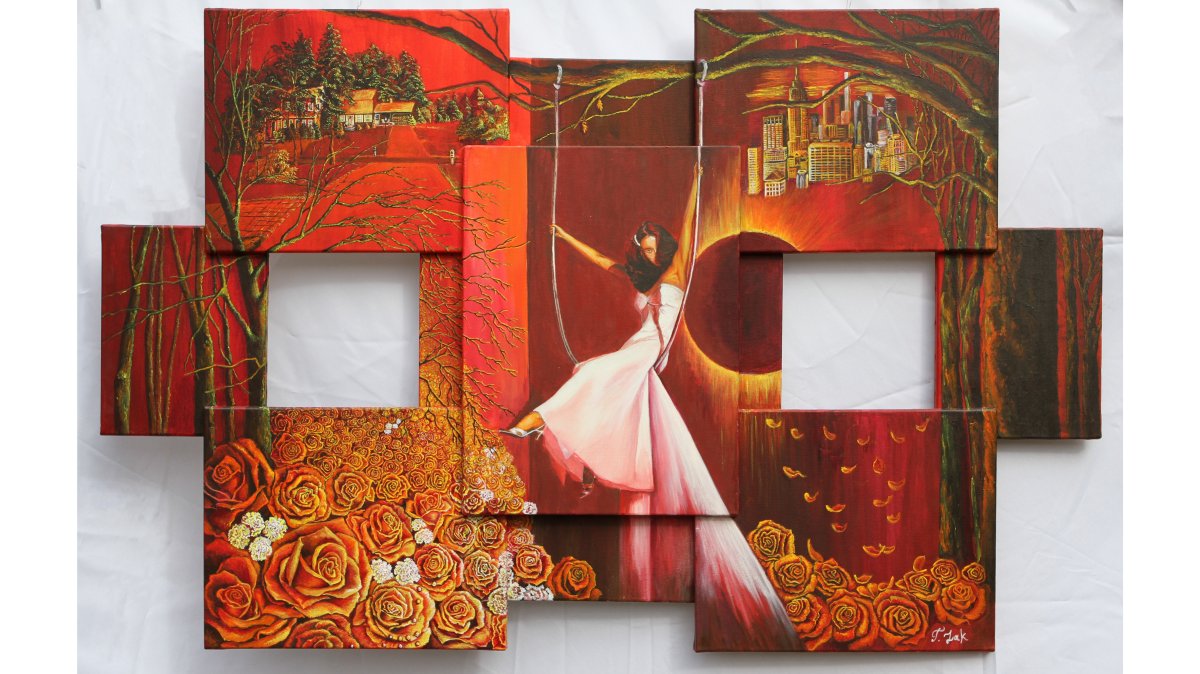
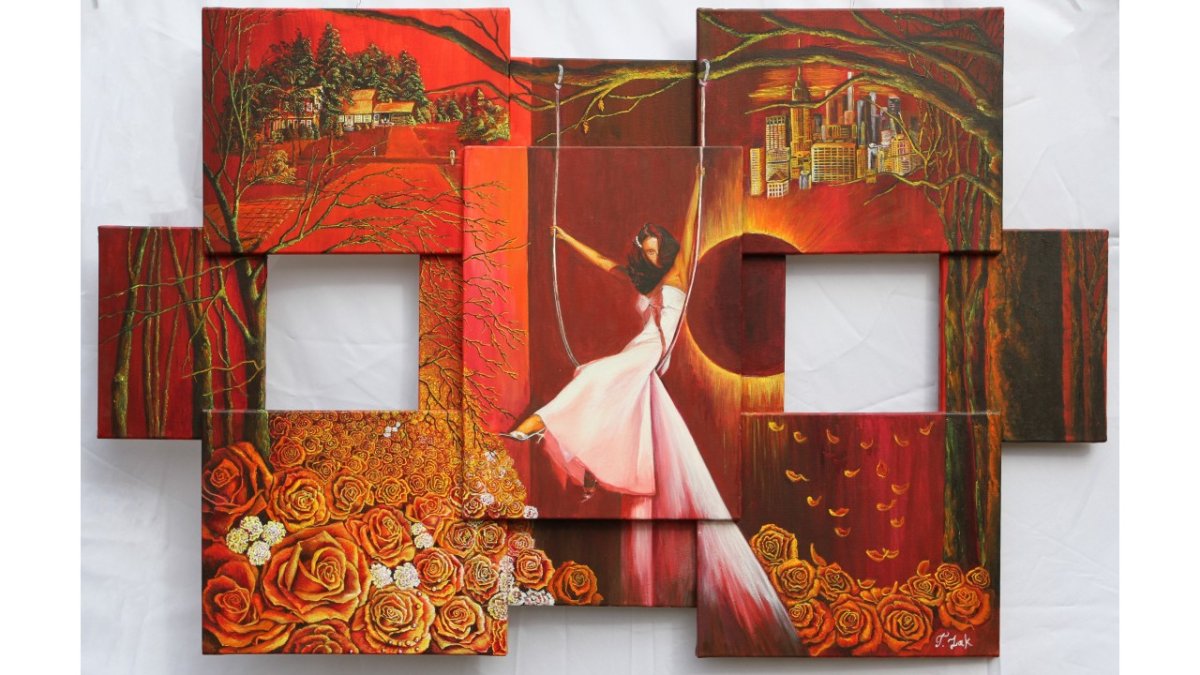
Swing of Life™ - Hand-Embellished Collector Edition Installation →
- Your space is large enough to accommodate multiple pieces with generous spacing
- You have several hand-embellished pieces you genuinely love
- The pieces relate thematically or stylistically
When in doubt, choose one strong hand-embellished print over a clustered display. Minimalism rewards confidence in single, meaningful choices.
Lighting, Framing, and Presentation for Hand-Embellished Work
How you light and frame a hand-embellished print determines whether its texture and detail shine or fade into the background.
Choosing the Right Lighting to Showcase Texture
Hand-embellished artwork needs light to reveal its texture and dimension. Flat, shadowless lighting defeats the purpose of layered acrylic details.
Natural light is ideal. Position the artwork where morning or afternoon sunlight hits it at an angle, creating shadow and highlighting the embellishment.
Avoid placing hand-embellished work directly under harsh overhead lights. This flattens the texture.
Lighting tips:
- Place the artwork where sunlight hits it at an angle during the day
- Use picture lights for evening viewing
- Avoid direct overhead lighting that creates flat, shadowless illumination
Framing Options and Ready-to-Hang Solutions
Hand-embellished prints can be framed or displayed unframed, depending on your aesthetic and the artwork's finish.
Canvas prints often look best unframed. A hand-embellished canvas from Tatyana Zak, like the Swing of Life collection, ships ready to hang without additional framing.

Paper-based hand-embellished prints benefit from framing. A simple frame in white, natural wood, or black complements minimalist spaces.
For ready-to-hang solutions:
- Canvas prints typically arrive ready to hang with mounting hardware included
- Paper prints may need framing, choose simple frames in neutral colors
- Ensure the frame complements your room's aesthetic without drawing attention away from the artwork
Styling Hand-Embellished Art with Minimalist Accessories
A hand-embellished print doesn't stand alone, it exists within a room full of other objects. How you style around it determines whether it feels integrated or isolated.
Pairing with Neutral Furnishings and Textiles
Minimalist styling means letting the hand-embellished artwork be the room's visual anchor. Furnishings should support this without competing.
Choose furniture in neutral tones that echo your artwork's color palette or the room's base colors.
The rule is restraint: fewer objects, chosen intentionally. If your hand-embellished print introduces warm tones, your textiles might echo that warmth subtly.
Styling approach:
- Use neutral furniture that doesn't compete with the artwork
- Add 2-3 textiles maximum per room (a rug, one pillow, a throw blanket)
- Choose textures that complement the artwork without repeating its visual weight
Using Accent Colors and Layering Thoughtfully
Minimalist interiors often introduce one intentional accent color. If your hand-embellished print is that accent, keep everything else neutral; if the print is neutral, a single accent color can appear elsewhere. Layering means adding depth through texture and material, not quantity: a woven basket, a linen throw pillow, or a wooden shelf each adds visual interest through material and craft, not pattern or color.
Layering with intention:
- If the hand-embellished print is colorful, keep accessories neutral
- If the print is neutral, introduce one accent color through textiles or a single object
- Use natural materials, wood, linen, wool, ceramic, to add warmth
Care, Durability, and Living with Hand-Embellished Pieces
Hand-embellished artwork is made to live in your home, not to sit in storage.
For long-term care:
- Dust gently with a soft, dry cloth every few months
- Keep the artwork away from direct sunlight to prevent fading
- Maintain stable temperature and humidity in your room
Hand-embellished art from Tatyana Zak is designed to be lived with. Each piece carries a Certificate of Authenticity and is made to withstand years of daily viewing.
Minimalist living doesn't mean empty walls, it means purposeful choices. Each piece is individually hand-enhanced with acrylic, making it a genuine collector's edition. Shop new arrivals to find the hand-embellished art that speaks to your space and your story.
Frequently Asked Questions
What is a hand-embellished art print, and how is it different from a standard canvas print?
A hand-embellished print begins as a fine art print on canvas or paper, then is individually enhanced with acrylic paint, texture, and layering by the artist. Unlike standard prints where every copy is identical, each hand-embellished piece is unique, no two are exactly alike. This process bridges the gap between mass-produced prints and original artwork, giving the piece dimension, presence, and the character of a one-of-a-kind work while maintaining the precision of a quality print base.
How do you choose hand-embellished art for a minimalist home?
Start by assessing your room's color palette and selecting pieces with restrained embellishment that complement neutral tones. Look for artwork where the hand-painted details enhance rather than overwhelm, consider pieces with subtle texture, limited accent colors, or monochromatic embellishment. Evaluate the scale to ensure it feels intentional, not cramped or oversized. Choose subject matter that resonates emotionally rather than decoratively. Limited edition pieces like those from Tatyana Zak, such as Night Blues of the Suburbs ($595), offer thoughtful compositions designed for meaningful, reflective spaces.
How high should you hang art above a sofa or other furniture?
Hang artwork 8 to 10 inches above the back of a sofa or console table. The center of the artwork should sit at eye level when standing (approximately 57 to 60 inches from the floor). For pieces above furniture, ensure the artwork width is roughly 50 to 75 percent of the furniture width to maintain visual balance. If hanging a large installation like Swing of Life (42" x 66", $999), measure your wall space carefully and consider the viewing distance, textured hand-embellished work benefits from being seen from a slight distance to appreciate its layering and dimension.
Can hand-embellished art withstand everyday living with kids and pets?
Hand-embellished canvas and acrylic prints are durable for everyday homes when properly displayed and maintained. Canvas is more forgiving than paper and resistant to minor dust and handling. Avoid direct sunlight, humidity, and moisture, which can affect acrylic paint over time. Display the artwork out of reach of active play, and dust gently with a soft, dry cloth. Canvas wraps and ready-to-hang options are stable and less fragile than framed pieces. If you're concerned about placement, choose a bedroom, office, or adult space first, then expand to shared areas as you gain confidence in caring for the piece.