How to Mix Modern Art Styles in Living Rooms
Table of Contents
- Start With a Plan: The Living Room Art Strategy
- How to Make Different Art Styles Look Cohesive
- How to Arrange Art on a Wall: Layouts and Measurements
- How Many Walls in a Room Should Be Decorated
- What to Put on Either Side of a Large Painting on a Wall
- Balancing Contrast: Mixing Contemporary and Traditional Pieces
- Fixing Common Mixing Mistakes
- Choose Your Anchor Piece from the Collection
- Frequently Asked Questions
Last Updated: November 20, 2026
Start With a Plan: The Living Room Art Strategy
Learning how to mix modern art styles in living rooms starts with one rule: plan the walls before you buy a single frame. Collectors often fall for a piece online, hang it alone, then wonder why the room feels unfinished. A plan fixes that.
Here is the sequence we recommend:
- Measure every wall you might use
- Choose one anchor piece first
- Build the rest of the art around it
- Pick frames and mats last
That order matters. Most people do it backwards.
Map Your Walls Before You Buy
Start with a simple sketch of your living room. Mark windows, doors, furniture, and outlets.
Then note these numbers for each wall:
- Total width and height
- Space above the sofa or console
- Distance from the sofa back to the ceiling
A common mistake is buying art that is too small. Art should fill roughly two-thirds to three-quarters of the wall width above a sofa. If you are unsure which size suits a specific wall, our guide on how to choose the right art print size for your wall walks through the math.
How to Make Different Art Styles Look Cohesive
Different art styles look cohesive when they share at least two visual threads: color, subject, frame finish, or scale. You do not need matching pieces. You need repeating elements.
Think of it as a conversation. Each piece should echo something in another.
Three threads do most of the work:
- Color: one shade that appears in every piece
- Subject: repeated motifs like trees, water, or architecture
- Frames: the same finish or width across the group
Color, Repetition, and the 70/30 Rule
The 70/30 rule keeps a mixed wall calm. About 70 percent of your art should follow one dominant style or palette. The remaining 30 percent can break the pattern.
So in a living room with five pieces, three or four share a mood. One or two bring contrast. That ratio gives you interest without chaos.
Keep a mood board on your phone. Save each piece next to the others before you buy. If one jumps out as unrelated, it probably is.
For more on tying color across a room, see our guide on matching canvas art colors to your interior design.
How to Arrange Art on a Wall: Layouts and Measurements
Good arrangement comes down to a few numbers you can measure with a tape and a pencil. Get those right and most layouts work, whether you are hanging one piece or seven.
Here is the working set of rules:
- 57-inch center line: hang the middle of the artwork at about 57 inches from the floor. That is average eye level for most adults.
- 3-5-7 rule: group pieces in odd numbers. Three, five, or seven items read as a set; even numbers tend to look like pairs waiting for a third.
- Spacing: leave 2 to 3 inches between frames in a tight group. Use 4 to 6 inches for a looser, airier look.
- Above furniture: keep the bottom of the frame 6 to 10 inches above the sofa back.
- Artwork-to-furniture width: the full group should span roughly two-thirds to three-quarters of the sofa or console width. A 90-inch sofa wants a group about 60 to 68 inches wide.
Worked Layouts You Can Copy
Use these as starting templates, then adjust to your wall width.
Single large piece above a sofa. A 36 x 48 inch canvas centered over a 90-inch sofa leaves about 21 inches of wall on each side. That is a clean, gallery-like look.
Three-piece horizontal row. Three 16 x 20 inch frames with 3-inch gaps total about 54 inches wide. Center that over a 72-inch console and the group spans three-quarters of the furniture width, which is the target ratio.
Five-piece gallery wall. Start with the largest piece slightly above the 57-inch center line, then build outward. Keep the outer edges within the two-thirds-to-three-quarters span of the furniture below.
Two stacked pieces on a narrow wall. Stack vertically when wall width is under about 30 inches. Keep the gap at 2 to 3 inches and center the pair on the 57-inch line so the midpoint of the stack sits at eye level.
Test Before You Drill
Cut paper templates to each frame size and tape them to the wall. Step back. Sit on the sofa. Adjust before you drill. This step catches almost every sizing error before it becomes a hole in the drywall.
Watch out: hanging every piece at the same center height flattens a mixed wall.
If you are deciding between a mirrored layout and a looser one, our comparison of symmetrical vs asymmetrical gallery walls covers the trade-offs. For sets of two or more pieces, this guide to displaying art sets with correct spacing goes deeper.
How Many Walls in a Room Should Be Decorated
Two walls is the sweet spot for most living rooms. One wall carries the main statement. A second, smaller wall echoes it.
Here is a simple guide:
| Room Size | Walls to Decorate | Best Placement |
|---|---|---|
| Small living room | 1 to 2 | Above the sofa, plus one narrow wall |
| Medium living room | 2 | Sofa wall and a side or hallway wall |
| Large or open-plan room | 2 to 3 | Sofa wall, dining nook, and entry wall |
Walls to Decorate
Leave at least one wall mostly bare. Blank space gives the eye a rest and makes the decorated walls feel intentional.
What to Put on Either Side of a Large Painting on a Wall
Balance a large painting with pieces that support it, not compete with it. The goal is visual weight, not symmetry for its own sake.
Options that work well on either side:
- Slim vertical art: narrow pieces that echo the painting's height
- Sconces: wall lights that frame the piece and add warmth
- A mirror: reflects light and doubles the sense of space
- Open shelving: a few objects at a lower height
- Nothing at all: a single strong piece can stand alone
Keep side pieces smaller than the main work. A good ratio is roughly half its width or less.
Watch out: hanging side pieces at the same height as the painting's center can flatten the wall. Drop them a few inches lower for a layered look.
Balancing Contrast: Mixing Contemporary and Traditional Pieces
Contrast works when one style clearly leads and the other answers it. A living room that mixes a bold abstract with a classic landscape needs a referee: color, frame, or subject. The pairings below explain why each combination holds together, so you can adapt the logic to pieces you already own.
Style Pairings That Work, and Why
Abstract plus landscape. The abstract supplies energy and color; the landscape supplies depth and a recognizable subject.
Photography plus painting. Photography is crisp and literal; painting is textured and interpretive.
Vintage or traditional plus contemporary. An older landscape or portrait brings warmth and history; a contemporary piece brings edge.
Figurative plus geometric. A figurative work gives the eye a human subject; geometric abstraction gives it structure. Repeat one shape or color from the figure's surroundings in the geometric piece and the two will read as intentional.
Bold color plus muted tones. Let the muted piece anchor the wall and the bold piece act as the accent.
Visual Weight and the Half-Width Rule
A dark, heavy piece pulls the eye. Balance it with a lighter work of similar size, or give it more breathing room. As a working rule, side pieces should be about half the width of the main work or less. A 40-inch anchor wants companions around 20 inches wide, not 35.
Watch out: two pieces of equal visual weight placed side by side create a standoff. Offset them vertically or vary the size so one clearly leads.
Solving Common Living-Room Constraints
Above a fireplace. The mantel is the natural anchor.
Large blank walls. Break the wall into zones rather than filling it edge to edge.
Open-plan rooms. Treat each functional zone, sofa, dining nook, entry, as its own wall.
Rentals and limited wall space. Use removable adhesive strips rated for the frame weight, and lean larger pieces on a console or shelf instead of hanging.
Low ceilings. Hang lower and go wider. A horizontal row keeps the eye moving sideways rather than up, which makes a low room feel less compressed.
If you want a single large work to build around, browse our large statement paintings for serene living rooms.
Fixing Common Mixing Mistakes
Most mixed walls fail for a few predictable reasons. Here is how to fix them fast.
| Problem | Fix | Why It Works |
|---|---|---|
| Art feels scattered | Add one shared color or frame finish | Creates a visual thread |
| Pieces look too small | Size up to fill two-thirds of the wall | Anchors the furniture |
| Wall feels cluttered | Remove one piece and add spacing | Gives the eye rest |
| Styles clash | Let one style dominate at 70 percent | Sets a clear lead |
| Frames fight each other | Unify width or finish | Calms the group |
One insider tip: if a wall still feels off, the frame is usually the culprit. Matching frame width across mismatched art does more than most people expect.
Choose Your Anchor Piece from the Collection
Every mixed wall needs one piece that sets the tone. Choose the anchor first, then let the rest follow its colors and mood.
Our hand-enhanced limited edition prints can work well as anchors because each one is individually finished with acrylic paint by the artist. No two collector editions are exactly alike.
A few starting points:
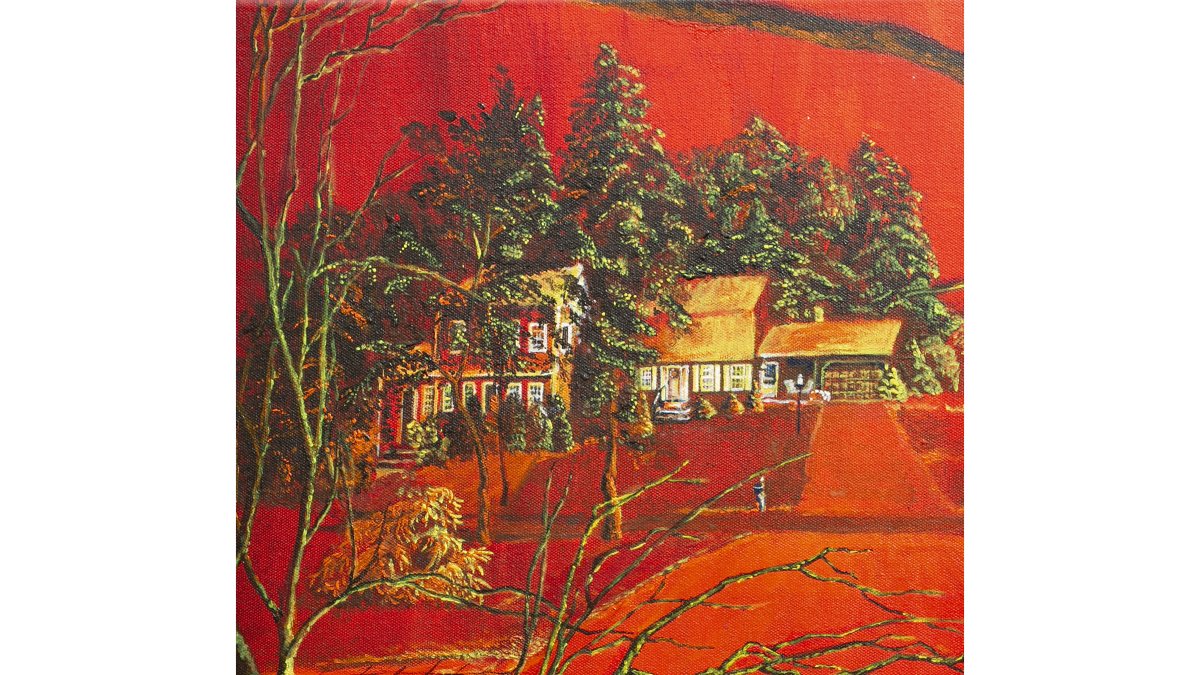
- The Suburbs, 6" x 6" ($95): a small, grounded neighborhood scene that pairs well with larger works
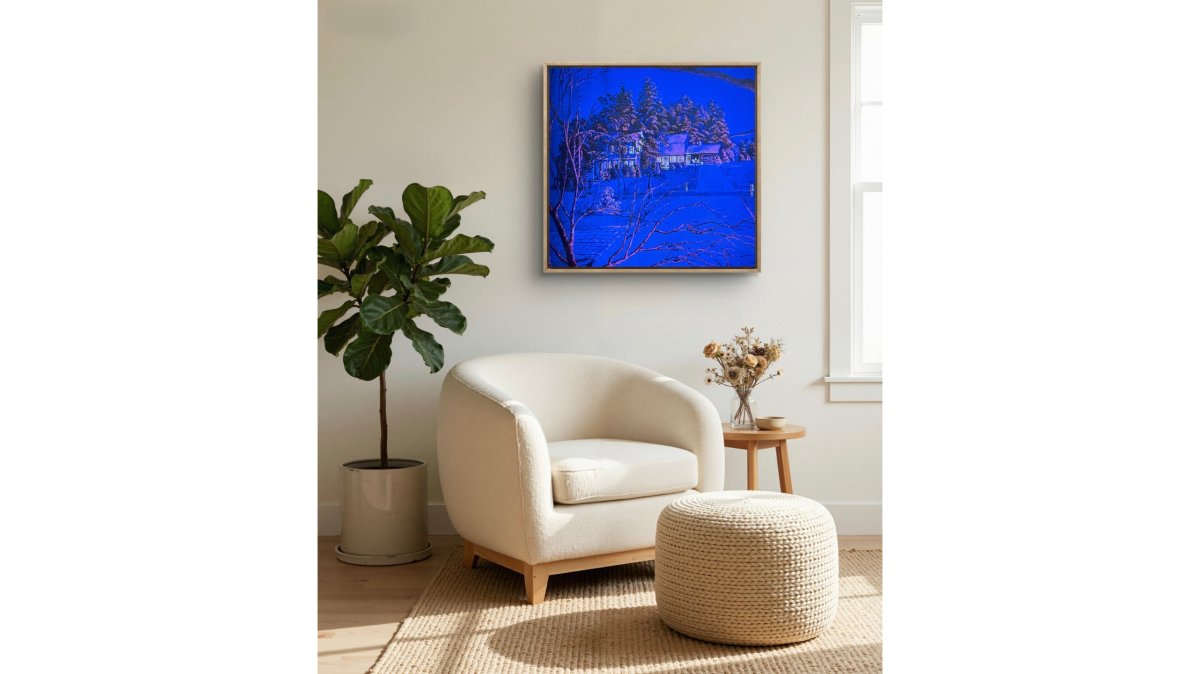
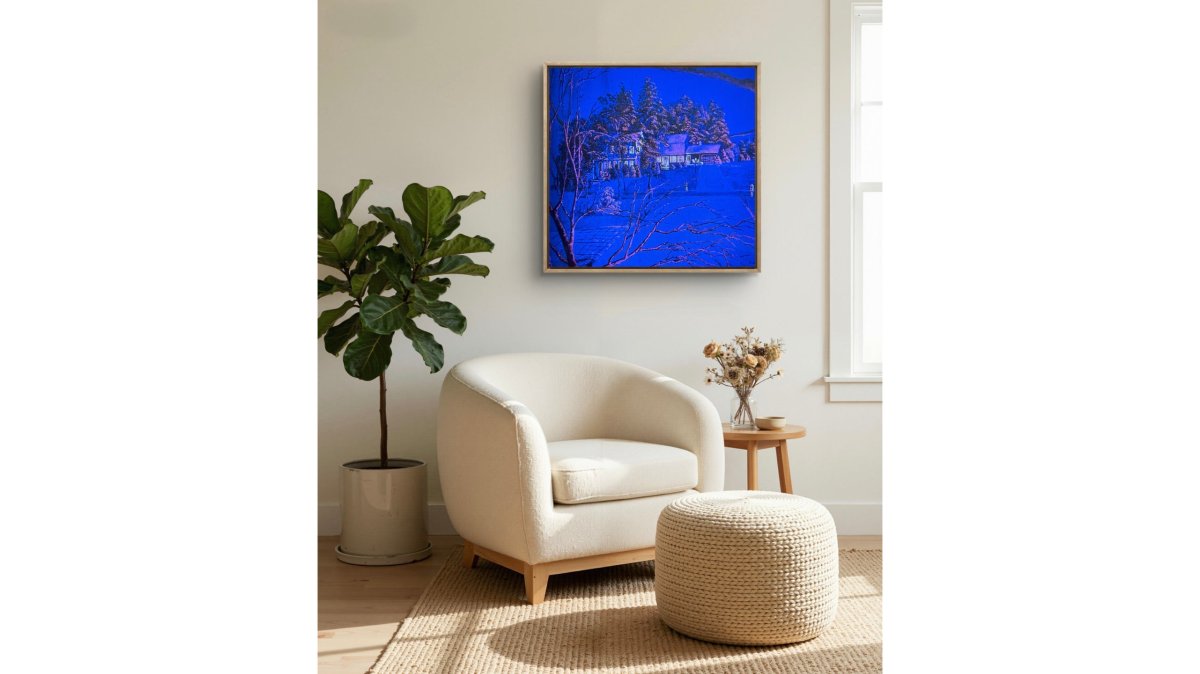
- Night Blues of the Suburbs, 24" x 24" ($595): a calm, blue-toned statement piece for a sofa wall
- A Four-Panel Journey in Balance ($625): four 16" x 16" panels that already form a cohesive set
- Three-Piece Set, Roses and Trees ($465): a ready-made grouping with a shared red ground
If you want a single large work to build around, browse our large statement paintings for serene living rooms.
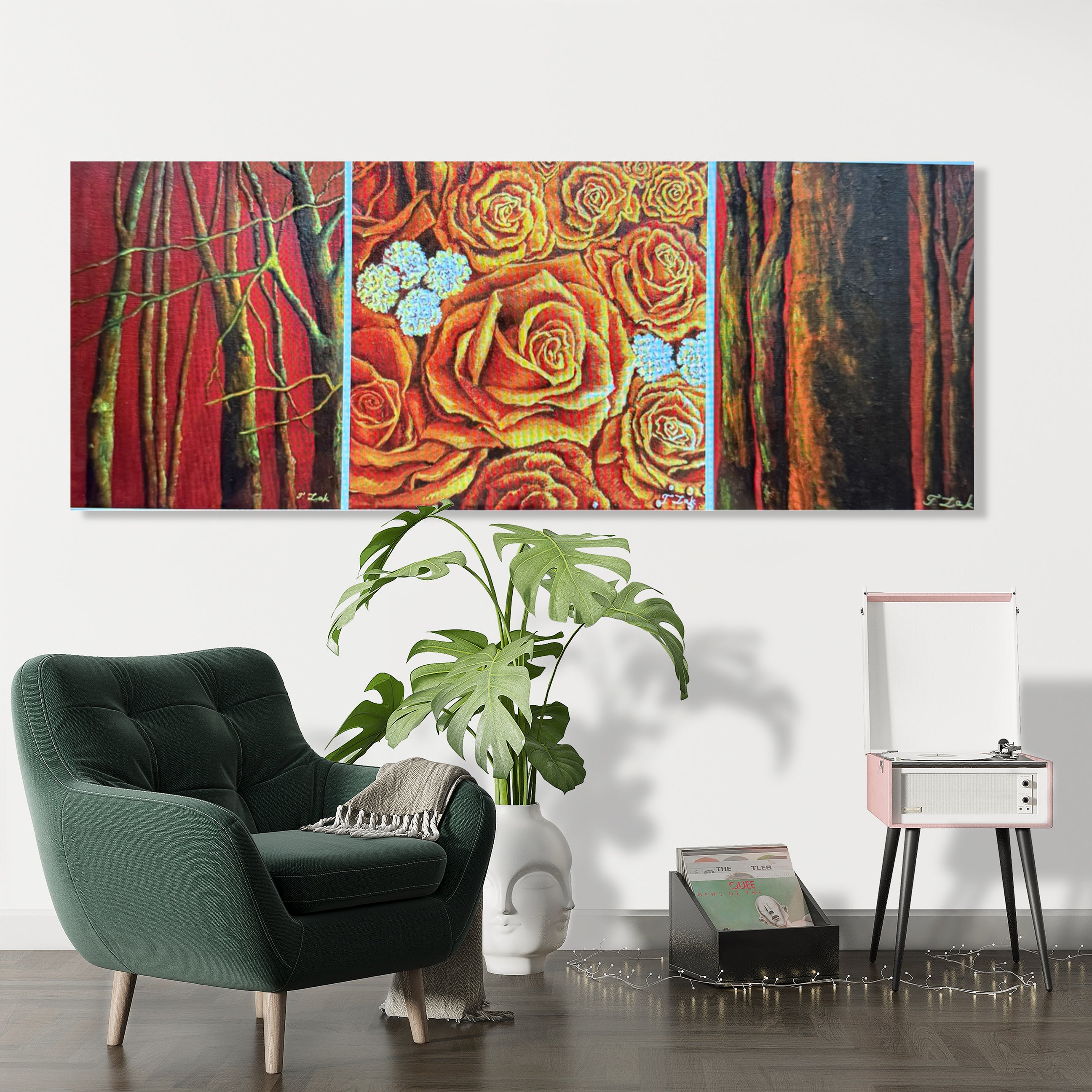
Mixing styles takes a plan, not a big budget. Start with your walls, pick one anchor, and let color and frames do the unifying.
Frequently Asked Questions
Can you mix art styles in a living room?
Yes, and mixing modern art styles often makes a living room feel more collected and personal than a matched set. The key is a shared thread: a repeated color, a consistent frame finish, or a common subject. Pick one anchor piece, then build around it with pieces that echo at least one of its qualities. Keep about 70 percent of the room in one dominant style and let the remaining 30 percent contrast, so the mix reads as intentional rather than accidental.
What is the 3-5-7 rule in decorating?
The 3-5-7 rule is a guideline for grouping objects or artworks in odd numbers, typically three, five, or seven pieces. Odd numbers create asymmetry that feels natural to the eye, while even numbers can look static. When mixing modern art styles, use it for gallery walls: three large pieces, five medium ones, or seven small prints. Pair it with consistent spacing of 2 to 3 inches between frames so the grouping holds together.
How many walls in a living room should be decorated with art?
Most living rooms look balanced with art on two walls: the main focal wall behind the sofa and one secondary wall. In larger rooms, three walls can work if you vary scale, keeping the largest piece on the focal wall. Avoid decorating every wall, which leaves the eye nowhere to rest. If you have a fourth blank wall, consider a mirror or a single small piece instead of a full arrangement.
What should you put on either side of a large painting?
Flank a large painting with pieces that are clearly smaller, roughly one-third to one-half its width, so the centerpiece stays dominant. Good options include slim vertical prints, sconces, a pair of small sculptures on a console, or a tall plant. Leave 2 to 4 inches of wall between the painting and its companions. Matching the frame finish on the side pieces ties the grouping together without competing with the main work.