How Do You Style Modern Office Decor With Canvas Prints?
Quick Summary
Style modern office decor with canvas prints by choosing art that matches the room's mood and purpose, sizing it to about two-thirds to three-quarters of the furniture below, and hanging the center at 57 to 60 inches from the floor. Unframed canvas also avoids glare, which suits screen-heavy workspaces.
- Canvas has no glass, so it avoids reflections that bother people working on screens.
- Size the artwork to roughly two-thirds to three-quarters of the width of the desk or credenza beneath it.
- Hang the center of the canvas at 57 to 60 inches from the floor.
- Keep 6 to 9 inches between the top of the desk and the bottom edge of the canvas.
- Avoid placing canvas directly behind a monitor, where it competes for attention.
Table of Contents
- Why Canvas Prints Work for Modern Office Decor
- Choosing Canvas Art for Office Walls by Style and Mood
- Selecting the Right Canvas Size for Your Wall
- Placing Canvas Prints: Height, Focal Points and Lighting
- Arranging a Gallery Wall of Canvas Prints
- Motivational Wall Art for Office Spaces
- Choosing a Professional Office Wall Art Piece You Can Live With
- Booking Your Next Canvas for Your Workspace
- Frequently Asked Questions
Why Canvas Prints Work for Modern Office Decor
Last Updated: November 11, 2026
Canvas prints are one of the simplest ways to make a modern office feel finished. A well-chosen piece brings color, texture and personality to a wall that would otherwise look bare. This guide walks through how to choose and style canvas prints well.
Canvas works for offices for three practical reasons. It has no glass to glare under desk lamps or window light. It has a soft, textured surface that feels more like an original painting than a paper print. And it can be hung without a frame, which keeps the look clean and current.
- No glare: Unframed canvas avoids reflections that bother people on screens.
- Texture: The woven surface adds depth that smooth paper lacks.
- Modern look: Gallery-wrapped edges suit contemporary interiors.
Our hand-enhanced collector editions add acrylic brushwork by the artist, and no two pieces are identical.
Choosing Canvas Art for Office Walls by Style and Mood
Start with the feeling you want the room to carry. A calm, focused office usually suits cool blues and muted tones. A creative studio can handle bolder color and more movement.
Match the art to the room's purpose:
- Focus work: Quiet landscapes and night scenes with soft color.
- Client-facing spaces: Bold, confident pieces with clear composition.
- Creative work: Expressive, multi-layered art that rewards a second look.
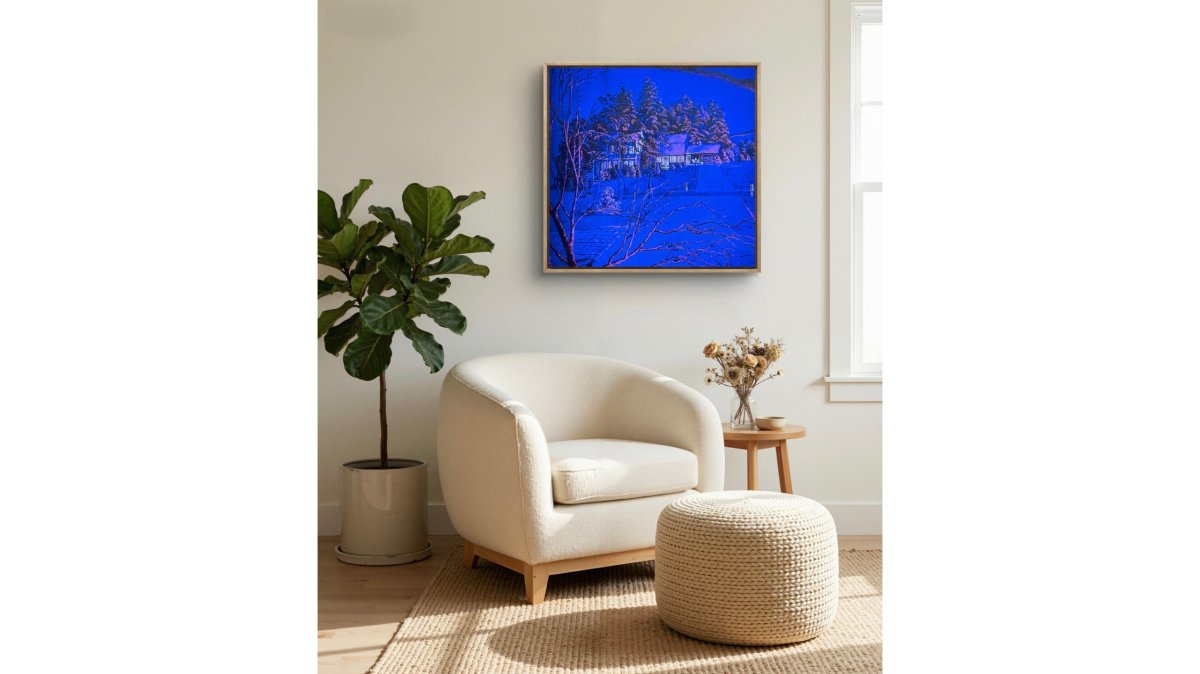
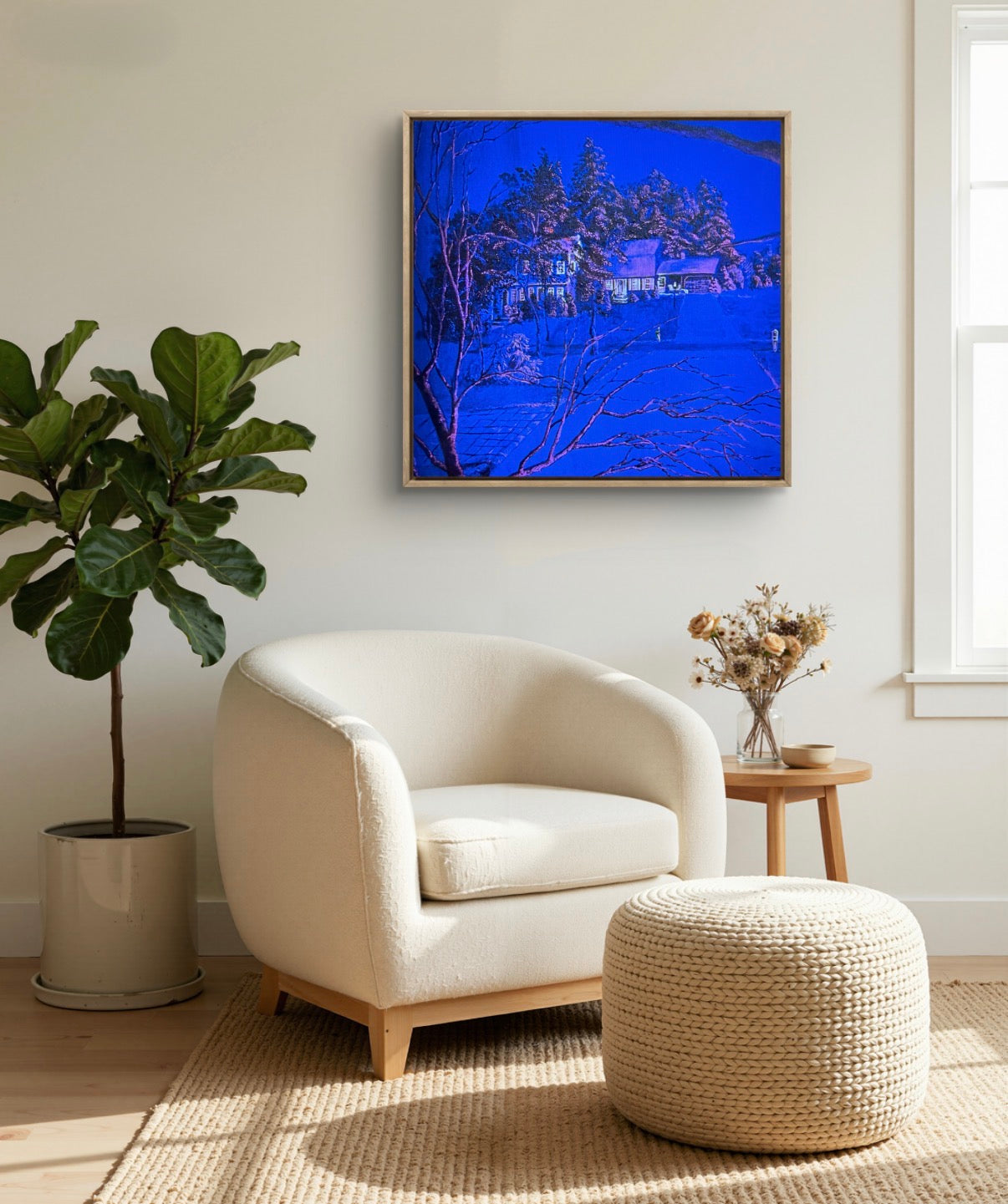
Our Night Blues of the Suburbs print is a good example of calm, reflective art. Its layers of blue and muted tones suit a home office where you want a steady, peaceful backdrop. For a bolder statement, The Lion King carries strong symbolism and confident color, which works well in an executive office or a leadership space.
Keep the palette consistent. Pick one or two colors from the artwork and echo them in a desk accessory, a chair or a rug. This ties the art to the rest of the room.
Selecting the Right Canvas Size for Your Wall
Size is one of the decisions that most affects how a canvas looks in a room. For a fuller look at displaying art in small offices, the guide covers layouts where space is limited. The goal is not the biggest piece you can afford; it is a piece that relates to the furniture below it and the wall around it. Choose the right art print size for your wall with a dedicated guide to dimensions.
Start with the furniture, not the wall. A common pattern among interior stylists is to size the artwork to roughly two-thirds to three-quarters of the width of the desk, credenza, or console beneath it. Above a 60-inch desk, that puts you in the 40- to 45-inch-wide range for a single piece.
Use the wall itself as the second check. For a single canvas on an otherwise empty wall, aim for the piece to occupy about 50 to 75 percent of the available wall width. On a 96-inch wall, that means a canvas roughly 48 to 72 inches wide.
Here is a practical size map for common office walls:
- Narrow wall beside a door or window (under 36 inches wide): 16 x 20 inches or 18 x 24 inches, hung vertically to use the height.
- Standard desk wall with a 60-inch desk: 24 x 36 inches or 30 x 40 inches for a focal piece; 24 x 24 inches only if you plan to add a second piece.
- Reception or feature wall (8 to 12 feet wide): a single canvas 48 to 72 inches wide, or a triptych totaling that width.
- Long corridor wall: a series of same-height pieces spaced evenly, each 16 x 20 to 24 x 36 inches, rather than one small canvas in the middle.
Height matters as much as width. The center of the canvas should sit at roughly 57 to 60 inches from the floor, which is the typical eye level for a standing adult and a comfortable sightline from a seated desk chair.
For multi-piece arrangements, do the math before you buy. A three-piece set over a 72-inch credenza should total about 48 to 54 inches in width, with 2 to 3 inches between panels. That keeps the group visually connected to the furniture instead of spilling past it.
Watch out: measuring only the wall and ignoring the furniture is the most common sizing error. A canvas that fills the wall but dwarfs the desk looks unbalanced from every angle in the room.
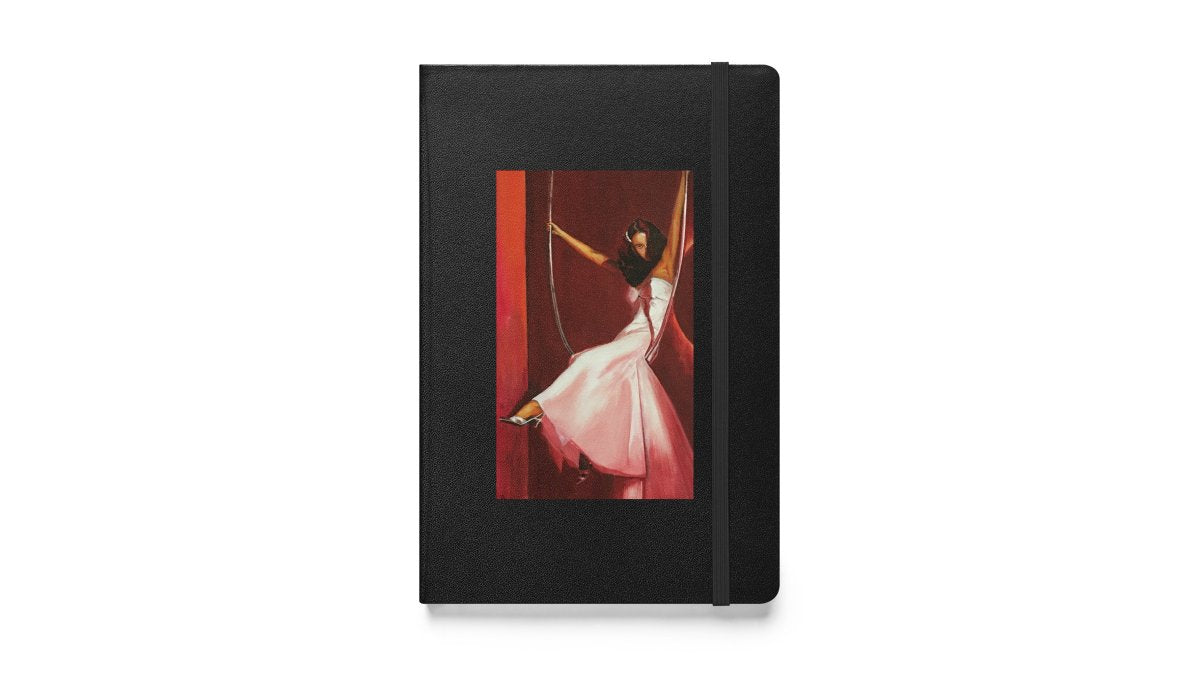
Our larger installation, Swing of Life, measures 42 x 66 inches with a depth of 2.5 inches. It arrives unframed, and the frames shown in room images are styling examples only, not included. Before you commit to a piece that size, tape the dimensions out on the wall with painter's tape and stand back at desk distance.
The article gives these sizing guidelines for common office walls.
| Wall or furniture | Recommended canvas size | Note |
|---|---|---|
| Narrow wall under 36 inches wide | 16 x 20 or 18 x 24 inches | Hang vertically to use the height |
| Standard desk wall, 60-inch desk | 24 x 36 or 30 x 40 inches | 24 x 24 only if adding a second piece |
| Reception or feature wall, 8-12 feet | Single canvas 48-72 inches wide | Or a triptych totaling that width |
| Long corridor wall | Same-height pieces, 16 x 20 to 24 x 36 inches | Spaced evenly, not one small canvas |
| Canvas over a desk | Width about two-thirds to three-quarters of desk | Based on a 60-inch desk example |
Placing Canvas Prints: Height, Focal Points and Lighting
Placement is where a good canvas either settles into the room or fights it. The rules are simple, but they change depending on the layout, the light, and where the screens sit.
Height and focal point. Hang the center of the canvas at 57 to 60 inches from the floor. Over a desk, that usually puts the bottom edge 6 to 9 inches above the work surface. Center the piece on the furniture below it, not on the wall, unless the wall is the only reference point.
Layout-specific placement.
- Private office with a desk facing the door: put the primary canvas on the wall behind the desk so it frames you during meetings, and keep a second, quieter piece on the side wall you see while working.
- Home office with a window on one side: place the canvas on the wall opposite the window if you want it lit softly, or on the window wall if you want it bright but risk fading over time.
- Shared or open workspace: hang art above shared credenzas and in circulation areas rather than directly behind individual monitors, where it becomes a distraction.
- Reception area: the canvas should be visible from the entry sightline, centered on the seating or console, and large enough to read from 8 to 10 feet away.
Lighting and glare. Canvas has no glass, so it avoids the mirror-like reflections of framed prints, but it still interacts with light. Direct sunlight on the surface can wash out color and, over months, fade dyes. Strong window light hitting the canvas head-on also creates a bright patch that pulls the eye away from the room.
Screens and sightlines. The monitor is the real constraint in most offices. If a bright window is behind the viewer, it reflects in the screen; if the canvas is directly behind the monitor, it competes for attention every time the user looks up.
Watch out: hanging art on the same wall a monitor faces, with a window behind the chair, creates a double glare problem that no canvas finish can fix. Move the art or the screen before you move the furniture.
Finally, check the sightline from the doorway. A canvas that looks perfect from the desk can be hidden by an open door or a tall cabinet. Walk the room from the entry point before you commit to the hook.
Arranging a Gallery Wall of Canvas Prints
A gallery wall adds richness, but it works best with a plan. Lay the pieces out on the floor first, then move them until the spacing feels even.
Use these guidelines:
- Keep 2 to 3 inches between pieces for a tight, cohesive look.
- Mix sizes, but keep one piece clearly dominant.
- Align the bottom edges or the centers, not both at once.
If you combine multiple collector editions, choose pieces that share a color family. This keeps the wall calm rather than busy. For a single statement, one large canvas usually beats a crowded grid.
Motivational Wall Art for Office Spaces
Motivational wall art can lift a workspace, but restraint matters.
Choose imagery that supports the message. Confidence and resilience suit a leadership office, while hopeful, quiet imagery suits a space used for long, focused work. The Lion King, for instance, carries a message about confidence and self-belief.
Keep the text or symbolism readable from the desk. If you cannot make out the message from your chair, it is probably too small or too far away.
Choosing a Professional Office Wall Art Piece You Can Live With
A professional piece should hold up to daily use for years. Ask yourself three questions before buying:
- Will I still like this in a year?
- Does it suit the room's function and the people who use it?
- Does the size fit the wall without crowding the furniture?
Look at the artwork in person when possible, or check the detail images closely. For hand-embellished pieces, examine the texture and color to confirm the finish matches your expectations. Our listings include the edition size, signature, numbering and a certificate of authenticity.
Booking Your Next Canvas for Your Workspace
A thoughtful canvas can change how a workspace feels every day. Start with the mood you want, measure the wall, plan the height and lighting, and choose a piece that you will enjoy for years.
Explore the full range of available works and find the piece that suits your office. Shop new arrivals to see what is currently on offer, or browse the Night Blues of the Suburbs print if you want a calm, professional piece.
Frequently Asked Questions
How do you choose canvas prints for a modern office?
Start with the room's color palette and the mood you want to create. Warm neutrals and calm landscapes suit most workspaces, while bold abstract pieces work well in creative studios. Tatyana Zak's collection includes individually hand-enhanced pieces with acrylic, and since no two are identical, you can pick one that matches your palette and still feels personal. Keep the subject calm enough that it does not compete with your screens during long workdays.
What size artwork works best above an office desk?
As a general guide, the artwork should span roughly two-thirds to three-quarters of the desk width so it reads as part of the setup rather than a stray element. A 24 by 24 inch piece, such as Night Blues of the Suburbs at $595.00, is one option. For a wider wall or a statement installation, the 42 by 66 inch Swing of Life installation at $999.00 fills the space with a single cohesive piece.
How high should you hang canvas art in an office?
Hang the center of the canvas at roughly 57 to 60 inches from the floor, which places it near eye level for most adults seated or standing. If the artwork sits above a desk, leave about 8 to 12 inches between the desk surface or monitor and the bottom edge so it does not feel crowded. Check the placement with painter's tape before drilling, and step back to see it from the doorway.
How do you arrange multiple canvas prints on an office wall?
Lay the pieces out on the floor first, keeping gaps between frames consistent, often 2 to 3 inches. Group pieces that share a palette so the arrangement reads as one composition. Anchor the grouping around a single larger piece to create a focal point, then add smaller works at either side for balance.