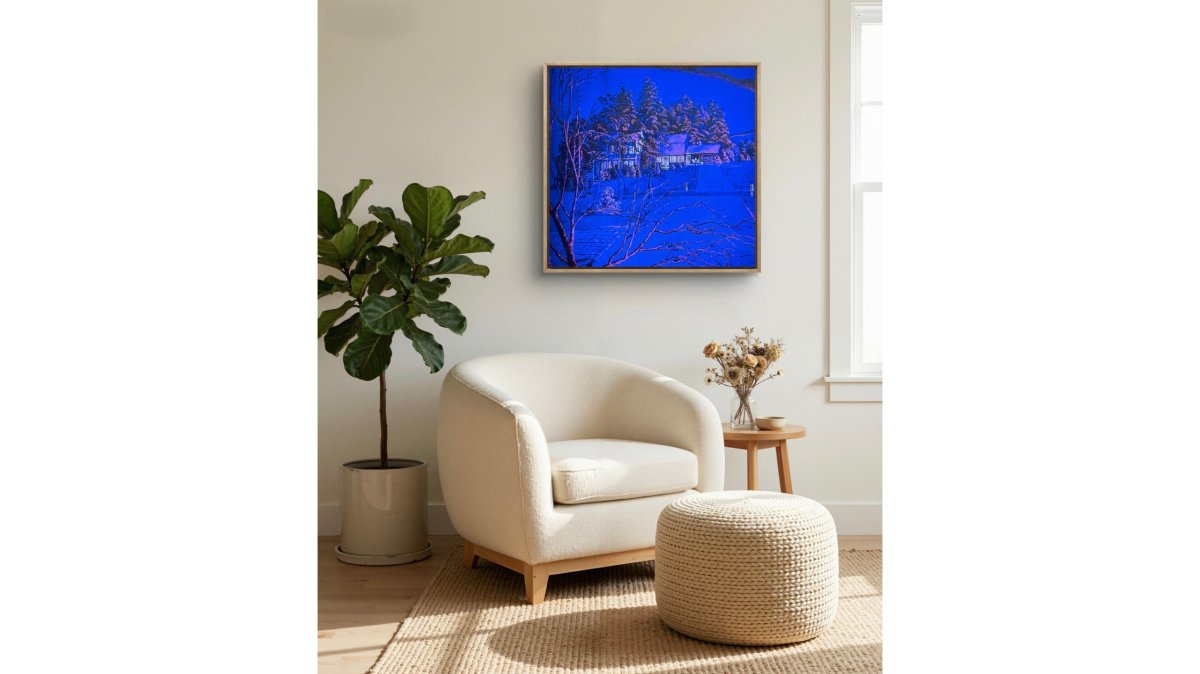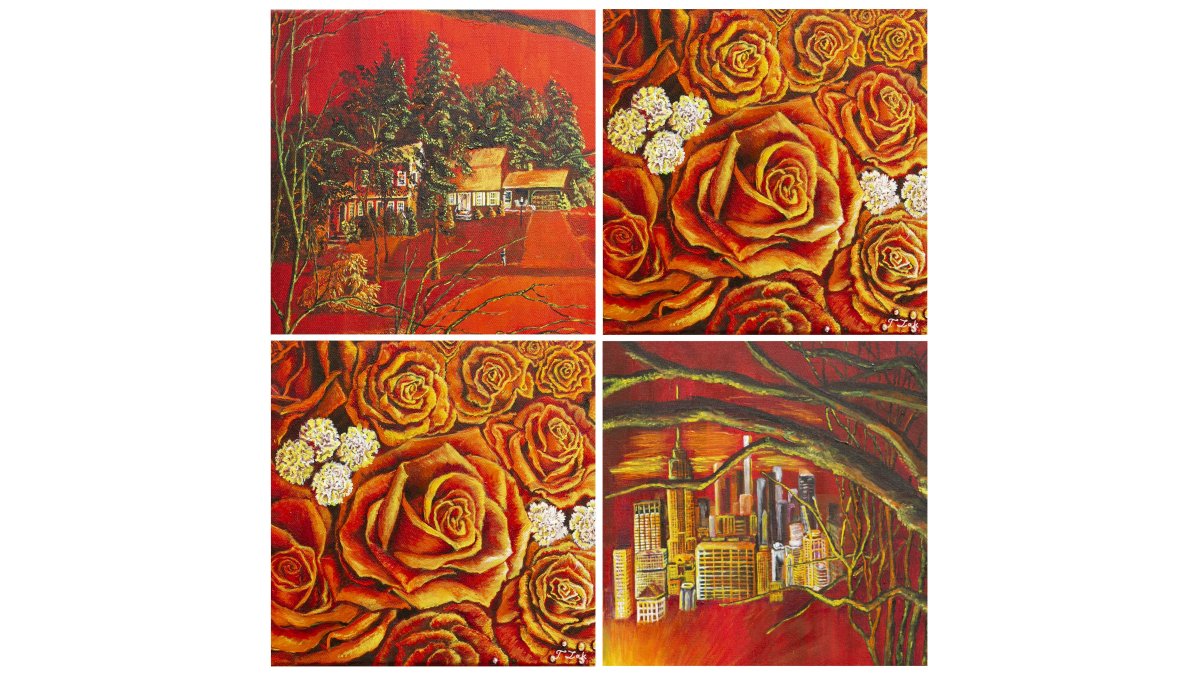
7 Multi-Panel Canvas Art Ideas for Balance and Calm
Last Updated: November 12, 2026
Quick Summary
Multi-panel canvas art is one image or theme split across two or more stretched canvases hung as a single composition, and it creates calm because the eye reads the whole before the parts. Choose restrained palettes, size the set to about two-thirds of the sofa width, and keep gaps equal at one to two inches.
- A three-panel triptych is the safest choice above a standard sofa.
- Keep gaps between panels equal to roughly one to two inches.
- Set the center of the arrangement at roughly eye level, or 8 to 10 inches above the sofa back.
- Canvas printing generally wants about 150 pixels per inch at final size.
- In bedrooms, hang the center about 57 to 60 inches from the floor.
Table of Contents
- Why Multi-Panel Canvas Art Creates Balance and Calm
- Choosing Multi-Panel Wall Art for Living Room Calm
- Colors and Imagery That Quiet a Room
- Large Multi-Panel Canvas Art for Visual Impact
- How to Arrange Panels: Spacing, Symmetry, and Balance
- Create Your Own Multi-Panel Canvas Wall Art
- Multiple Canvas Painting Ideas for Every Room
- Shop Hand-Embellished Sets for a Calmer Home
- Frequently Asked Questions
Why Multi-Panel Canvas Art Creates Balance and Calm
Multi-panel canvas art is a single image or theme split across two or more stretched canvases, hung as one composition.
The calm comes from structure. A multi-panel canvas art set gives the eye a predictable path: panel one, panel two, panel three, then back again. There is no jolt, no visual dead end.
For a deeper look at how contemporary pieces shape a quiet room, see our guide to contemporary art for calming home spaces.
Choosing Multi-Panel Wall Art for Living Room Calm
The living room is where multi-panel wall art for living room settings earns its keep. This is the room you actually sit in, so the art has to survive long, repeated looks without becoming noise.
Start with the wall, not the art. A sofa wall usually has one job: anchor the seating. A two- or three-panel set centered above the couch does that without the weight of one oversized canvas.
Sizing Above a Sofa and Viewing Distance
A common mistake is buying panels that are too small for the wall. A set that spans roughly two-thirds of the sofa's width reads as intentional; anything narrower looks like it is floating.
Viewing distance matters just as much. From a seated position across the room, you should be able to take in the whole set in one glance without turning your head. If you have to scan, the panels are too far apart or the set is too wide.
- Small sets (two panels): best for narrow walls, hallways, and above a console
- Three-panel triptychs: the safest choice above a standard sofa
- Four panels and up: reserve for wide, empty walls with real viewing distance
Colors and Imagery That Quiet a Room
Calm in art is mostly a color decision. A restrained palette does more for a room than any single subject, because fewer colors mean fewer places for the eye to stop.
Here is what we reach for when a space needs to settle:
- Neutral palette: warm whites, sand, stone, soft gray. These recede and let furniture lead.
- Spa tones: muted sage, clay, dusty blue. Quiet without being flat.
- Nature canvas subjects: misty mountains, still water, bare tree lines. Low-detail landscapes calm a room because there is nothing to solve.
- Botanical print and soft florals: keep them loose and pale. Dense, saturated florals energize a room rather than quiet it.
Abstract arcs and simple geometric forms work well in sets, since repetition across panels creates its own visual balance. If you are matching a palette to your furniture and flooring, our guide on matching canvas art colors to your interior design walks through it step by step.
The woman is American.
Large Multi-Panel Canvas Art for Visual Impact
Scale changes the job the art does.
This is where a four-panel set outperforms a single print. One large canvas over a long wall can feel like a poster.
The A Four-Panel Journey in Balance (16" x 16" each panel) Hand-Enhanced Limited-Edition Print is a good example of the format working at scale.
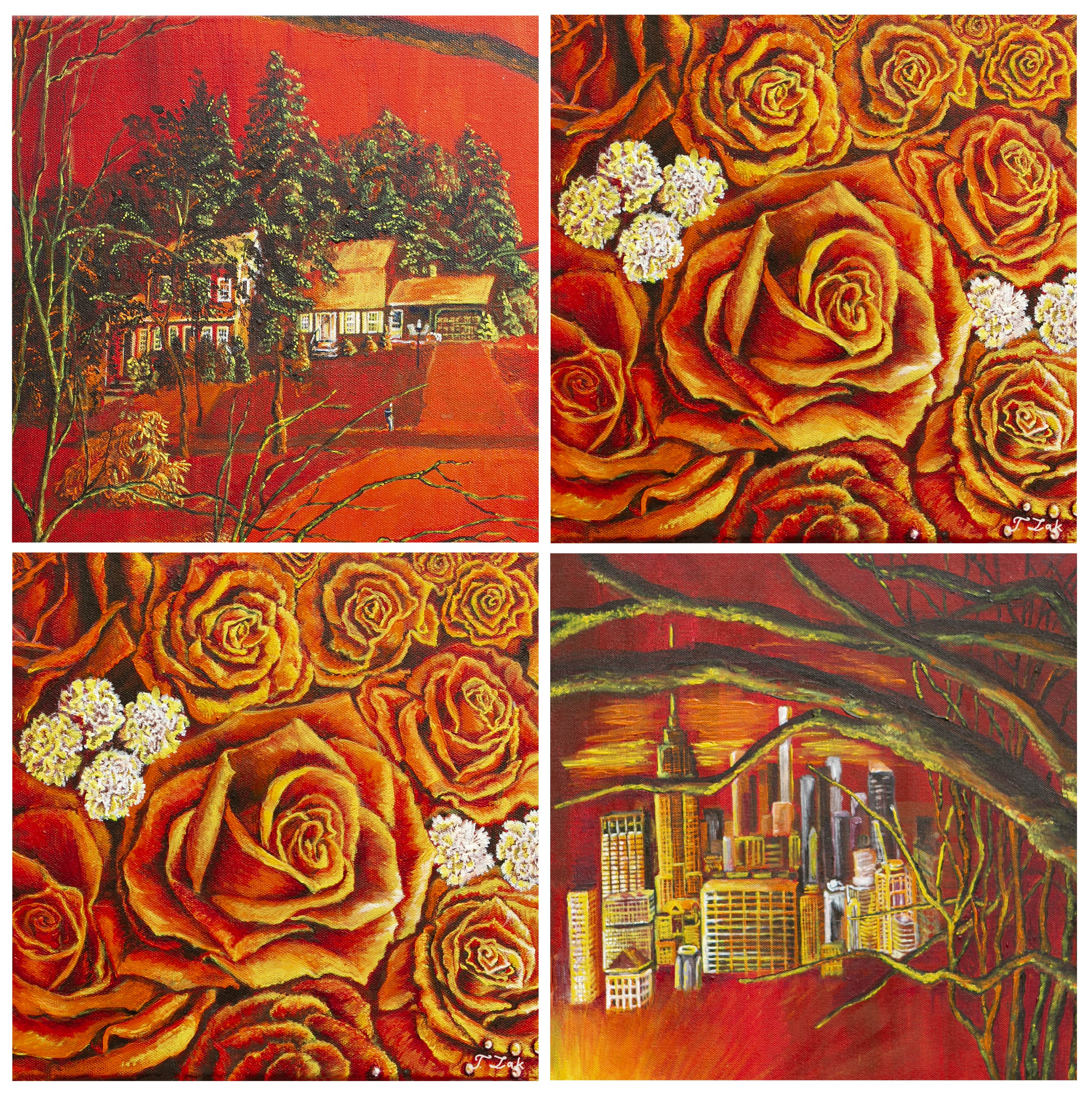
Best for: wide living room walls, open-plan spaces, and offices with real viewing distance.
How to Arrange Panels: Spacing, Symmetry, and Balance
Panel spacing is the single detail that separates a professional-looking installation from a set that looks slightly wrong.
Work in this order:
- Mark the centerline of the wall or the furniture below it with painter's tape.
- Lay the panels on the floor in order and measure the total span including gaps.
- Set the height: center of the arrangement at roughly eye level, or 8 to 10 inches above the sofa back.
- Mark each panel's corners on the wall with pencil before drilling anything.
- Check panel alignment with a level across the top edges of all panels.
- Install hanging hardware rated for the canvas weight, using wall anchors on drywall.
- Step back and check the gaps from across the room, not up close.
Keep the arrangement symmetrical unless the wall itself is not. On an off-center wall, align the set to the furniture, not to the room. For more detail on layout options, read how to display art sets.
Watch out: hanging panels one at a time by eye, without marking all corners first, can produce a set that drifts across the wall. Mark everything before you drill.
| Set Size | Typical Span | Best Wall | Effort to Hang |
|---|---|---|---|
| 2 panels | 30-48 in | Hallway, narrow wall | Low |
| 3 panels | 48-72 in | Above a sofa | Moderate |
| 4 panels | 60-96 in | Wide living room wall | Moderate |
| 5+ panels | 90 in and up | Open-plan, office | High |
Create Your Own Multi-Panel Canvas Wall Art
You can create your own multi-panel canvas wall art from a single photograph, and the process is more forgiving than it sounds. The main rule: choose an image with one clear subject and plenty of empty space.
Work in this order:
- Pick the image. Landscapes, horizons, and quiet architectural shots split well. Busy scenes with faces or text do not, because a seam through a face or a word reads as a mistake rather than a design choice.
- Decide the panel count and finished size. For a three-panel set above a sofa, a common target is a total span of 48 to 72 inches including gaps. If each panel is 16 inches wide and you use 1.5-inch gaps, the artwork span is 16 + 1.5 + 16 + 1.5 + 16 = 51 inches. Write that number down before you touch the file.
- Check resolution against print size. Canvas printing generally wants about 150 pixels per inch at final size for a crisp result, and 300 ppi if the viewer will stand close. A 16-inch-wide panel at 150 ppi needs 2,400 pixels across; three panels plus gaps means the source image should be at least about 7,200 pixels wide. If your file is smaller, either reduce the panel size or accept a softer print.
- Crop for the panel count. Divide the image into equal vertical sections, one per panel, and check that each section still looks interesting alone. Equal sections keep the horizon continuous across gaps.
- Keep the subject clear of the seams. A horizon line running straight through a gap will look broken. Nudge the crop so key lines fall inside a panel, or plan the gap to land on open sky or water where a break is invisible.
- Add bleed and safe margins. Printers typically want about 0.125 inch of bleed beyond the trim on each edge so the canvas wraps the stretcher bar without a white sliver. Keep faces and focal points at least 0.25 inch inside the trim line.
- Name and order the files. Label them panel-1-left, panel-2-center, panel-3-right so the printer cannot reverse the sequence. A reversed set is the most common DIY failure, and it is invisible until the boxes arrive.
- Order as one set and confirm color consistency. Ask the printer to run all panels in the same batch on the same canvas stock; separate orders can drift in color and texture.
Watch out: exporting each panel as a separate JPEG at different quality settings can shift color between panels; export all panels from the same master file with identical settings.
Multiple Canvas Painting Ideas for Every Room
Different rooms want different energy, and multiple canvas painting ideas should follow the room's job rather than a single style rule.
- Bedroom wall art: soft seascapes, pale botanicals, or a two-panel set in muted tones. Low contrast helps here. Hang the center of the arrangement at about 57 to 60 inches from the floor, or at seated eye level from the bed, and keep the set at least 8 to 10 inches above the headboard so it does not crowd the pillows. From a bed, viewing distance is short, so a two-panel set spanning 30 to 48 inches usually reads better than a wide triptych.
- Living room art: a three-panel landscape or a four-panel abstract set, sized to the sofa. Center the set on the sofa, not the wall, and set the bottom edge 8 to 10 inches above the sofa back. From a chair across the room at 8 to 10 feet, a 60- to 72-inch span holds the wall without forcing a head turn.
- Home office: mountain landscape or forest imagery in cooler tones, positioned in your sightline when you look up from the desk. Because you sit close, keep the set smaller, 30 to 48 inches wide, and place the center at seated eye level, about 48 to 52 inches from the floor, so you see it without leaning back.
- Therapy room decor: gentle nature canvas pieces with plenty of negative space, hung at seated eye level. A two- or three-panel set with a single horizon line and open sky gives the eye one place to rest; avoid dense foliage or high-contrast abstracts that pull attention during conversation.
- Hallways: narrow vertical pairs, spaced tighter than you would in a living room, because you pass them at close range. A 1- to 1.5-inch gap keeps a vertical pair reading as one piece in a tight corridor.
Watch out: hanging every room's art at the same height ignores how people actually use the space; a set that looks right above a sofa can sit too high over a desk or too low over a bed.
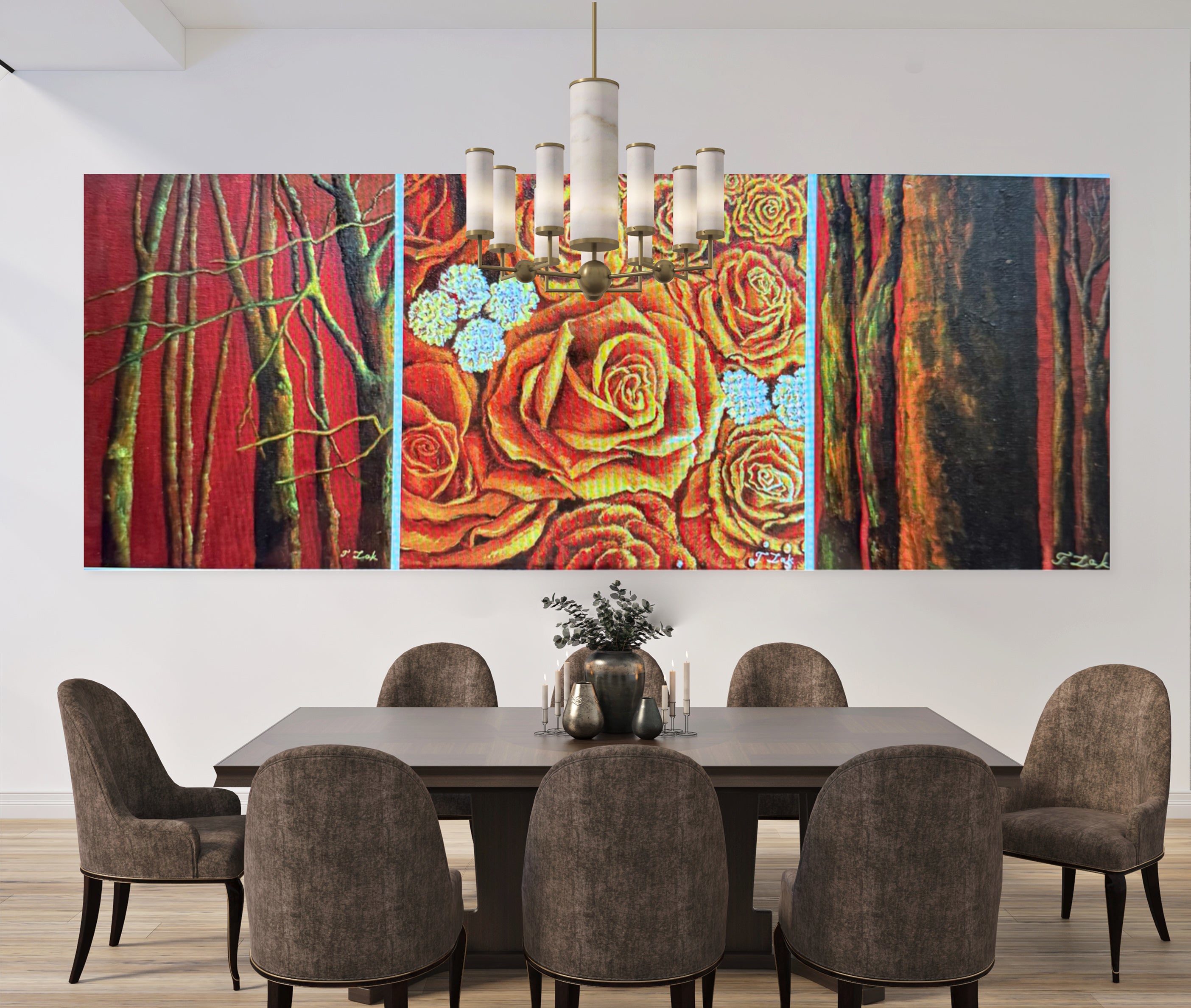
Our Set of 3 Canvases - Roses and Trees features rose and tree silhouettes on a red ground, printed on canvas, with multiple sizes available.
Shop Hand-Embellished Sets for a Calmer Home
A calm room is built from a few deliberate choices, and wall art is one of the few you can change in an afternoon.
Our sets are hand-enhanced with acrylic by the artist, so no two pieces are identical. Browse the full range and shop art sets to find a composition that fits your wall.
Balance in a room rarely comes from one bold object. It comes from a set that holds together, spaced with care, in colors that let the rest of the room breathe.
Frequently Asked Questions
How much space should you leave between canvas panels?
Leave 1 to 2 inches between panels in a tight set and 2 to 3 inches in a wider triptych. The gap should be smaller than the width of one panel so the set reads as a single composition. Measure the total width first, mark the center of the wall, then work outward. Keep the gaps identical; uneven spacing is the fastest way to make a calm arrangement look off.
What size multi-panel wall art works above a sofa?
Aim for art that spans about two-thirds of the sofa's width. For a standard 84-inch sofa, that means roughly 56 inches of total artwork, including the gaps between panels. Hang the bottom edge 6 to 10 inches above the sofa back so the art connects to the furniture without crowding it. Larger sets work well on tall walls but need a viewing distance of at least 6 feet.
Can wall art help create a more relaxing atmosphere?
It can support a calmer room, though it works alongside lighting, clutter, and color rather than on its own. Nature imagery, soft neutrals, and generous negative space give the eye fewer places to work. Repeating a motif across panels, as in a rose or landscape set, adds rhythm that feels settled rather than busy. Choose pieces you can look at daily without tiring of them.
Can you make your own multi-panel canvas wall art?
Yes. Split one high-resolution image across two, three, or four canvases in an editing app, keeping the same aspect ratio per panel. Export each panel at 150 to 300 DPI at final print size, then order canvas prints and hang them with consistent gaps.