Selecting Journals for Artists: Paper, Binding and Format
Quick Summary
The best art journals depend on the medium you use most, so start by listing your three most common materials. Then choose paper weight to match them: lighter stock for graphite and ink, heavier stock around 140 lb for watercolor. Finally, pick a binding and format that suits how you carry and open the book.
- List the three materials you reach for most before comparing any journals.
- Light papers of 60 to 80 lb suit graphite, colored pencil and fine liner.
- Heavier stock at 140 lb, roughly 300 g/m², is the usual choice for watercolor.
- Sewn bindings are most durable, while spiral or wire-o books open completely flat.
- Test your main medium on a spare sheet to check for bleed-through before buying in bulk.
Table of Contents
- Start With the Media You Actually Use
- Paper Weight and GSM: What the Numbers Mean
- Choosing the Best Art Journal for Mixed Media
- Surface Texture, Tooth and Bleed-Through
- Binding, Format and Page Count
- Using Mixed Media Art Journals for Daily Practice
- Art Journal Ideas to Test Your Pick
- Booking Your Next Notebook From the Tatyana Zak Collection
- Frequently Asked Questions
Start With the Media You Actually Use
Choosing a journal for artists begins with one question: what will you put on the page? A pencil sketchbook, a watercolor journal and a mixed media notebook have very different needs, so the best of the art journals depends on your medium. Pick the medium first, then the paper, then the binding.
Most artists buy journals that suit a medium they only use occasionally. Before you shop, list the three materials you reach for most in a typical week. That list will narrow your options faster than any product comparison.
Watch out: buying a beautiful journal for a medium you rarely use means it sits on the shelf. Let your habits decide the purchase.
Paper Weight and GSM: What the Numbers Mean
Paper weight is usually listed in one of two systems. In the United States, many journals show pound weight (lb), which refers to the weight of a ream of 500 sheets in a standard basis size. Outside the US, and on many spec sheets, the same paper is listed in GSM (grams per square meter), which measures the weight of a single square meter of sheet. Because the two systems use different reference sizes, you cannot convert them with a simple multiplier. A common approximation is that 70 lb text weight is about 104 g/m², and 80 lb cover weight is about 118 g/m². Check the spec sheet for whichever unit the manufacturer uses, and compare like with like.
Weight is a rough proxy for how a sheet will handle moisture and pressure, not a guarantee. Lighter papers in the 60 to 80 lb range (roughly 90 to 120 g/m²) suit graphite, colored pencil, ballpoint and fine liner. Mid-weight papers around 90 to 110 lb (roughly 150 to 200 g/m²) handle most markers and light washes without much cockling. Heavier stocks at 140 lb (roughly 300 g/m²) and above are the usual choice for watercolor and heavy wet media, where the sheet has to absorb water without buckling.
Watch out: a heavy page can still bleed if its sizing is poor, and a light page can handle surprising amounts of ink if it is coated. Two papers at the same weight may behave very differently, so test your main medium before buying in bulk.
When you compare journals, look for the weight of the page stock, not just the cover. Covers are often heavier to protect the book, and that number can make the paper seem sturdier than it is.
Paper weight in lb for different media
Choosing the Best Art Journal for Mixed Media
A mixed media journal has to handle several techniques on one page. Look for a heavier page, a surface that takes both dry and wet media, and a cover that survives being carried around.
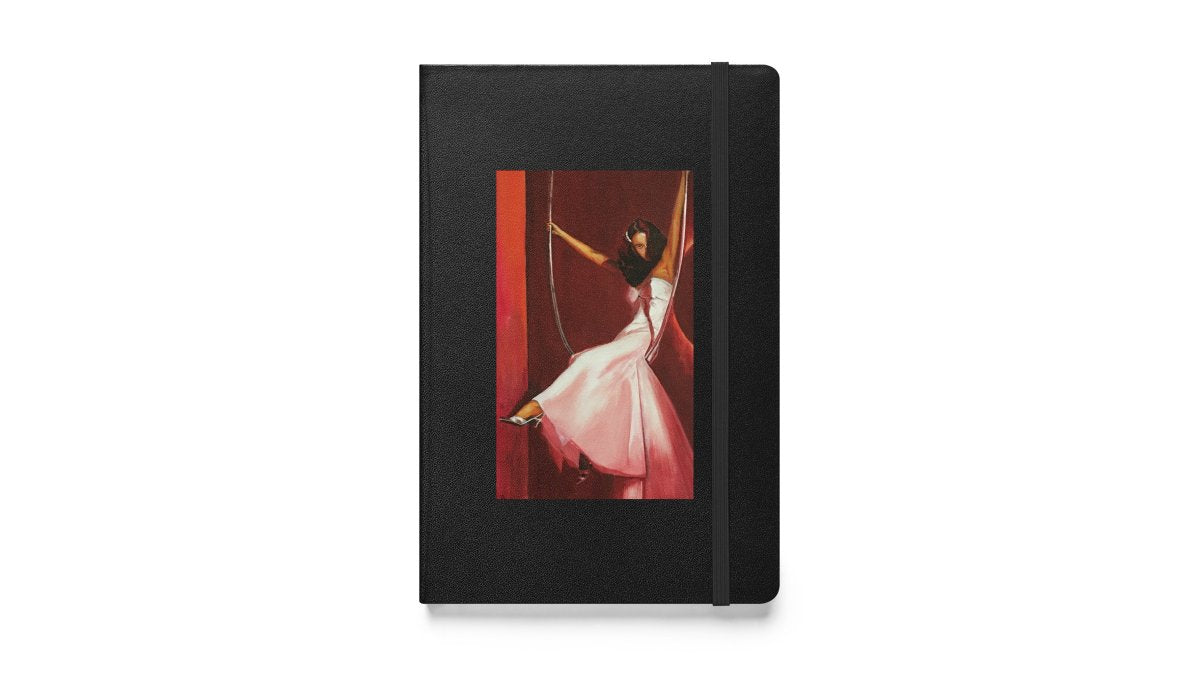
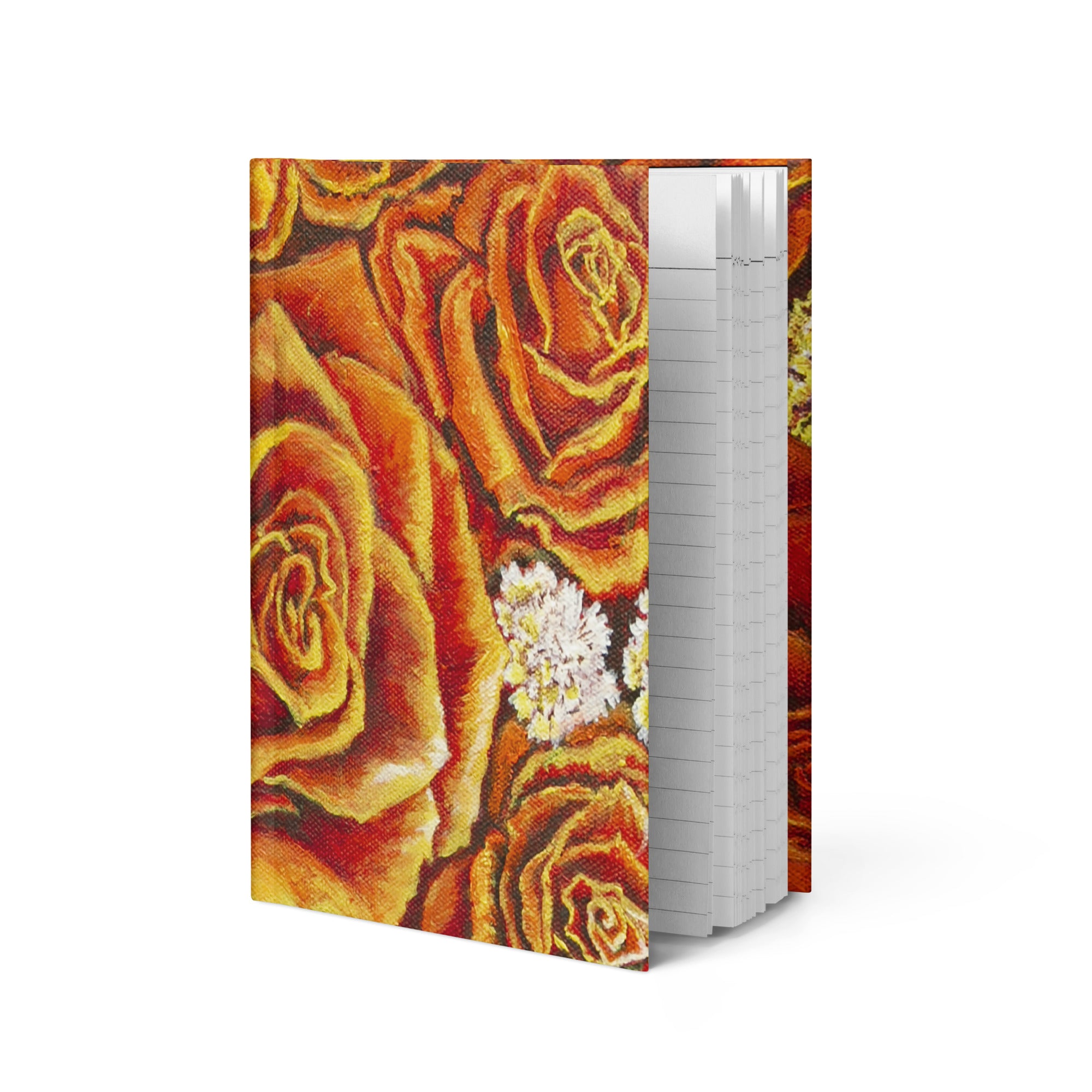
The Hardcover bound notebook has 80 lined, cream-colored pages, a built-in elastic closure, a matching ribbon page marker and an expandable inner pocket for loose notes. Its cover is UltraHyde hardcover paper, and it measures 5.5" × 8.5" (13.97 cm × 21.59 cm).
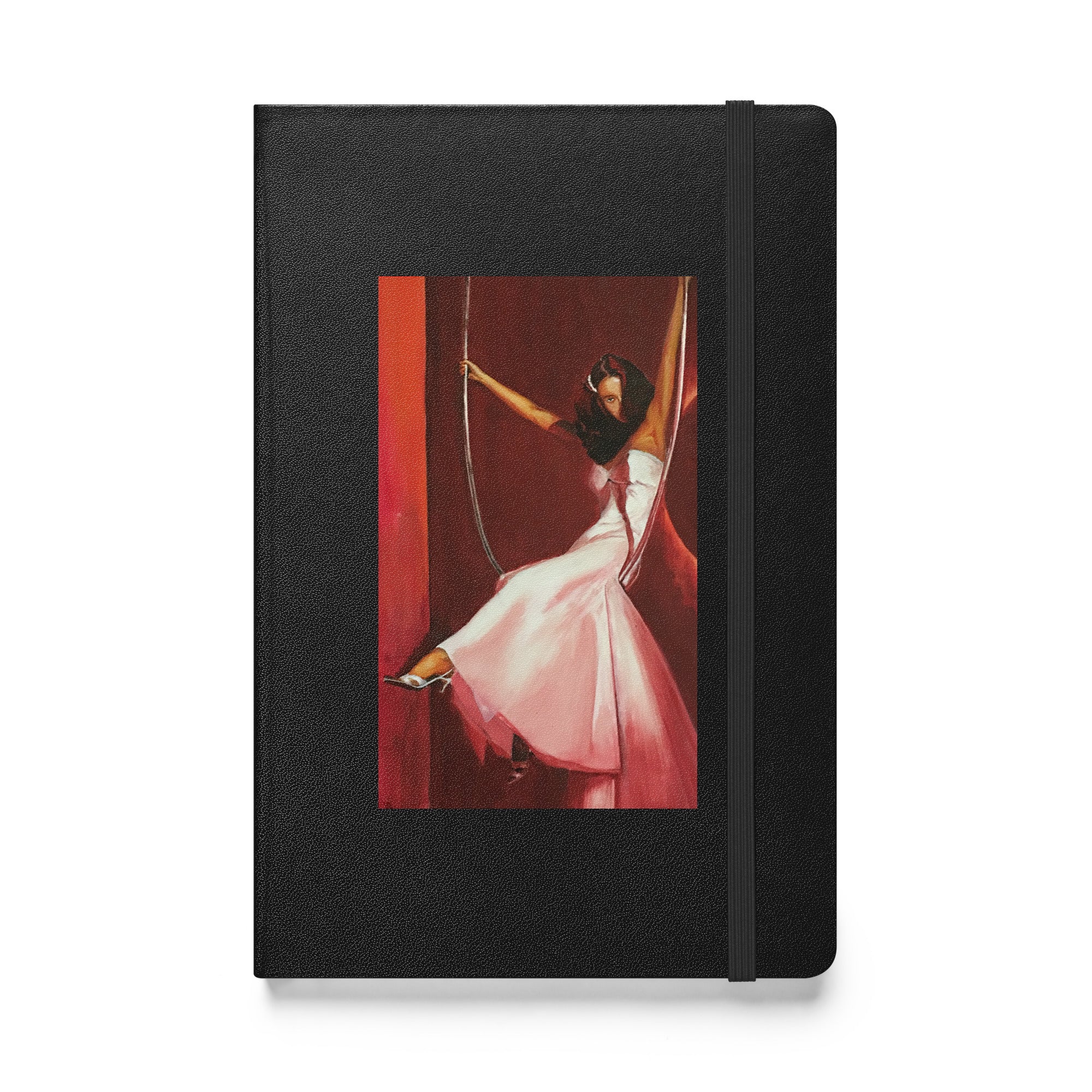
If you want a clean white surface and a tear-out option, a Hardcover journal matte has 150 pages and perforated sheets. Note that its pages are lined and uncoated, so test your heaviest media on a spare sheet first.
Surface Texture, Tooth and Bleed-Through
Tooth describes how much grip a surface has on pencil, charcoal or dry paint. Smooth pages suit fine line work. Slightly toothy pages hold graphite and pastel better.
Bleed-through happens when ink or paint soaks through to the other side of the sheet. It is one of the most common frustrations in journaling, especially with markers and wet washes. Thicker paper and sealed or coated surfaces reduce it.
Preventing Paint Bleed-Through
Use a single layer of wet media per page, or place a scrap sheet behind the page you are working on. Let each layer dry fully before adding the next. Lighter washes spread less than thick paint, so thin your paint with water when you can. If you work with acrylic, a thin barrier sheet beneath the page usually prevents most transfer.
Binding, Format and Page Count
Binding decides how a journal opens, how long it survives handling and how it sits in a bag. The three common types behave differently in daily use.
Sewn bindings, where signatures are stitched into a hardcover or softcover case, open reasonably flat and are the most durable choice for long-term archiving. They suit artists who want a complete record of their work in order. The trade-off is that the spread can curve toward the gutter, which makes drawing near the center harder.
Spiral and wire-o bindings open completely flat, which helps when you draw across a spread.
Glue or perfect bindings are common on softcover sketchbooks. They are inexpensive and clean, but the pages can separate from the spine after heavy use, and they usually open less flat than sewn or wire-o books.
Format matters as much as binding. A 5.5" × 8.5" page fits most bags and suits daily sketching. A 9" × 12" page gives room for large gestures but needs a larger bag and feels heavier after an hour of carrying.
Page count changes how long a journal lasts in practice. Divide the number of pages by the number of sheets you expect to use each week, and you will see how long the book will last. Plan around your real usage, not the most optimistic estimate.
The main binding and format options differ in how they open, how they carry, and how long they last.
| Option | Best for | Key difference |
|---|---|---|
| Sewn binding | Archiving a complete record | Durable, but spread curves toward the gutter |
| Spiral or wire-o | Drawing across a spread | Opens completely flat |
| Glue or perfect binding | Inexpensive softcover sketchbooks | Pages can separate from spine after heavy use |
| 5.5" × 8.5" format | Daily sketching and bags | Fits most bags and is lightweight |
| 9" × 12" format | Large gestures | Needs a larger bag and feels heavier |
Using Mixed Media Art Journals for Daily Practice
A daily practice works when the journal is always within reach. Keep one journal for quick sketches and a separate larger one for finished pieces. Many artists find that a small, lightweight book gets used more often than a large one.
Set a low bar. Ten minutes of drawing in the same journal every morning builds more skill than an occasional large project. Use the journal for experiments too, not just finished work. Pages that look rough are often the ones that teach the most.
Art Journal Ideas to Test Your Pick
Before committing to a journal, test it with a few simple exercises. Try a wash of watercolor, a dense pen study, a graphite gradient and a page of quick marker blocks. Check the back of each page for bleed-through and look at how the page lies when open.
Other useful tests include writing with your usual pen, pressing hard with a pencil to check for indentation, and folding the spine back to see how it holds. Record what works in a short note on the first page. That note becomes your buying guide for the next journal.
For more on choosing notebooks for creative work, see our guide on Choosing Notebooks for Creative Journaling: A Tested Buying Guide.
Booking Your Next Notebook From the Tatyana Zak Collection
Choosing the right journal comes down to matching paper, binding and format to the way you work. At Tatyana Zak, we design our notebooks for artists who want a reliable surface for everyday practice. Explore the range to find the format that fits your next project.
Last Updated: November 11, 2026
Frequently Asked Questions
What should artists look for in a high-quality journal?
Start with paper weight, surface and binding. Heavier paper, roughly 70 lb (104 g/m²) or more for page stock, handles wet media and layering better than thin sheets. Check that the binding lies flat when open, since a journal that snaps shut makes drawing across a spread awkward. Test a few pages with your favorite pen or paint before committing to a full book.
What paper weight is best for an art journal?
For mixed media, aim for page stock around 70 lb (104 g/m²) or heavier. Lighter paper, such as standard notebook stock, buckles under wet media and shows bleed-through from ink and markers. Sketch-only journals can use lighter weights because pencil and ballpoint put little moisture on the page. The matte hardcover journal in our collection uses 70 lb (104 g/m²) pages with an 80 lb (118 g/m²) cover.
Can you use a regular notebook for art?
Yes for pencil, ballpoint and light ink. A regular notebook struggles with watercolor, heavy acrylic or layered mediums, which tend to cockle the paper and bleed through to the next page. If you start with a standard notebook, keep wet media on a separate surface. Moving to a dedicated art journal once you know your media usually improves results without much extra cost.
What binding is best for an art journal?
Sewn bindings open flat and hold up to repeated page turns, which makes them the usual choice for mixed media. Glue-bound books are the least durable for heavy use and can lose pages over time. The spiral notebook with dotted pages in our range uses a metal wire-o binding.