Does Modern Art Suit Traditional Homes: A Room-by-Room Mixing Guide
Last Updated: November 21, 2026
Quick Summary
Yes, modern art suits traditional homes when the contrast is deliberate rather than accidental. Keep about 70 percent of the room traditional and 30 percent modern, then tie the two together by repeating one color, frame finish, or shape. A classic frame with a wide mat also helps a modern piece blend into a traditional interior.
- Hang art so its center sits 57 to 60 inches from the floor.
- Make the art group two-thirds to three-quarters of the furniture width below it.
- Space pieces 2 to 3 inches apart so the group reads as one unit.
- Decorate one or two walls per room rather than every wall.
- Use a 3- to 4-inch mat to give modern prints a traditional feel.
Table of Contents
- Why Modern Art Works in Traditional Rooms
- Mixing Art Styles Without Creating Clash
- Choosing a Color Palette That Ties Old and New Together
- How to Arrange Art on a Wall in a Traditional Living Room
- What to Put on Either Side of a Large Painting on a Wall
- How Many Walls in a Room Should Be Decorated
- Framing Modern Art for a Traditional Interior
- Shop Hand-Embellished Pieces That Bridge Both Worlds
- Frequently Asked Questions
Why Modern Art Works in Traditional Rooms
A contemporary canvas can absolutely live in a traditional home, and the pairing often looks better than a room where every piece matches. The tension is the point. A modern piece gives the eye somewhere new to land, while the moldings, wood, and classic furniture hold the room together.
The short answer: does modern art suit traditional homes? Yes, when the contrast is deliberate rather than accidental.
The Contrast Principle Behind a Cohesive Look
Contrast is what makes a room feel designed instead of decorated. A traditional room with only traditional art reads like a period set. One bold modern piece breaks the pattern and gives the space energy.
The trick is to repeat one thread between old and new. It might be a color, a frame finish, or a shape. That single thread ties the contrast together.
- Repeat one color from the room in the artwork
- Keep frames consistent across a wall
- Let one piece lead and the rest support it
Mixing Art Styles Without Creating Clash
Mixing art styles works when one style clearly leads and the other supports. Think of it as a conversation, not a competition. The traditional room sets the tone; modern pieces add the reply.
A common mistake is giving every style equal weight. That creates noise, not balance.
The 70/30 Rule for Visual Balance
The 70/30 rule is a simple ratio for mixing styles: about 70 percent of the room follows one style, and 30 percent introduces contrast. In a traditional living room, that means most furniture, textiles, and art stay classic, while a smaller share goes modern.
This keeps the room readable. The eye knows what the room is, then notices the surprise.
- 70% traditional: sofa, rug, curtains, classic frames
- 30% modern: one large abstract canvas, a sculptural lamp, a modern print
- Adjust the ratio, not the whole room, when something feels off
Choosing a Color Palette That Ties Old and New Together
Color is the fastest way to make a modern piece belong in a traditional room.
If you are unsure where to start, our guide on how to match canvas art colors to your interior design walks through building a palette around a piece you love.
Watch out: buying art that ignores your room's palette often ends up stored in a closet. Check the dominant tones before you commit.
- Match one dominant color, not all of them
- Warm woods pair well with warm-toned art
- Cool walls suit blues, grays, and muted greens
How to Arrange Art on a Wall in a Traditional Living Room
Hang art so its center sits at eye level, roughly 57 to 60 inches from the floor. That single measurement solves most hanging problems in a traditional room, where high ceilings can tempt you to hang too high. But eye level is only the starting point.
A Step-by-Step Layout Method for a Living Room Wall
Start with the furniture, not the art. The width of the sofa, console, or mantel sets the footprint the artwork should fill. A common pattern is to make the art group about two-thirds to three-quarters of the furniture width below it.
- Measure the wall width and the furniture width below it.
- Decide the group width: about two-thirds of the furniture width for a balanced look, up to three-quarters for a bolder statement.
- Choose the number of pieces. One large piece suits a narrow wall; three to five smaller pieces suit a wide wall.
- Mark the centerline of the furniture on the wall with painter's tape.
- Mark the eye-level line at 57 to 60 inches.
- Lay the pieces on the floor in the planned arrangement before drilling.
- Space pieces 2 to 3 inches apart so the group reads as one unit.
For a fireplace wall, treat the mantel as the furniture line. Keep the bottom of the art 4 to 6 inches above the mantel so it does not crowd the shelf.
Hanging Heights, Spacing, and the 3-5-7 Rule
The 3-5-7 rule is a grouping guideline: arrange art in odd-numbered sets of three, five, or seven pieces for a balanced gallery wall. Odd numbers feel natural because the eye cannot split them into even halves. Space pieces 2 to 3 inches apart so the group reads as one unit.
For a tighter traditional look, a symmetrical grid of four or six pieces also works when the frames match and the spacing is exact. The odd-number rule is a default, not a law.
Solving Common Living Room Constraints
- Large blank wall: one oversized canvas or a tight grid of six to nine small prints. A single small piece on a big wall is the most common mistake.
- Rental with no-drill rules: use adhesive strips rated for the frame weight, or lean framed art on a console or mantel. Check the strip's weight rating against the piece; a 24" x 24" framed canvas can weigh 8 to 12 pounds.
- Limited wall space: hang above a doorway or use a narrow vertical stack of two or three pieces beside a window.
Watch out: hanging art before checking the furniture width often leads to a piece that is too small for the wall. Measure first, then buy.
Before you drill, confirm your print size fits the wall with our guide to choosing the right art print size for your wall. For layout options, compare symmetrical versus asymmetrical gallery walls before you commit to a pattern.
Here are the key measurements and spacing rules the article gives for hanging art in a traditional living room.
| Item | Value | Note |
|---|---|---|
| Art center height | 57 to 60 inches from floor | Eye level solves most hanging problems |
| Art group width | Two-thirds to three-quarters of furniture width | On an 84-inch sofa: 56 to 63 inches |
| Space between pieces | 2 to 3 inches apart | So the group reads as one unit |
| Art above mantel | 4 to 6 inches above the shelf | Treat the mantel as the furniture line |
| Art above low-back sofa | At least 6 to 8 inches above sofa back | So people can lean back freely |
| Odd-number grouping | Sets of three, five, or seven pieces | The 3-5-7 rule for gallery walls |
| Framed 24" x 24" canvas weight | 8 to 12 pounds | Check adhesive strip rating against it |
What to Put on Either Side of a Large Painting on a Wall
Balance a large painting with quieter companions, not competing ones. A pair of slim sconces, a tall plant, or two small framed prints at the same height all work. The goal is support, not rivalry.
- Wall sconces for warm light and symmetry
- A tall plant to soften a hard edge
- Two small prints to extend the composition
Keep the side pieces smaller than the main work. If they start to compete, remove one.
How Many Walls in a Room Should Be Decorated
Decorate one or two walls per room, not every wall. A single strong focal wall does more than art on all four sides. In a traditional living room, the wall behind the sofa or the fireplace wall is usually the best pick.
Fixing Common Layout Problems
Too much art is the most common issue we see. It flattens a room and makes every piece feel less important.
- Art too high: lower it so the center hits eye level
- Art too small for the wall: add a second piece or a wider frame
- Cluttered wall: remove one piece and let the rest breathe
Framing Modern Art for a Traditional Interior
Framing does more to blend a modern piece into a traditional room than almost anything else. A simple gallery frame can look out of place beside ornate moldings. A classic frame with a wide mat often bridges the gap.
Our guide on framing limited edition prints professionally covers mat and frame choices in detail. For hand-embellished pieces, choose a frame that lets the painted texture show.
- Wide mats give modern prints a traditional feel. A 3- to 4-inch mat is a common starting point for a traditional room; narrower mats read more contemporary.
- Warm wood or gold frames echo classic decor. Match the frame tone to the dominant wood in the room rather than to the artwork alone.
- Keep frame finishes consistent across one wall. Two finishes on one wall can work, but three or more usually looks accidental.
Lighting, Glare, and Protecting the Artwork
A modern piece in a traditional room often sits opposite a window, which is exactly where glare and fading do the most damage.
- Glare: position the art so the main light source is not directly across from it. If a window reflection hits the glass at eye level, shift the piece a few feet or angle the frame slightly downward.
- Artificial light: a picture light or a pair of sconces mounted above the piece gives warm, even light without washing out the surface. Keep the light source at least 12 inches above the top of the frame so it does not create a hot spot.
- Sunlight: direct sun fades pigments and yellows paper over time. Use UV-filtering glazing and draw sheer curtains during the brightest hours if the piece faces south or west.
Watch out: a beautiful frame will not protect a print from a south-facing window. Check the light before you choose the wall.
For hand-embellished pieces, the texture is part of the value, so keep the glazing off the surface where possible and let the frame do the protective work.
Shop Hand-Embellished Pieces That Bridge Both Worlds
Hand-embellished prints can bridge modern and traditional styles.
Our guide to hand-embellished art in minimalist decor shows how these pieces adapt to different rooms.
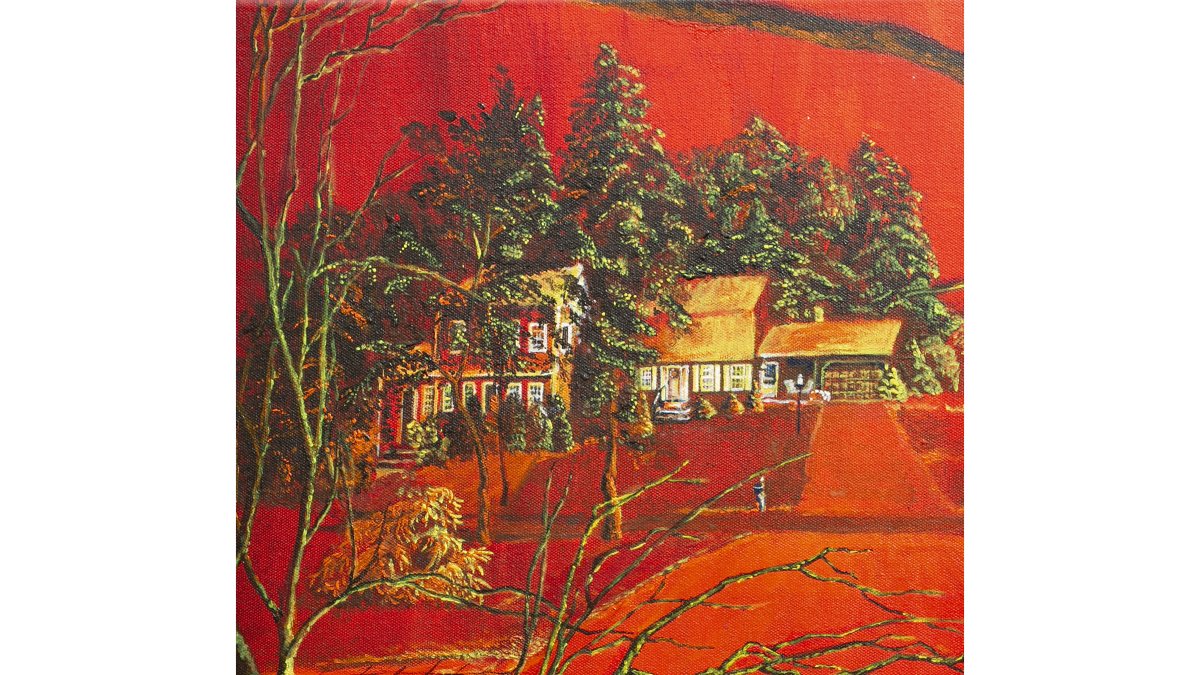
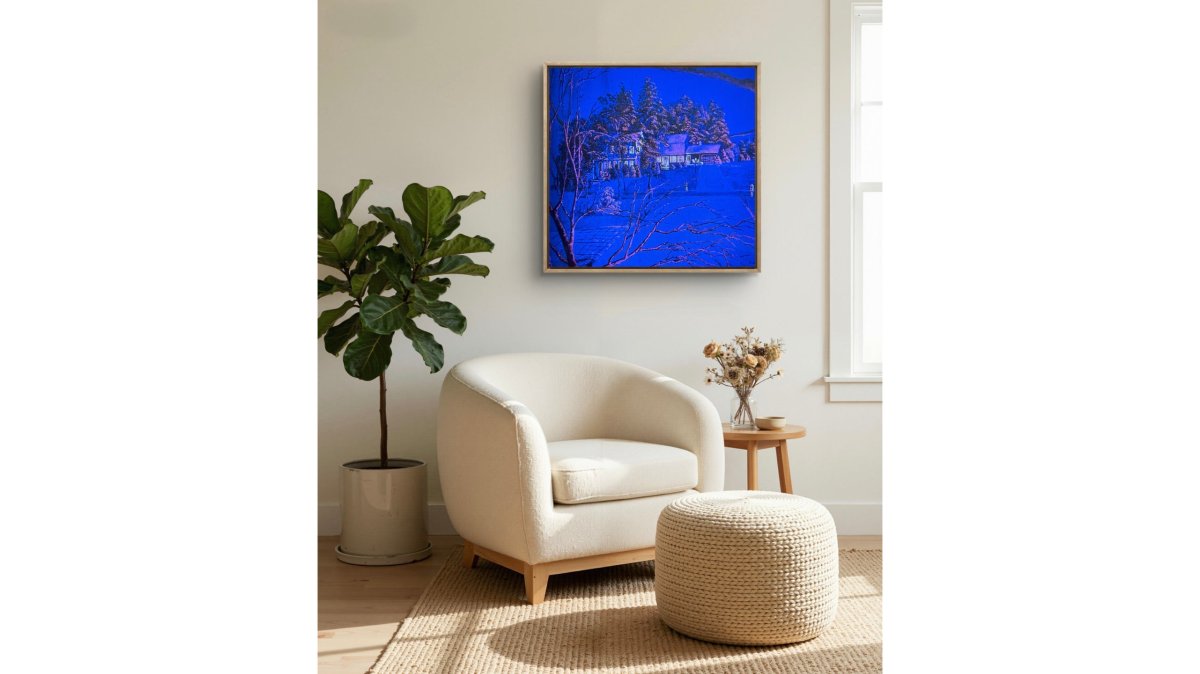
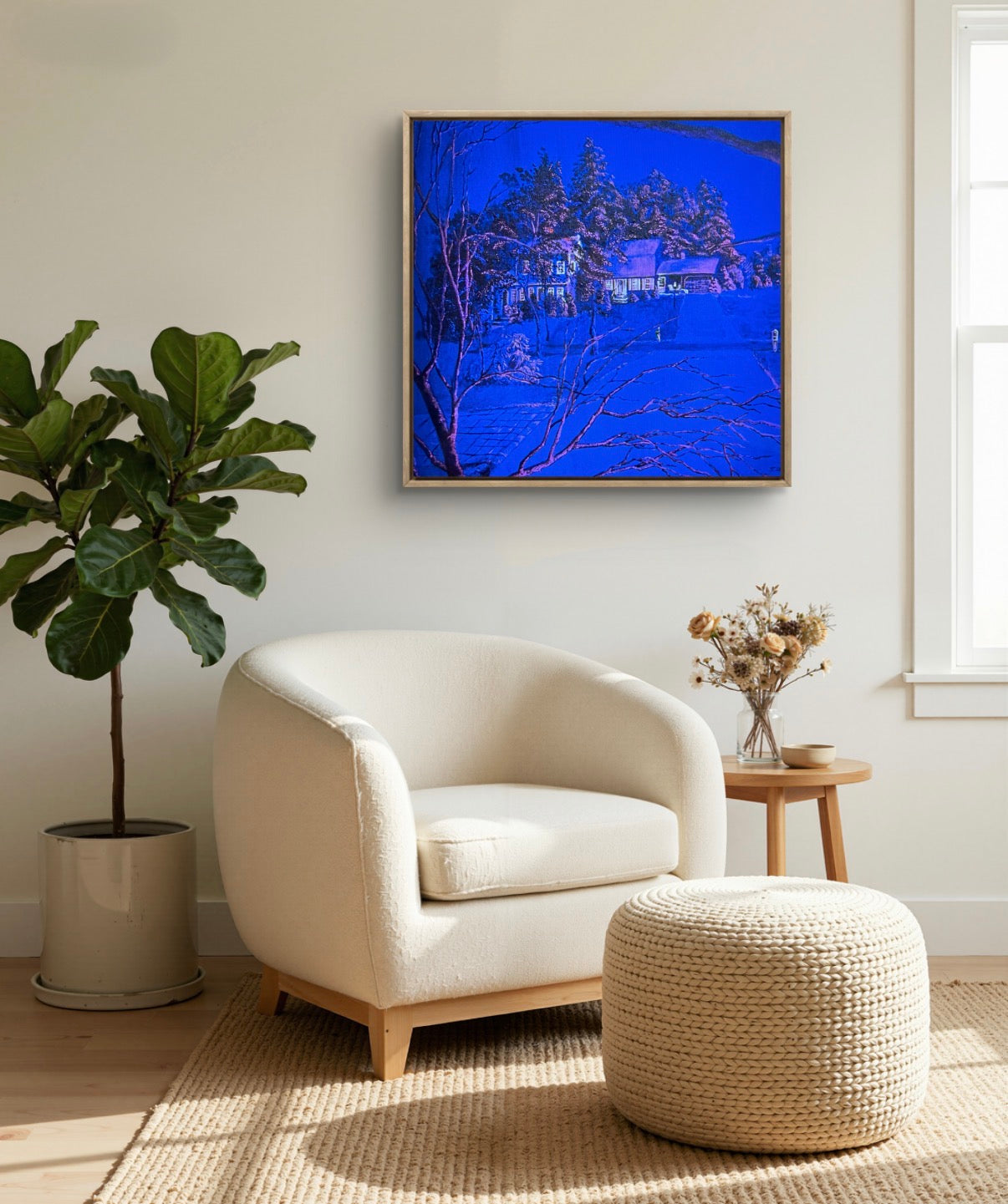
- Night Blues of the Suburbs, a 24" x 24" hand-enhanced canvas at $595, brings calm blue tones to a room
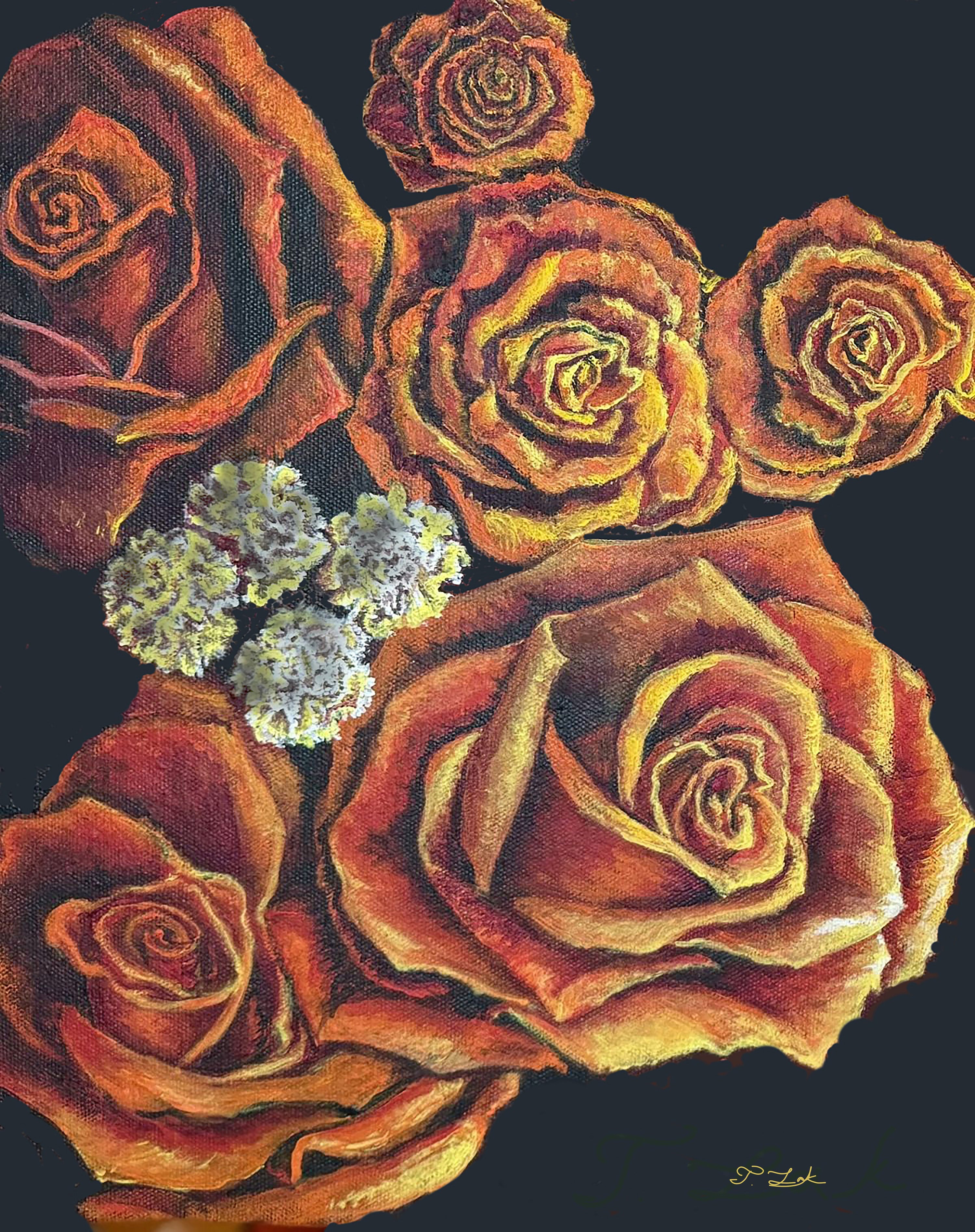
- Roses on Black, a 20" x 24" hand-embellished canvas at $525, makes a warm focal point above a mantel
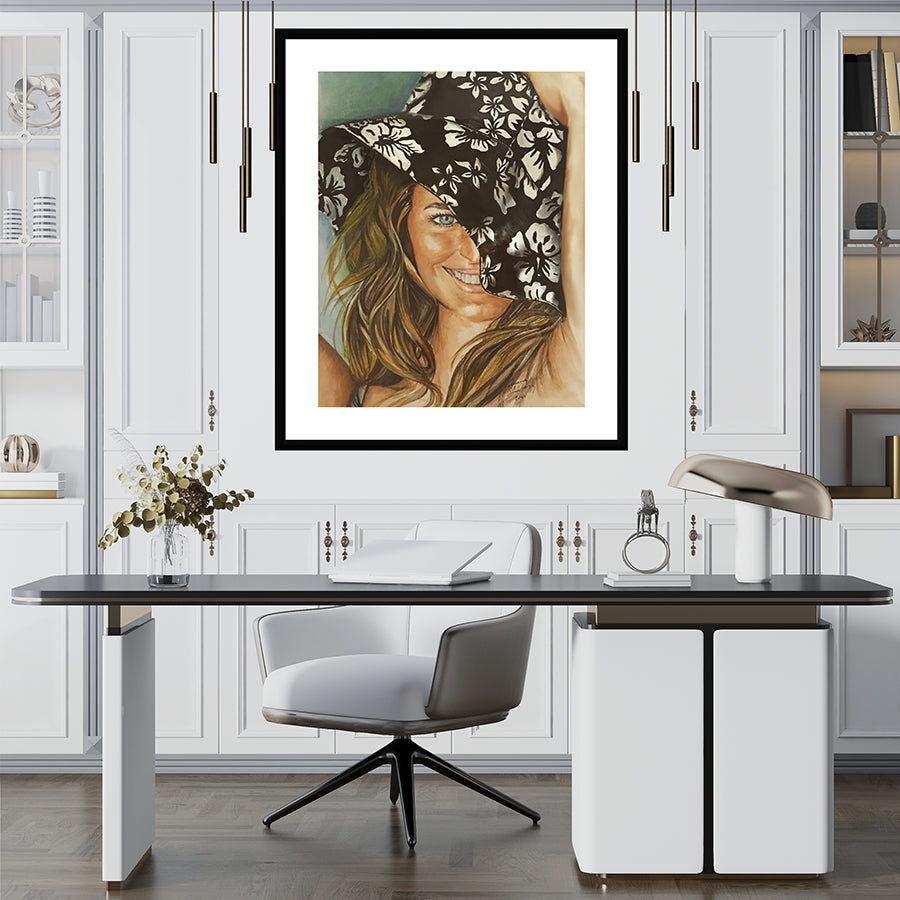
- Lady in a Hat, a 24" x 18" hand-enhanced print at $495, adds a portrait with timeless charm
Each piece is signed and numbered by Tatyana Zak and comes with a Certificate of Authenticity. Mounting brackets are included.
Blending modern art into a traditional home takes a little planning, but the result is a room with depth and personality.
Frequently Asked Questions
Can you mix modern art with traditional furniture?
Yes, and the pairing often looks better than an all-period room. The trick is to let the furniture anchor the space and let the modern art provide contrast. Keep the palette linked: if your furniture is warm wood and cream upholstery, choose modern art with warm neutrals or one strong accent color rather than neon. Scale matters too. A 24 x 24 inch canvas above a heavy mahogany sideboard holds its own, while a tiny print gets swallowed.
How many walls in a room should be decorated?
Most living rooms look balanced with two to three decorated walls out of four. Pick one focal wall, usually behind the sofa or the fireplace, and give it the largest piece or a gallery grouping. A second wall can carry a smaller companion piece or a mirror. Leave at least one wall mostly bare so the eye has somewhere to rest. In small rooms, one strong focal wall plus one small accent wall is enough. Decorating all four walls flattens the room and makes art read as wallpaper rather than collection.
Should modern art be framed in a traditional home?
Framing is the fastest way to make modern art feel at home in a traditional room. A simple gallery frame in black, warm wood, or brushed gold ties a contemporary canvas to moldings and antique furniture without fighting it. Canvas prints can also hang unframed if the edges are clean, which suits a more relaxed traditional look. If you frame, use a wide mat for works on paper to add breathing room. Avoid ornate frames on very abstract pieces, since the two styles compete rather than complement.
What is the 70/30 rule in art and decorating?
The 70/30 rule means roughly 70 percent of a room should follow one dominant style and 30 percent should contrast it. In a traditional home, that means most furniture, textiles, and lighting stay classic, while modern art supplies the 30 percent of contrast. The ratio keeps a room from looking like a showroom of one era or a jumble of many. Apply the same idea to color: 70 percent neutral base, 30 percent accent pulled from the artwork. It is a guideline, not a law, but it prevents both blandness and visual chaos.