How to Choose Modern Canvas Art Sets for Narrow Walls
Last Updated: November 18, 2026
Quick Summary
Choose canvas art sets for narrow walls by measuring the usable wall width and applying the 2/3 rule, so art spans about two-thirds of that width. Then pick a vertical stack for slim columns or a horizontal row for long corridors, keeping gaps of 2 to 4 inches and centering the arrangement at 57 to 60 inches from the floor.
- Leave at least 2 to 3 inches of breathing room on each side of the art.
- Space multiple canvases 2 to 4 inches apart and keep every gap identical.
- A 36-inch-wide wall calls for artwork spanning about 24 inches.
- Hang the center of the arrangement 57 to 60 inches from the floor.
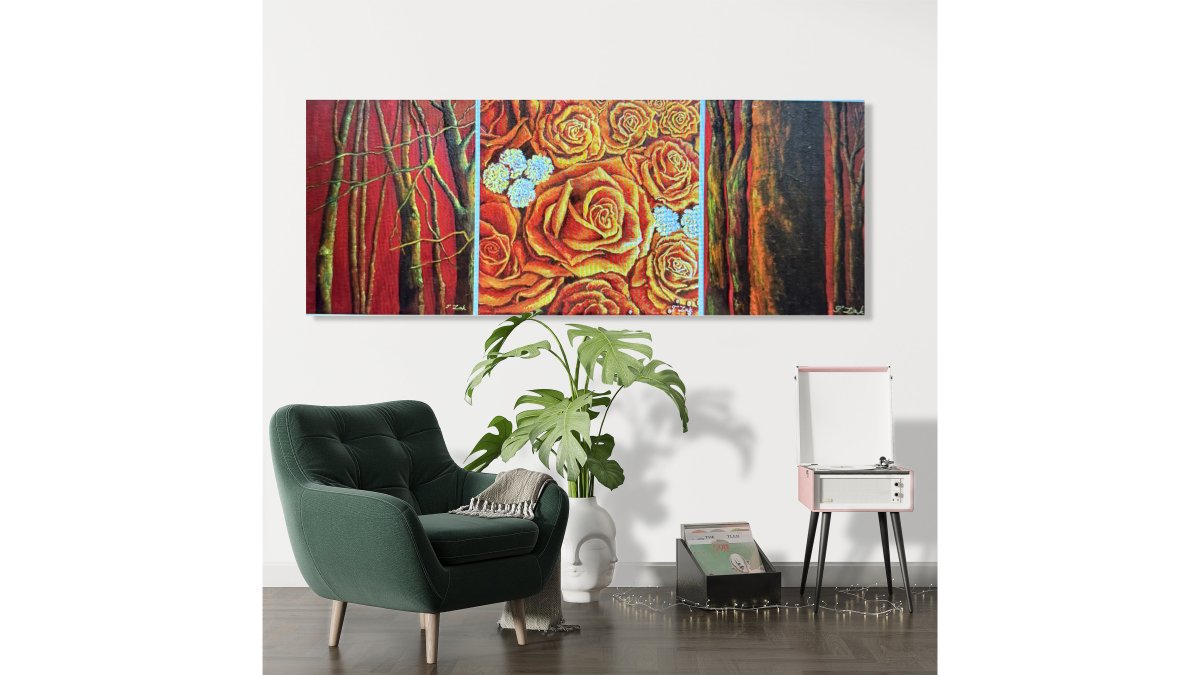
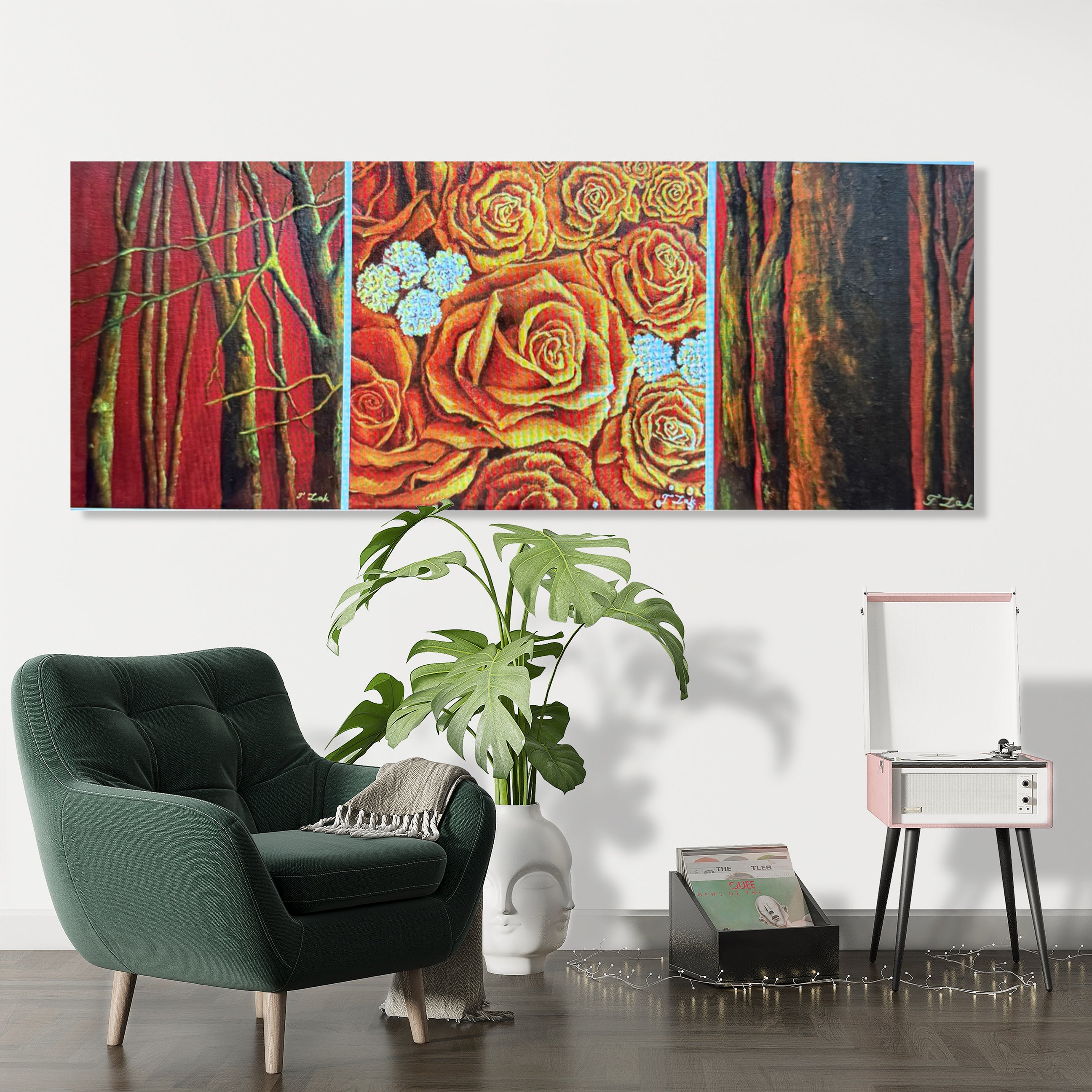
- The Roses and Trees three-piece set is ready to hang with mounting hardware included.
Table of Contents
- How to Arrange Canvas Art on a Narrow Wall
- Wall Art Size and Spacing Guide for Narrow Walls
- Long Narrow Horizontal Wall Art: Where It Works Best
- Tall Narrow Vertical Wall Art Sets for Tight Spaces
- Choosing Art by Room, Wall Function, and Viewing Distance
- Framed or Unframed, and Which Finish Fits Your Palette
- Lighting, Print Quality, and Care for Hand-Embellished Canvas
- Shop Canvas Art Sets That Fit Your Narrow Wall
- Frequently Asked Questions
How to Arrange Canvas Art on a Narrow Wall
A narrow wall is not a problem to solve. It is a chance to make a hallway or a slim bedroom corner feel intentional. For a deeper walkthrough of layout and spacing, see our layout and spacing guide for displaying art sets.
Start by measuring the width and height of the wall with a tape measure. Mark the usable zone with painter's tape. Leave at least 2 to 3 inches of breathing room on each side so the art does not feel crammed into the corner.
Vertical stacking versus horizontal flow
Vertical stacking suits tall, slim walls. Place two or three canvases in a single column, centered on the wall's midline, with 2 to 4 inches between frames. This pulls the eye upward and makes a low ceiling feel taller.
Horizontal flow works when the wall is long but short. Line up a set of two or three pieces in a row at eye level, keeping the gaps even. A set of two reads as calm and balanced, while three or more pieces create rhythm. Pick one direction and commit to it.
Rental-friendly hanging that protects the wall
Renters and anyone cautious about nail holes have good options.
If you want a damage-free method you can install yourself, our guide on how to build a DIY picture ledge for art display walks through the tools, measurements, and mounting steps.
}]}" style="margin:2rem 0; padding:20px 20px 10px; border:1px solid #e5e7eb; border-radius:12px; background-color:#ffffff;">Target art width by wall width under the 2/3 rule
Wall Art Size and Spacing Guide for Narrow Walls
The right size for a narrow wall is roughly two-thirds of the wall's width. This is the 2/3 rule, and it keeps art from looking lost or oversized. A 36-inch-wide wall, for example, calls for artwork spanning about 24 inches.
Height matters just as much. Hang the center of the arrangement at eye level, usually 57 to 60 inches from the floor. In a hallway, center the art on the visible wall span, not the full wall length.
How to measure a narrow wall in four steps
A tape measure and painter's tape help prevent sizing mistakes. Work through these steps before you shop:
- Measure the full wall width and height. Write both numbers down. If the wall runs between two door casings or windows, measure the clear span between the trim, not the room dimension.
- Subtract fixed obstructions. Account for outlet covers, light switches, thermostat plates, and any furniture that will sit against the wall. The remaining number is your usable width.
- Mark the usable zone with painter's tape. Leave at least 2 to 3 inches of breathing room on each side so the art does not feel crammed into the corner.
- Apply the 2/3 rule to the usable width, not the full wall. A 48-inch usable span calls for about 32 inches of art. If the result falls below 16 inches, a single small canvas may read as a placeholder; consider a taller vertical stack instead.
The 2/3 rule and how far apart to hang canvases
Space multiple canvases 2 to 4 inches apart. Tight gaps make a set feel like one unified piece; wider gaps read as separate works. Keep every gap identical, because uneven spacing is the fastest way to make a coordinated set look messy.
For a multi-panel set, calculate total width as panel widths plus the gaps between them.
Hang the center of the arrangement at 57 to 60 inches from the floor, measured to the middle of the group, not the top edge. For a vertical stack, measure to the center panel.
Translate the rule into real print sizes with our guide on how to choose the right art print size for your wall, which turns wall measurements into concrete dimensions. Here is a quick reference:
| Wall Width | Target Art Width (2/3) | Suggested Set |
|---|---|---|
| 24 in | 16 in | Set of two, 8×10 each |
| 36 in | 24 in | Three-piece set, 9×12 each |
| 48 in | 32 in | Three-piece set, 11×14 each |
| 60 in | 40 in | Four-panel set, 16×16 each |
Watch out: the 2/3 rule assumes a wall you view head-on. On a wall seen at a sharp angle from a doorway, err toward the smaller end of the range so the art does not crowd the sightline.
Long Narrow Horizontal Wall Art: Where It Works Best
Long narrow horizontal wall art shines above furniture and in corridors. A low sofa, a console table, or a bed headboard creates a natural anchor for a wide, shallow arrangement.
Hallways are the other obvious home. A horizontal row of panels draws the eye down the corridor and makes the walk feel shorter.
Skip horizontal layouts on walls that dead-end at a door or a tight corner. The art will look cut off. A tall, slim wall in that spot wants vertical art instead.
Tall Narrow Vertical Wall Art Sets for Tight Spaces
Tall narrow vertical wall art sets are the answer for slim columns between windows, closets, and doorways. Stack panels in a single column and center them on the wall's midline. The vertical line adds height and gives a cramped corner a focal point.
These sets also work in small bedrooms and offices where floor space is limited. A narrow column of art draws the eye up and away from clutter. Choose pieces with a shared palette so the stack reads as one coordinated display rather than a random pile.
Choosing Art by Room, Wall Function, and Viewing Distance
Match the art to how close people stand. In a hallway, viewers pass within a few feet, so bold color and clear shapes hold attention. Above a sofa, viewers sit several feet back, which suits softer, larger compositions.
A useful rule of thumb: the ideal viewing distance is roughly 1.5 to 2 times the diagonal measurement of the artwork. A 24-inch-wide, 36-inch-tall canvas has a diagonal of about 43 inches, so it reads best from about 5 to 7 feet away. Use that number to sanity-check scale before you commit.
Room-by-room decision rules
- Hallway: Viewers are in motion and close. Choose panels with strong contrast and simple shapes that register in a glance. Keep the row centered on the visible span you see when you enter, and avoid fussy detail that disappears at walking pace.
- Bedroom: The wall is viewed from a bed, often 6 to 10 feet back and in low light. A neutral palette and gentle nature prints calm the room. Hang the center at 57 to 60 inches, and keep the bottom edge 6 to 10 inches above the headboard.
- Entryway: First impressions happen at 3 to 5 feet. A vertical stack adds height to a slim wall beside the door and gives the eye a focal point as guests arrive.
- Home office: Viewers sit close and for long stretches. Abstract art or a bolder contemporary style can spark focus, but avoid high-contrast patterns directly behind a monitor where they compete with the screen.
- Above a sofa or console: Viewers sit several feet back, which suits softer, larger compositions. Span most of the furniture's width so the two feel connected.
Ask yourself what the wall does. Is it a focal point, or a quiet backdrop? A statement art piece belongs where people pause; a subtle set belongs where people pass. Viewing distance decides scale: close-up walls want smaller panels, distant walls want larger ones.
Lighting and color matching
Light changes how a palette reads. Indirect daylight flatters most canvases, while direct sun fades color over time. Hang art away from harsh glare, or add a sheer blind to soften the light.
Match the frame finish to the room's hardware and lighting fixtures for a cohesive display. Black frames sharpen bold color, natural wood warms a neutral palette, and gold or brass adds a polished touch.
Watch out: a palette that looks balanced online can shift under warm incandescent bulbs.
Framed or Unframed, and Which Finish Fits Your Palette
Unframed canvas prints suit modern and minimalist interiors. The gallery-wrapped edge lets the artwork run to the sides, which keeps a narrow wall feeling open.
Frame color sets the mood. Black frames sharpen bold color; natural wood warms a neutral palette; gold or brass adds a polished touch. Match the frame finish to your hardware and lighting fixtures for a cohesive display.
A ready-to-hang canvas saves time, especially on a narrow wall where precision matters. The Roses and Trees set is ready to hang with mounting hardware included.
Lighting, Print Quality, and Care for Hand-Embellished Canvas
Light decides how art looks on the wall. Indirect daylight flatters most canvases, while direct sun fades color over time. Hang art away from harsh glare, or add a sheer blind to soften the light.
Hand-embellished details add texture to each piece. Our hand-embellished prints are individually painted with acrylic by the artist, so no two pieces are identical.
Care is simple. Dust with a dry, soft cloth and keep canvas out of damp rooms. For fuller instructions, read our guide on how to care for acrylic canvas art.
Shop Canvas Art Sets That Fit Your Narrow Wall
The right set starts with your wall.
Our Three-Piece Set - Roses and Trees - Hand-Enhanced Limited Edition on Canvas is built for exactly this.
Shop the Roses and Trees three-piece set to bring a coordinated, hand-embellished piece into your hallway, bedroom, or office.
A narrow wall asks for planning, not guesswork. Measure the space, apply the 2/3 rule, and pick a format that fits.
Frequently Asked Questions
What size canvas art works best on a narrow wall?
Measure the wall's width and aim for artwork that fills about two-thirds of it, leaving breathing room on each side. On a 30-inch-wide wall, a 20-inch-wide canvas or a stacked pair of 9-by-12-inch panels reads as intentional rather than cramped. Height matters just as much: hang the center of the piece at roughly eye level, about 57 to 60 inches from the floor, so the set sits in the natural viewing zone even in a tight hallway.
Should art on a narrow wall be arranged vertically or horizontally?
Let the wall decide. A tall, slim wall between two doorways suits tall narrow vertical wall art sets, often two or three stacked panels that draw the eye upward. A short wall above a console or sofa suits long narrow horizontal wall art, where a wide, shallow composition stretches the space sideways. If you are unsure, tape paper templates to the wall at the planned dimensions and step back to see which direction feels balanced before buying.
How far apart should canvases in a wall art set be?
A gap of 1 to 2 inches between panels keeps a multi-piece canvas art set reading as one composition rather than separate pictures. Wider spacing, around 3 to 4 inches, works when you want each panel to stand on its own. Keep the gaps identical throughout the set, and treat the whole group as a single shape when centering it on the wall, measuring from the outer edges rather than each panel.
Can a set of small canvases make a narrow wall look wider?
Yes, when the arrangement stretches horizontally. A row of smaller panels placed side by side creates a continuous line of color that pulls the eye across the wall, which reads as more width than one small square canvas would. Keep the panels close together, use a coordinated palette, and align the top or center edges so the group looks deliberate. A cohesive display of three or four pieces often does more for a narrow wall than a single oversized print.