How to Display Original Art at Home
Table of Contents
- Prepare Your Space and Plan the Layout
- How to Display Art Without Damaging Walls
- How High to Hang Art for Visual Impact
- Creating a Gallery Wall Layout Ideas
- Art Lighting Ideas for Home Display
- Choosing Frames and Display Methods
- Protecting and Preserving Your Art
- Common Mistakes to Avoid
- Frequently Asked Questions
Last Updated: October 10, 2026
Prepare Your Space and Plan the Layout
How you display original art at home sets the tone for your entire space.
Identify your room's focal point, where your eye naturally lands when you stand in the center. Place original art there, where it commands attention without competing with furniture or architectural features.
Natural light changes throughout the day and can wash out or enhance colors. Artificial lighting should complement, not overpower, the artwork. Tatyana Zak's hand-embellished pieces shine in this regard, acrylic details catch light beautifully, revealing layers that flat prints cannot.

Sketch your wall layout before measuring. Mark where you want art to hang, including furniture placement, doorways, and windows. This prevents costly mistakes and helps you visualize the final arrangement.
Match viewing distance to piece size. Larger works need more distance to appreciate fully; art hung too high or too far loses impact, while art hung too low feels cramped.
How to Display Art Without Damaging Walls
Modern mounting solutions make damage-free display possible. Understanding trade-offs between permanence, wall type, and artwork weight is critical to avoiding costly mistakes.
Adhesive Strips and Damage-Free Mounting
Adhesive strips work for lightweight pieces under 15 pounds, bonding directly to wall and frame without nails or holes. They work best on clean, smooth drywall and perform poorly on textured, glossy, or freshly painted surfaces.
Remove dust and residue before applying strips. Press firmly for 30 seconds and wait 24 hours for full adhesion. Adhesive strips perform best between 50-85°F and lose effectiveness in cold conditions.
Heavy-duty adhesive solutions exist for pieces up to 25-30 pounds. Always check the weight rating and never exceed it; exceeding capacity risks sudden failure and damage.
Adhesive strips leave residue when removed and can damage fresh paint. Use rubbing alcohol and gentle pressure to clean afterward. Test removal on an inconspicuous area first.
Damage-Free Mounting by Wall Type
Wall material determines mounting method. Drywall accepts adhesive strips, damage-free hooks, and nails equally well. Plaster walls are more fragile; adhesive strips and hooks are safer than nails, which can cause cracking.
Concrete or brick walls require masonry anchors or concrete screws. For renters, adhesive strips rated for masonry are the only damage-free option, though they may not reliably hold pieces heavier than 10 pounds.
Adhesive strips work on smooth tile but perform poorly on grout lines or textured tile. Avoid mounting art directly on glass; use picture ledges or display stands instead.
Propping Art on Furniture
Propping art on shelves, mantels, or console tables eliminates wall damage and offers maximum flexibility, especially for smaller pieces or frequent rearrangement.
Use a picture ledge at eye level. Lean framed pieces at roughly 10-15 degrees, placing heavier frames toward the back. Ensure the shelf is level; even a 2-degree tilt causes frames to slide.
Create a vignette by combining art with decorative objects, books, or plants. This layered approach adds visual interest and allows seasonal editing without touching walls.
Propped art takes up shelf space and may not be visible from all angles. It's better for smaller collections and rentals than permanent installations, and is vulnerable to accidental displacement by pets, children, or cleaning.
How High to Hang Art for Visual Impact
Height dramatically affects how viewers experience art. Too high feels distant; too low dominates uncomfortably.
Standard rule: hang art so the center sits at eye level, approximately 57-60 inches from the floor. Adjust based on context.
Adjust based on viewing position. In bedrooms, lower slightly for seated viewers. In entryways, use standard eye-level height. Above sofas, hang 8-10 inches above the furniture back.
For gallery walls, imagine a horizontal line through the middle of all frames and align it to eye level for balanced visual impact.
Measure twice, mark lightly with pencil, and use a level before making any permanent holes. This prevents frustration and protects your walls.
Creating a Gallery Wall Layout Ideas
Gallery walls transform blank spaces into curated collections, displaying multiple artworks in conversation with each other to create visual rhythm and depth.
Spacing and Composition
Frame spacing defines the gallery wall's feel. Tight spacing (2-3 inches) creates a cohesive appearance; wider spacing (4-6 inches) gives breathing room and suits smaller rooms.
Vary frame sizes and orientations. Mix square frames with rectangles and alternate portrait and landscape orientations to keep the eye moving.
Distribute visual weight evenly. Don't cluster dark frames on one side or large pieces at the top. Spread pieces across all quadrants.
Using a Template for Precision
Cut kraft paper templates matching each frame's dimensions. Tape them to your wall in your desired arrangement and live with the layout for a few hours before committing.
This reveals spacing issues, dominance problems, or composition imbalance immediately. Adjusting templates takes minutes; adjusting wall holes takes much longer.
Mark nail holes through the paper, remove templates, and hang with confidence.
| Layout Type | Best For | Spacing | Frame Variety |
|---|---|---|---|
| Grid | Modern, minimalist spaces | 2-3 inches | Uniform sizes |
| Salon-style | Eclectic collections | 3-4 inches | Mixed sizes and frames |
| Linear | Narrow walls, hallways | 2-3 inches | Consistent orientation |
| Asymmetrical | Creative, bold interiors | 4-6 inches | High variation |
Art Lighting Ideas for Home Display
Proper lighting transforms how viewers perceive original art. Colors sing and textures reveal themselves. The right solution depends on your space, wall type, and whether you rent or own.
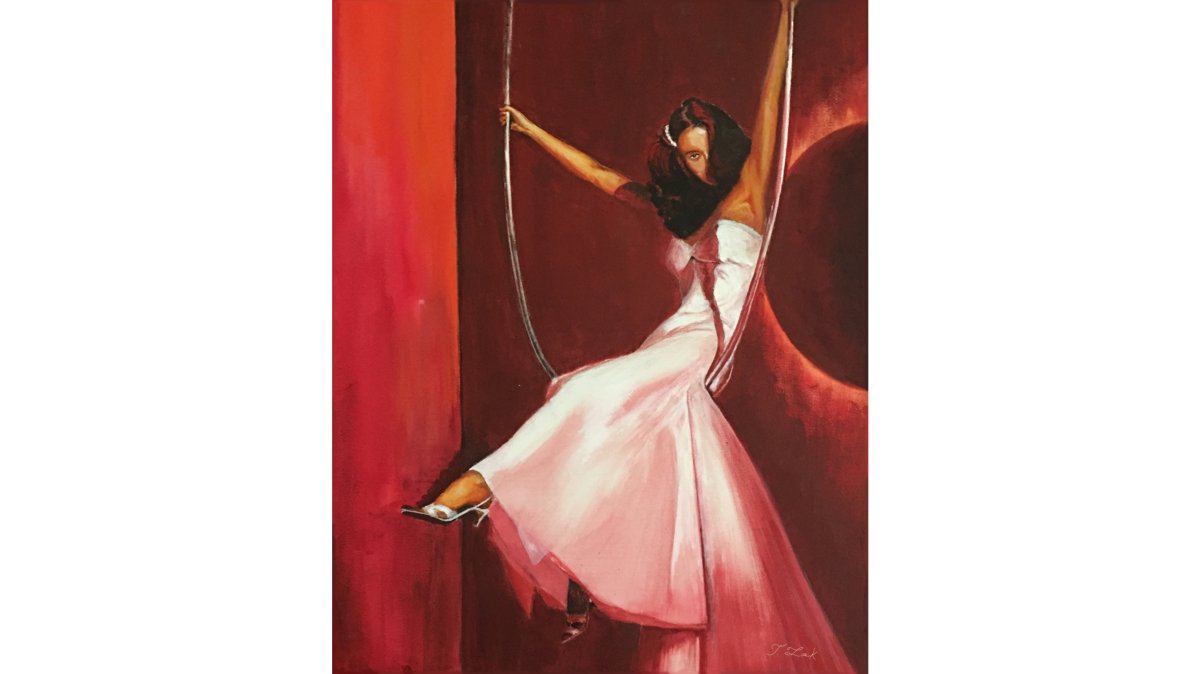
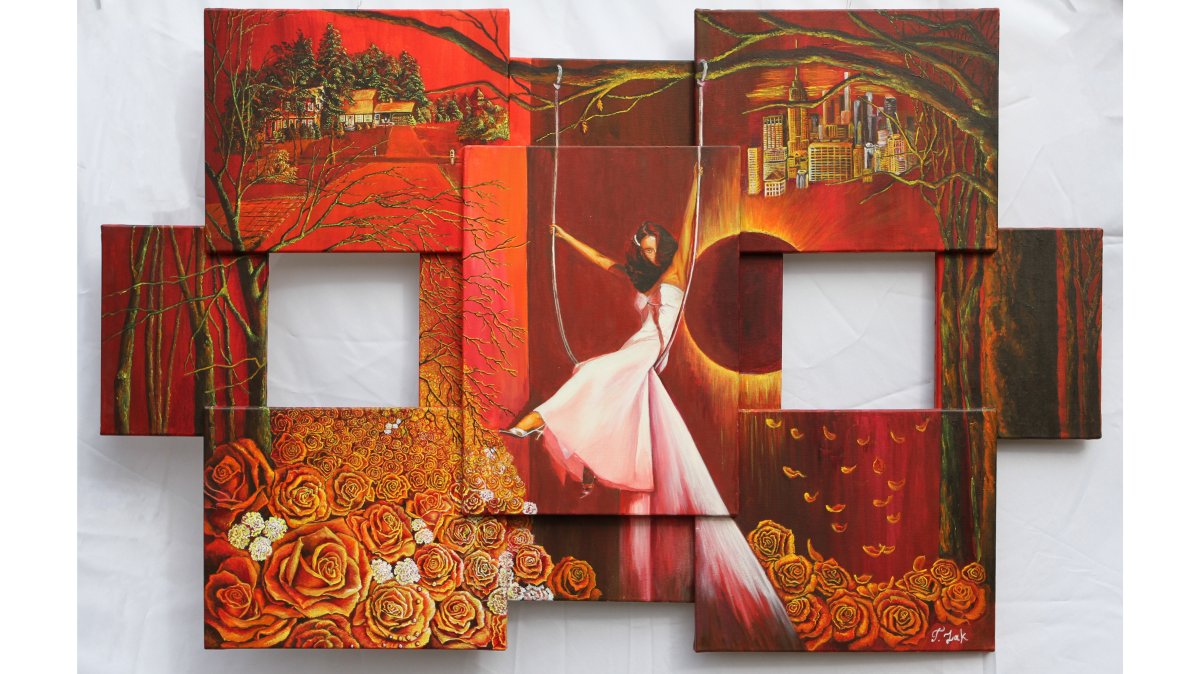
Swing of Life™- 42" x 66" Original Acrylic on Canvas Painting Installation →
Picture Lights and Focused Illumination
Picture lights provide focused illumination without glare, enhancing colors and emphasizing texture. Choose 2700K-3000K (warm white) to avoid color distortion; cooler temperatures wash out artwork.
LED picture lights generate minimal heat, protecting original art from fading. They consume 75% less energy than incandescent equivalents and last 25,000+ hours.
Plug-in picture lights eliminate hardwiring and wall drilling. Mount via adhesive strips or clamps and position 12-18 inches above the frame, angled 30-45 degrees downward to minimize glare.
Track Lighting for Gallery Walls
Track lighting offers flexibility for gallery walls. Position individual fixtures to light each piece independently, allowing repositioning without rewiring.
Choose low-voltage track systems (12V) with dimmable fixtures. Aim for 50-75 foot-candles of illumination; too little makes pieces hard to see, while too much causes glare and fading.
For renters, adhesive-mounted picture lights are more practical than plug-in track systems.
Protecting Art from Light Damage
Avoid direct sunlight, which fades colors. UV radiation breaks down pigments and causes permanent color shifts. Use sheer curtains or UV-filtering window film to block 99% of UV rays while maintaining natural light.
UV-protective glass filters harmful light without altering colors. Standard glass blocks 25% of UV radiation; museum-quality glass blocks 97-99%. The cost difference is significant, but for original art, the protection justifies the expense.
For art displayed in kitchens or bathrooms where humidity and temperature fluctuate, UV-protective glass is doubly important because moisture and heat accelerate fading. Sealed frames with UV-protective glass create a microclimate that stabilizes humidity around the artwork, reducing damage from environmental stress.
Ambient Room Lighting Strategy
Ambient room lighting should complement, not compete with, artwork lighting. Dim overhead lights slightly when displaying art to let your fixtures do the work. This creates visual hierarchy and draws attention to the pieces you want to showcase.
Avoid placing artwork directly opposite bright windows or light sources, which create glare and wash out colors. Position art on walls perpendicular to windows when possible.
For renters in apartments with limited lighting control, portable floor lamps with adjustable heads can provide supplemental illumination without permanent installation. Position a lamp 4-6 feet from the wall, angled toward the artwork, to create accent lighting that enhances visibility and visual impact.
Choosing Frames and Display Methods
The right frame enhances artwork without overshadowing it. The wrong frame can diminish even exceptional pieces. Your frame choice depends on the art's style, your room's aesthetic, and the level of protection your pieces need.
Picture Ledges and Display Stands
Picture ledges mount to walls like floating shelves, allowing you to display framed art without drilling into the frame or wall. This flexibility lets you swap pieces seasonally or rearrange without permanent damage.
Ledges work particularly well for collections that evolve. Display Tatyana Zak's hand-enhanced prints on ledges to highlight the dimensional quality of the acrylic details. The slight forward tilt of ledge-displayed art creates visual interest and catches light beautifully.
Display stands offer another damage-free option for smaller pieces. These tabletop stands hold framed art at various angles, perfect for shelves, desks, or nightstands. They're ideal for renters or anyone who moves frequently.
Protecting and Preserving Your Art
Original art deserves protection from environmental damage. Temperature fluctuations, humidity, and direct sunlight all degrade artwork over time.
Control humidity in your home. Fluctuating moisture causes paper to expand and contract, leading to warping and buckling. Aim for 45-55% relative humidity.
Avoid hanging art in bathrooms or kitchens where steam and cooking moisture create unstable conditions. If you must display art in these spaces, use sealed frames with UV-protective glass.
UV-protective glass or acrylic filters harmful light without noticeably altering colors. This investment protects your pieces from fading, especially important for valuable or irreplaceable works.
Store artwork properly if you're not displaying it. Keep pieces in acid-free boxes in a climate-controlled space.
Common Mistakes to Avoid
The most common mistake is hanging art too high. This single error diminishes impact more than any other factor.
Another frequent error: using cheap frames. Poor-quality framing materials damage artwork over time. Acid in cardboard backing causes discoloration and brittleness.
Don't treat your wall like a storage system. Every piece should earn its space through visual contribution. If you're unsure about a piece, don't hang it.
Avoid mixing too many frame styles in a single gallery wall. While variation is good, too many different materials, colors, and widths creates visual chaos.
Finally, don't neglect lighting. Art without proper illumination is art you can't fully see. Invest in quality picture lights or track lighting to reveal the full beauty of your collection.
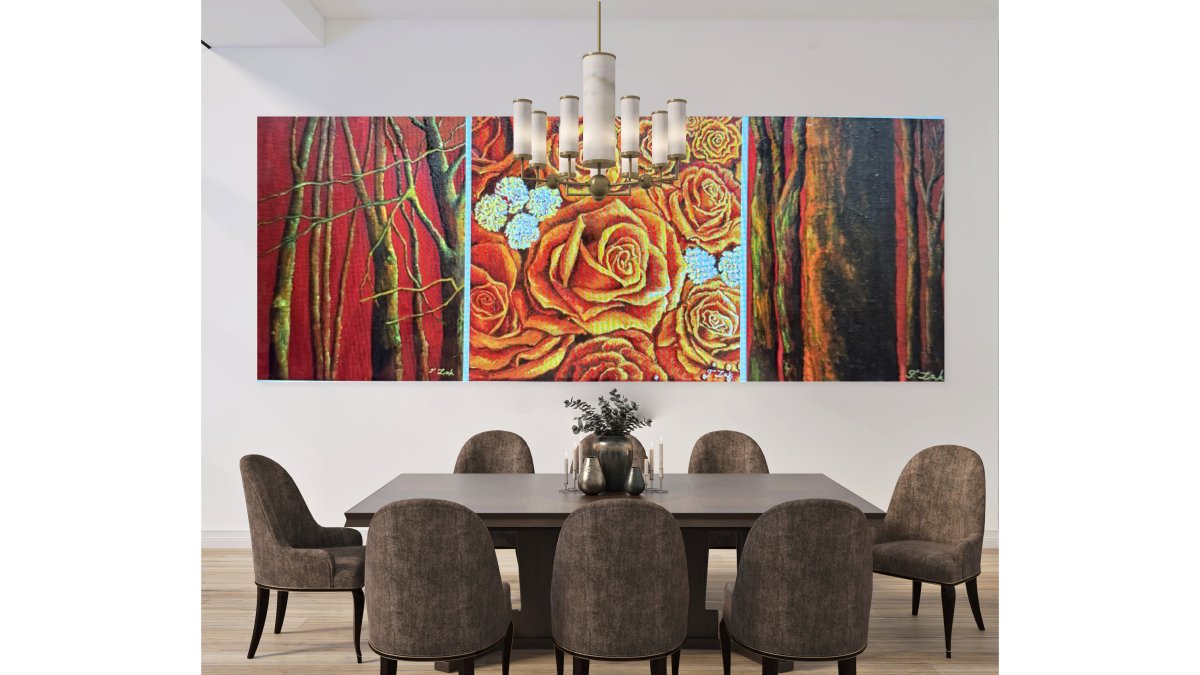
Displaying original art at home requires thoughtful planning, but the reward, a space that reflects your taste and invokes emotion, is worth the effort. At Tatyana Zak, we create hand-embellished original artworks and limited-edition prints designed to transform your space into something meaningful. Explore our collection of emotionally driven art, including the Swing of Life installation and curated sets like the Four-Panel Journey in Balance, and discover how original art can bring vision and depth to your home or office. Shop new arrivals and find the perfect piece for your space.
Frequently Asked Questions
How high should you hang original art on your wall?
The standard guideline is to hang art at eye level, with the center of the piece positioned 57-60 inches from the floor. This height works for standing viewers in most rooms. For gallery walls or multiple pieces, treat the arrangement as a unit and center it at eye level. In spaces where people sit (like above a sofa), you can hang art slightly lower, around 12-18 inches above the furniture. Adjust based on your ceiling height and the visual balance of your room.
What's the best way to display art without damaging walls?
Adhesive strips designed for wall hanging are the safest damage-free option for lightweight to medium-weight pieces. Command strips and similar products hold securely without leaving holes. For heavier original art or installations like the Swing of Life hand-embellished collector edition, use proper wall anchors rated for the weight. Propping art on console tables, mantles, or picture ledges eliminates wall damage entirely while creating a flexible, rental-friendly display. Always test adhesive on an inconspicuous area first and follow weight limits carefully.
How do you arrange different-sized artworks in a gallery wall layout?
Start by laying out all pieces on the floor to visualize the composition before hanging. Aim for visual balance rather than perfect symmetry, mix large focal pieces with smaller complementary works. Space pieces 2-3 inches apart for a cohesive gallery feel. Use a template made from kraft paper to mark exact positions on your wall before drilling or applying adhesive. Group pieces by theme, color, or size to create intentional focal points. This approach works well for curated art sets like the Four-Panel Journey in Balance, where each piece contributes to the overall narrative.
What lighting techniques work best for displaying art at home?
Picture lights mounted above the frame provide focused, museum-quality illumination without casting shadows. Ambient room lighting should be indirect to avoid glare on glass or canvas surfaces. For hand-embellished pieces like those from Tatyana Zak, soft directional light highlights the texture and brushwork details. Avoid placing art in direct sunlight, which fades colors and damages delicate surfaces over time. LED track lighting offers flexibility for gallery walls, allowing you to adjust angles and intensity to suit different pieces and room conditions.