How to Care for Acrylic Embellished Prints: A Collector's Guide
Table of Contents
- What Makes Acrylic Embellished Prints Different
- How to Clean Acrylic Prints: A Step-by-Step Safe Procedure
- Tools and Products to Avoid on Embellished Surfaces
- How to Protect Acrylic Artwork from Light, Heat, and Handling
- How Long Do Acrylic Prints Last? Materials, Coatings, and Care
- Acrylic Print Display and Storage: Framing, Environment, and More
- Fixing Common Problems: Stains, Scratches, and Loose Embellishment
- Conclusion: Caring for Your Hand-Embellished Print
- Frequently Asked Questions
Last Updated: October 6, 2026
What Makes Acrylic Embellished Prints Different
Acrylic embellished prints are limited edition reproductions painted over by hand, adding real acrylic texture on top of the printed image.
At Tatyana Zak, every collector edition leaves the studio with brushwork applied by the artist, part painted original, part print.

The key difference: a standard print has one flat surface, while an embellished print has two, the printed layer underneath and the raised acrylic paint on top.
Hand-Embellished vs. Standard Giclée Prints
A Giclée print is a high-resolution reproduction made with pigment inks on fine art paper or canvas, flat, even, and consistent copy to copy.
A hand-embellished print starts the same way, then the artist adds acrylic paint, gel medium, or both, creating texture you can see and feel.
The trade-off: a piece closer to an original painting, but a surface needing more careful handling.
Why Textured Surfaces Need Different Care
Texture traps dust. Flat prints wipe clean in seconds. Raised paint holds particles in every groove.
Texture also chips. Dried acrylic is flexible but not indestructible. Fingernails, rings, and rough cloths can lift an edge of paint.
And texture shows every mark. A smudge on a glossy flat print buffs out. A smudge worked into a painted ridge can smear.
How to Clean Acrylic Prints: A Step-by-Step Safe Procedure
Cleaning an acrylic print takes about five minutes and three tools.

Follow these steps:
- Wash and dry your hands fully, oils and lotion transfer to the surface.
- Set the print on a clean, flat surface, or leave it hanging. If framed under glazing, clean the glazing, not the paint.
- Test first: on an inconspicuous area, make one light pass with your dry cloth, wait a minute, and check in angled light. If unchanged, continue; if you see dulling, smearing, or lifted texture, stop.
- Use a dry, soft microfiber cloth with light pressure only.
- Work top to bottom in slow strokes, do not scrub back and forth.
- For stubborn dust in textured areas, use a soft brush first, then the cloth.
- Check in angled light and stop when clean.
Most prints need this once every few months, not weekly, over-cleaning causes more damage than dust ever will.
Removing Dust and Stubborn Dust from the Surface
Loose dust comes off with one light pass of a dry microfiber cloth.
Stubborn dust settles into the valleys of gel medium and heavy-bodied paint, where a dry cloth pushes it deeper.
Never blow on the surface, breath moisture can spot the finish. Never use compressed air either: propellant can spit residue and the force can lift a loose flake of medium.
When a Slightly Damp Cloth Is Appropriate
A slightly damp cloth is appropriate only for a fresh smudge or sticky mark dry dusting cannot lift. Damp means barely wet: mist the cloth, wring it until it stops dripping. Spot-clean rather than wiping the whole piece, touch only the mark, wipe once gently, then dry right away with a clean dry cloth, blotting rather than rubbing. Water and acrylic do not mix well over time, so never let moisture sit on the surface or spray liquid directly onto the print; droplets settle into every ridge and take far longer to dry than a damp cloth.
Drying Without Rubbing or Pressing
Drying is where most home cleaning goes wrong. Do not rub dry or press down to speed it up, both push dust and moisture into the texture and can flatten a raised brushstroke. Instead, lay a clean, dry microfiber cloth flat over the area for a few seconds to wick up moisture, then lift straight up. Repeat with a fresh section if still damp, then air-dry ten to fifteen minutes before rehanging or reframing.
Tools and Products to Avoid on Embellished Surfaces
Most damage to hand-embellished prints comes from the wrong cleaning product, not from cleaning too little. Skip:
- Paper towels, which scratch and shed fibers
- Rough or abrasive cloths of any kind
- Glass cleaner and all-purpose sprays
The common thread is chemicals and abrasion. Acrylic paint and gel medium sit on top of the print. Solvents can dull or dissolve that layer, and paper towels leave micro-scratches that catch the light.
What most guides miss: a product labeled "safe for glass" is not safe for painted surfaces.
How to Protect Acrylic Artwork from Light, Heat, and Handling
Protecting acrylic artwork comes down to three things: light, heat, and hands. Control those and the piece holds up for decades.
Direct sunlight is the biggest threat: UV light fades pigment inks and yellows protective coatings.
Heat and humidity matter too. Keep art off radiators, away from vents, and out of bathrooms. A stable indoor environment is kind to both canvas and paint.
Handling and Fingerprints: Best Practices
Handle the print by the edges or the frame only. Skin oils leave fingerprints that etch into acrylic over time.
If you must move it, wear clean cotton gloves. Set it down on a clean surface, never face-down on a hard table.
Deal with fingerprints quickly: a dry microfiber cloth usually lifts a fresh print, while set-in marks need a conservator, not more rubbing.
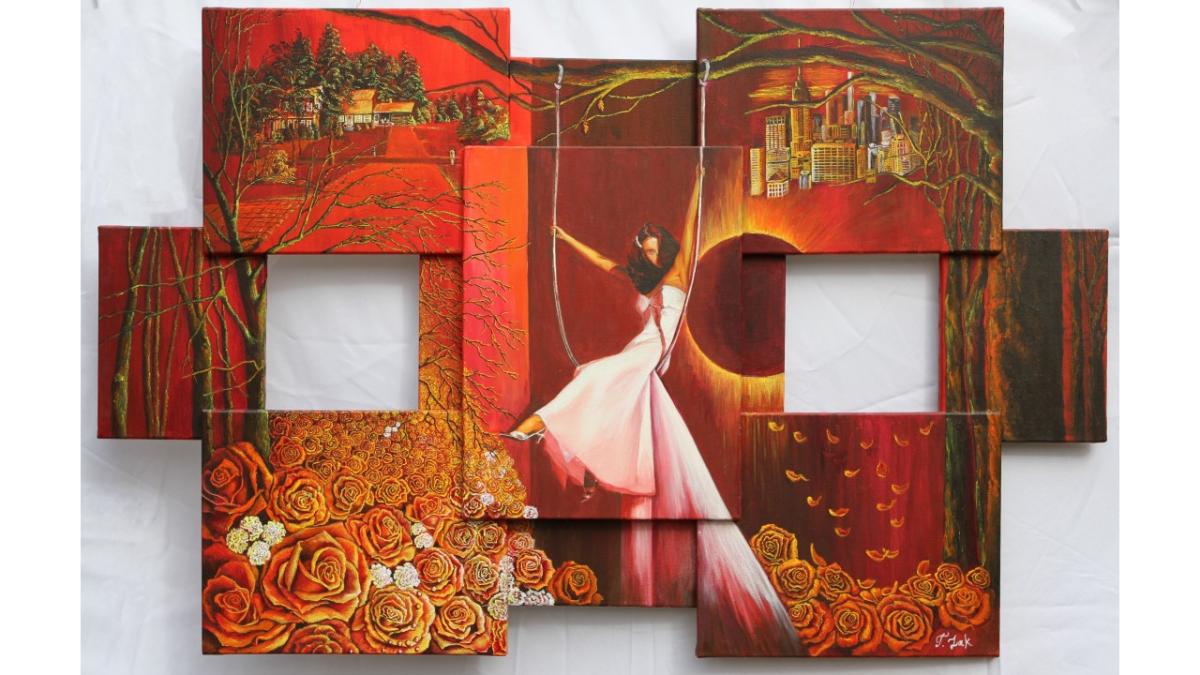
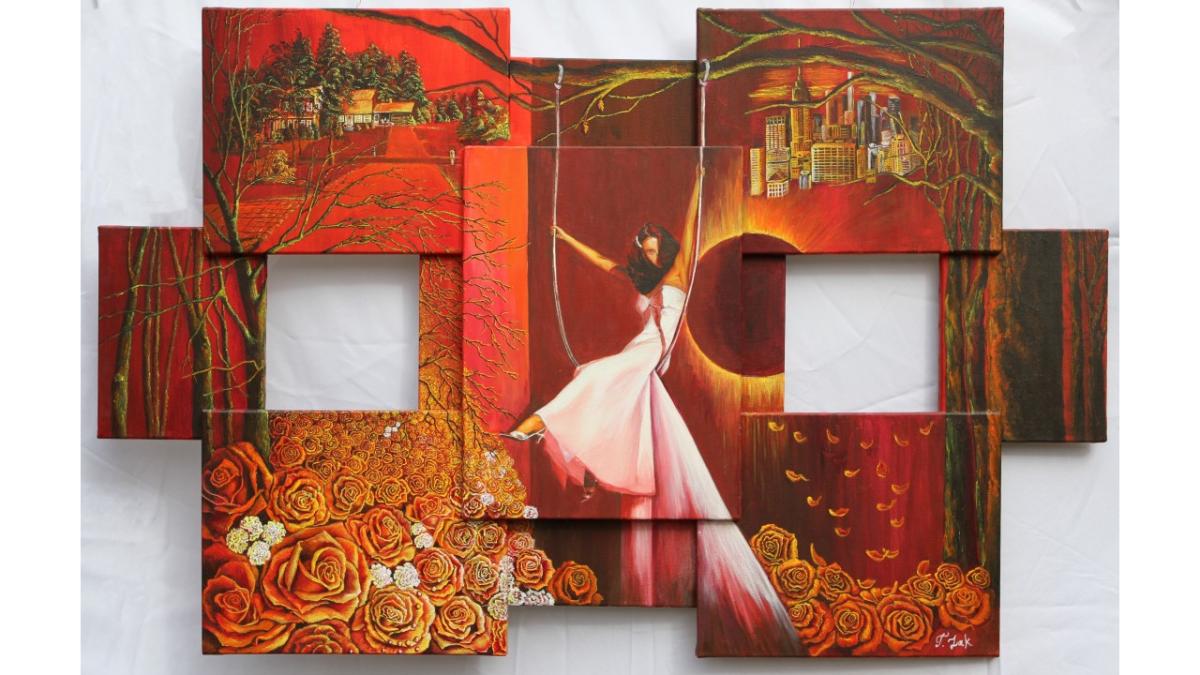
Swing of Life™ - Hand-Embellished Collector Edition Installation →
- Avoid touching the painted areas at all
- Never stack prints face-to-face
- Keep pets and small children away from low-hung pieces
How Long Do Acrylic Prints Last? Materials, Coatings, and Care
A well-cared-for acrylic print on canvas can last decades, often 50 years or more.
Pigment inks resist fading better than dye inks, canvas outlasts thin paper, and a clear coat or varnish shields the paint from dust, moisture, and UV light.
Care is the variable you control: a print in a cool, dry room out of direct sun will outlast one hung over a fireplace.
The honest caveat: hand-applied acrylic and gel medium age differently than the printed layer beneath them.
Acrylic Print Display and Storage: Framing, Environment, and More
Display and storage decisions decide how your print looks in ten years. The details below apply to hand-embellished pieces specifically, where a raised acrylic or gel layer reacts to its surroundings differently than a flat print.
Framing and Glazing Clearance
Framing: Use a mat or spacers so glazing never touches the paint. A quarter-inch clearance is a common minimum, deeper for heavy texture, glazing resting on a raised brushstroke can flatten the paint and trap condensation when room temperature shifts.
Choose acrylic glazing over glass for large pieces: lighter, less likely to shatter, easier on a frame holding stretched canvas. For UV protection, look for rated glazing, UV filtering slows fading rather than stopping it.
If you frame without glass, keep the piece away from high-traffic areas. Tatyana Zak's collector editions often hang unframed on stretched canvas, which suits textured work, but an unframed piece is more exposed to dust and touch, dust it more often and keep it above children and pets.
Environment: Humidity, Temperature, and Airflow
Environment: Aim for a stable room with moderate humidity, a common target is 40 to 50 percent relative humidity with minimal swings.
Keep temperature steady too. Room temperature is fine; rapid change causes damage, and a print on an exterior wall swings between warm afternoons and cold nights daily.
Avoid kitchens, bathrooms, and basements, cooking grease, shower steam, and damp air find their way into textured surfaces.
Storage Between Rotations
Storage: If you rotate your collection, store prints flat or upright in a clean, dry space. Wrap in acid-free tissue or a cotton sheet, never plastic, which traps moisture.
For a hand-embellished piece, add one step: dust lightly before storage, and if it was recently near a window or heat source, let it sit at room temperature for a day before wrapping, wrapping a piece still adjusting to a new temperature can trap condensation against the paint.
Care Differences by Support and Finish
The same advice does not apply to every print. A flat acrylic-panel print, a paper Giclée, and a textured canvas with hand-applied medium each need different handling.
- Acrylic panel: The rigid surface resists flexing, but it scratches easily and shows fingerprints. Clean with a dry microfiber cloth and avoid ammonia-based cleaners, which can cloud the panel.
- Paper Giclée: The most fragile of the three. Handle by the edges only, frame under glazing, and never clean with anything damp.
- Textured canvas with embellishment: The most forgiving to hang unframed, but the most sensitive to moisture and pressure. Follow the dry-first, spot-clean-only approach in the cleaning section above.
If unsure which category your piece falls into, check the artist's or gallery's care note before cleaning, advice for a flat acrylic print may not apply to a textured canvas, and vice versa.
| Situation | What to Do | What to Avoid |
|---|---|---|
| Hanging on a wall | Keep out of direct sun, stable room, 40-50% humidity | Radiators, vents, damp rooms, exterior walls |
| Framing | Use a mat or spacers with at least a quarter-inch of clearance | Glazing touching the paint |
| Storing | Acid-free wrap, flat or upright, board between stacked pieces | Plastic wrap, damp basements, face-to-face stacking |
| Moving | Gloves, support from the bottom | Bare hands, stacking face-to-face |
| Cleaning a textured piece | Dry microfiber first, spot-clean only | Damp cloths on heavy texture, sprays, solvents |
Fixing Common Problems: Stains, Scratches, and Loose Embellishment
Some problems you can handle at home. Others need a professional. Knowing the difference saves you from making damage worse.
Stains: A fresh, water-based mark may lift with a barely damp cloth and immediate drying.
Scratches: A light scratch on a glossy coating may be nearly invisible in normal light. Leave it alone.
If a piece arrives damaged, stop and photograph it before doing anything else.
Conclusion: Caring for Your Hand-Embellished Print
Caring for an acrylic embellished print is not complicated, just different from a flat poster.
When you buy a hand-embellished piece, you are collecting something closer to an original than a reproduction.
Treat the surface with the same care the artist put into it. Start with our Swing of Life™ collector edition or browse the full collection, and give your print the conditions it needs to last a lifetime.
Frequently Asked Questions
How long do acrylic prints last?
With proper care, acrylic embellished prints can last decades. The acrylic paint and gel medium used for embellishment are stable when kept away from direct sunlight, extreme heat, and excessive moisture. Display your print in a space with consistent temperature and indirect light, and clean it gently only when needed. Following the care steps in this guide helps preserve both the printed image and the hand-applied texture for many years.
How do you clean an acrylic-embellished print without damaging the texture?
Start by dusting with a dry, soft microfiber cloth using light pressure. For fingerprints or smudges, lightly dampen a clean cloth with water and wipe gently, then dry immediately with a separate dry cloth. Never rub the textured areas, never use paper towels, and avoid isopropyl alcohol or glass cleaner, which can break down the acrylic paint and gel medium. Always let the print fully dry before hanging or storing it.
Should you seal the painted details on an acrylic-embellished print?
No. Hand-embellished prints from a reputable artist are created with acrylic paint and gel medium that cure to a stable finish. Adding a sealant or clear coat yourself can alter the surface texture, change how light reflects off the painted areas, and may react with the existing medium. If you notice loose embellishment or flaking, contact the artist or a professional art conservator rather than applying a product on your own.
What should you avoid when cleaning an acrylic-embellished print?
Avoid isopropyl alcohol, glass cleaner, paper towels, and any abrasive cloth. Do not spray liquid directly onto the surface, do not scrub stubborn dust, and do not touch the painted texture with bare fingers. Skip dust-removing rollers with sticky adhesive, which can lift gel medium. Keep the print out of direct sunlight and away from humid rooms like bathrooms to prevent long-term damage to both the print surface and the acrylic embellishment.