Hand-Embellished vs Printed Art: Key Differences
Table of Contents
- Hand-Embellished vs Printed Art: Understanding the Core Difference
- What Is a Giclee Print and How It Relates to Hand-Embellished Work
- The Artistic Process: Embellishment vs Standard Reproduction
- Benefits of Hand-Embellished Canvas for Collectors
- Investment Value and Resale Potential
- Durability, Care, and Long-Term Quality
- Hand-Embellished vs Printed: Which Is Right for Your Space?
- Conclusion
- Frequently Asked Questions
Last Updated: September 25, 2026
Hand-Embellished vs Printed Art: Understanding the Core Difference
The gap between hand-embellished vs printed art isn't just about technique, it's about presence. A standard print sits flat on your wall. A hand-embellished piece invites you to look closer, to notice the texture, to feel the artist's intention in every brushstroke. At Tatyana Zak, we create work that bridges reproduction and original art, where each piece carries the artist's hand as part of its identity.
Hand-embellished art combines the precision of fine art printing with the tactile authenticity of original creation. Each piece begins as a giclee print, a museum-quality reproduction using archival pigments on premium canvas or fine art paper. Then the artist returns to that print with acrylic mediums, adding dimensional brushstrokes, texture, and visual depth that no standard reproduction can match. The result is a limited edition work that carries both the structure of a print and the presence of an original painting.
Printed art, by contrast, is a one-step process. The image transfers directly to canvas or paper through advanced printing technology. It's consistent, affordable, and accessible. But it remains flat, no texture, no variation, no evidence of human touch.
The choice between these two approaches depends on what you value: accessibility and consistency, or uniqueness and artistic presence. Below, we'll explore exactly how each works, what makes hand-embellished pieces cost more, and how to decide which belongs in your space.
What Is a Giclee Print and How It Relates to Hand-Embellished Work
A giclee print is a high-resolution digital reproduction created using professional inkjet technology and archival-quality materials. The term "giclee" comes from the French word for spray, referring to the fine mist of pigment applied to the surface. These prints use lightfast inks and premium substrates, canvas, fine art paper, or cotton blends, designed to last decades without fading or degradation.
Giclee printing represents a significant advancement over traditional lithography or offset printing. The technology captures fine detail, color accuracy, and subtle gradations that earlier reproduction methods couldn't achieve. For collectors seeking affordable access to artwork, giclee prints offer museum-quality results at a fraction of original art prices.
Hand-embellished prints begin with this giclee base. The artist then adds acrylic paint, creating peaks and valleys across the surface. This layering transforms a two-dimensional reproduction into something with genuine depth and tactile presence. The embellishment isn't random, it's intentional, guided by the artist's vision for how light should reflect, where emphasis should land, and how the piece should feel when you stand in front of it.
The relationship between giclee and hand-embellished work is collaborative. The print provides the foundational image with archival quality. The embellishment adds the human element that distinguishes each piece as unique. This hybrid approach makes hand-embellished editions more accessible than originals while offering significantly more presence than standard prints.
The Artistic Process: Embellishment vs Standard Reproduction
Standard reproduction is a mechanical process. Digital files transfer to canvas or paper through inkjet systems. The output is consistent, predictable, and identical across every edition. Speed matters. Cost matters. Variation is minimized.
Hand-embellishment is an artistic process. After the giclee print emerges, the artist examines the image and makes deliberate choices about where to add texture, depth, and dimensional brushstrokes. Each piece receives individual attention. No two editions are identical, the hand-painted details vary subtly from print to print, even within the same limited edition run.
This distinction matters for collectors. A standard print can be reproduced infinitely. A hand-embellished limited edition has a defined edition size, say 35 pieces, and once that run closes, no more are created. Each numbered print carries a certificate of authenticity documenting its place in the edition.
How Hand-Embellishment Adds Texture and Dimension
The embellishment process transforms a flat image into a three-dimensional object. Acrylic paint is applied selectively, not covering the entire surface, but layered strategically to create visual and tactile interest. Brushstrokes catch light differently depending on the angle you view the piece from. Peaks and valleys create shadow play that changes throughout the day as natural light shifts.

This dimensional quality serves multiple purposes. Aesthetically, it creates visual richness that photographs don't fully capture. The piece demands to be seen in person, a screen image can't convey the texture or the way light interacts with the embellished surface. Conceptually, the hand-painted details signal that this is a unique object, not a mass-produced copy. Practically, the texture adds durability, acrylic mediums bond with the canvas, protecting the underlying print from wear.
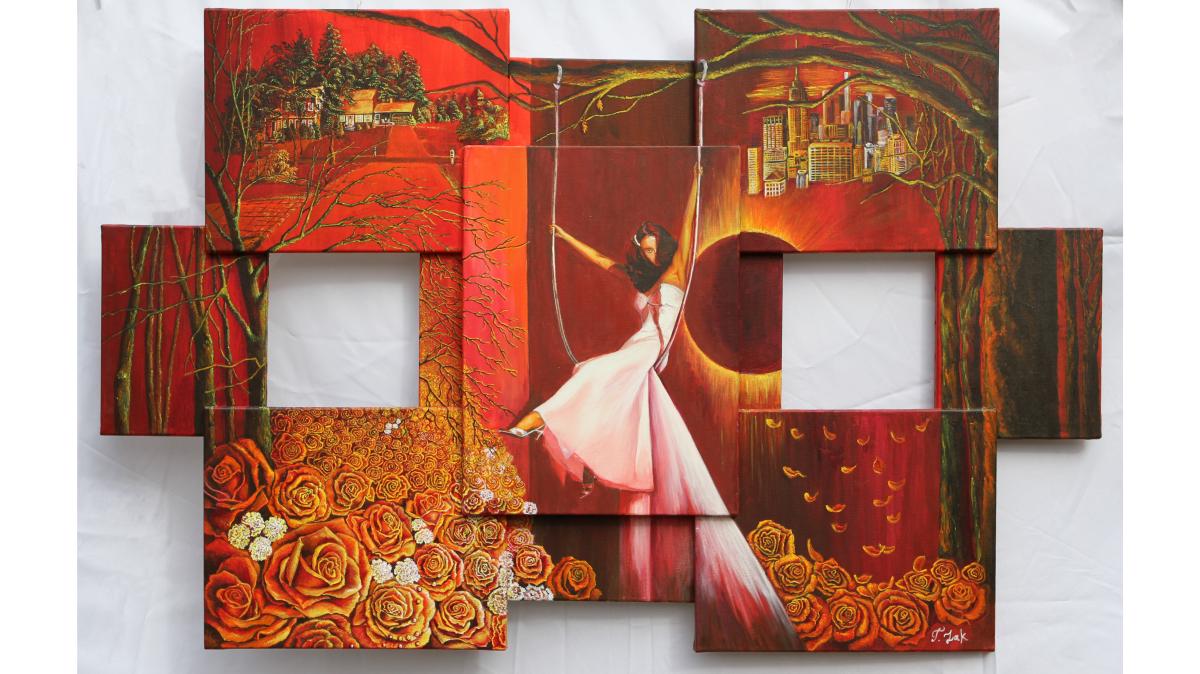
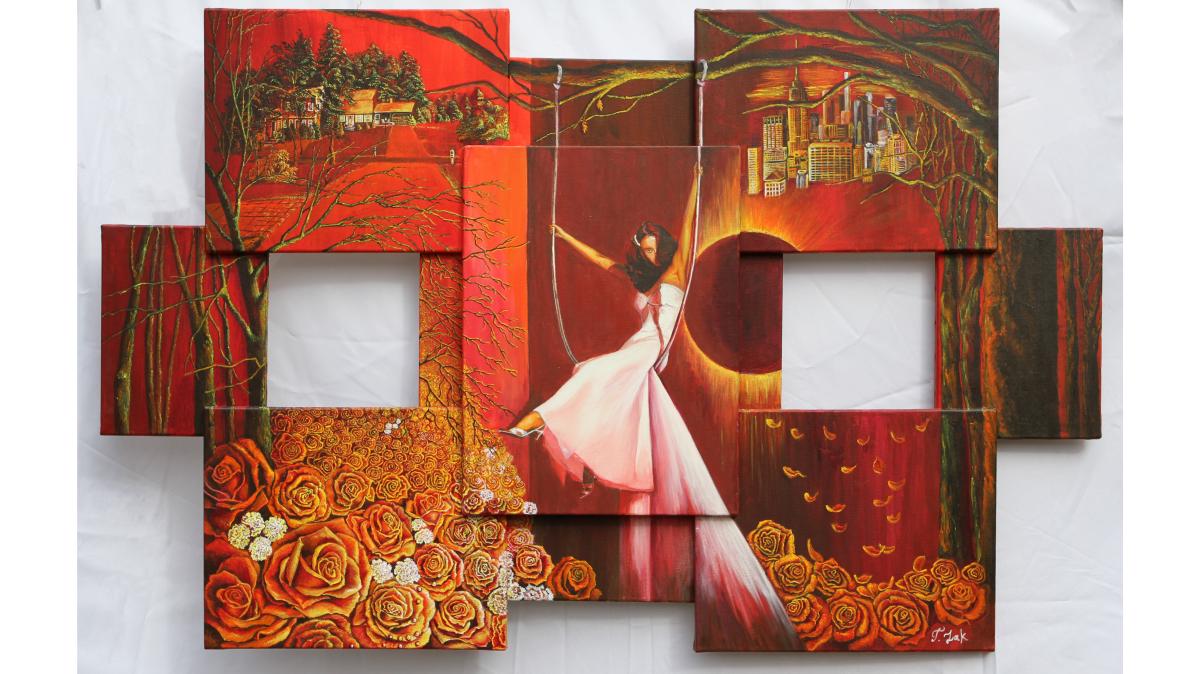
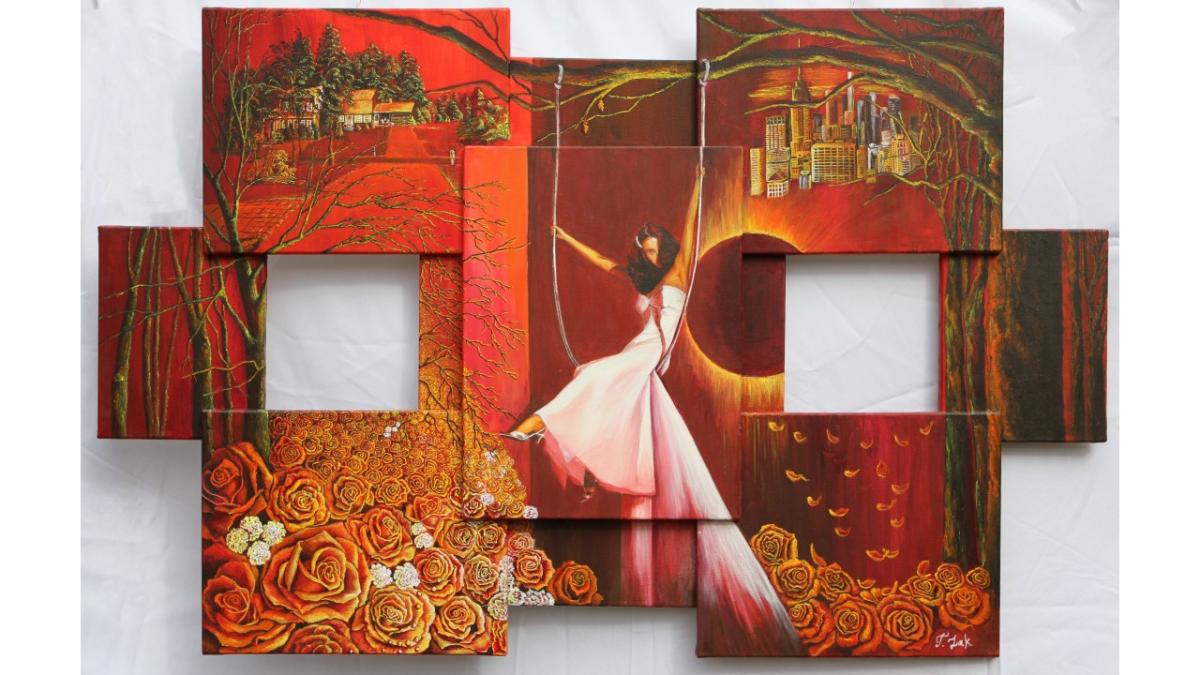
Swing of Life™ - Hand-Embellished →
The Role of Brush Strokes and Acrylic Mediums
Brush strokes are the signature of the embellishment process. Each stroke is deliberate, guided by the artist's interpretation of the image. Some strokes emphasize existing elements, deepening color in shadows, highlighting peaks of light. Others introduce new texture, creating movement or visual emphasis where the print alone is flat.
Acrylic mediums are chosen for their archival properties and working characteristics.
Benefits of Hand-Embellished Canvas for Collectors
Hand-embellished canvas offers distinct advantages for collectors who value uniqueness and artistic authenticity. First, each piece is genuinely one-of-a-kind within its edition. While the base image is consistent, the hand-painted details vary from print to print. This means your Bride on the Swing at 24" x 18" is subtly different from the next collector's version, the brushstrokes fall differently, the texture emphasizes different elements, the light plays across the surface in a way that's unique to your piece.

Investment Value and Resale Potential
Hand-embellished limited editions hold value differently than standard prints. A mass-produced print depreciates like any commodity, more supply means lower prices over time. A hand-embellished limited edition, by contrast, has a fixed supply. As demand grows and the edition size stays fixed, relative scarcity increases.
Durability, Care, and Long-Term Quality
Hand-embellished canvas prints built on archival foundations are durable when properly cared for. The giclee base uses fade-resistant pigments rated to last 100+ years without significant color shift. The acrylic embellishment adds a protective layer, the paint bonds with the canvas, actually reinforcing the surface against wear and environmental stress.
| Care Factor | Hand-Embellished Print | Standard Print |
|---|---|---|
| Fade Resistance | 100+ years (archival base + acrylic) | 100+ years (archival base) |
| Surface Durability | High (protective acrylic layer) | Medium (exposed pigment) |
| Dust Cleaning | Safe with soft cloth | Safe with soft cloth |
| Humidity Sensitivity | Moderate (acrylic stable) | Moderate (standard canvas) |
| Handling Resilience | High (durable surface) | Medium (vulnerable to touch) |
| Ideal Display | Away from direct sun, stable climate | Away from direct sun, stable climate |
Hand-Embellished vs Printed: Which Is Right for Your Space?
The choice depends on what you prioritize: uniqueness and presence, or consistency and affordability.
Conclusion
Hand-embellished vs printed art represents a fundamental choice about what you want from the work hanging on your wall. Standard prints offer accessibility and consistency. Hand-embellished pieces offer uniqueness, presence, and the tactile authenticity of artist involvement. The real difference isn't just technical, it's experiential.
Frequently Asked Questions
What does hand-embellished mean in the context of fine art prints?
Hand-embellished art means an artist applies additional acrylic paint, brushstrokes, or other mediums directly onto a printed canvas or paper after it has been produced. This transforms a reproduction into a unique, textured piece where no two examples are identical. The artist's hand becomes part of the work, adding peaks, valleys, and visual depth that standard prints lack. This bridges the gap between affordable reproduction and original artwork, creating pieces with both structure and presence.
How does hand-embellished art differ from a standard giclée print?
A giclée print is a high-quality digital reproduction printed onto canvas or fine art paper using inkjet technology. It captures color and detail accurately but remains flat and uniform across all copies. Hand-embellished canvas prints begin as giclée prints but are then individually enhanced with acrylic paint by the artist, adding texture, dimension, and light reflection. This manual addition makes each piece one-of-a-kind and gives it the character and presence closer to original artwork, while maintaining the affordability and accessibility of a print.
Does hand-embellished art hold more value than a standard print?
Hand-embellished pieces, being individually hand-painted, signed, and numbered in limited editions, offer a unique collector's experience. The combination of limited edition status, the artist's direct involvement, and the tactile, dimensional quality creates a distinct appeal that flat prints cannot match.
What materials are typically used to embellish art prints?
Acrylic paint is the primary medium used in hand-embellishment, applied with brushes to add texture, depth, and dimension to canvas or paper prints. Acrylic offers archival quality, dries quickly, and adheres well to printed surfaces. Some artists also use varnish or other protective coatings to enhance light reflection and preserve the work. The choice of acrylic ensures durability and longevity, making hand-embellished pieces suitable for long-term display and collection without fear of deterioration.
Is hand-embellished art considered an original piece?
Hand-embellished art occupies a unique position between reproduction and original. While it begins as a printed reproduction, the individual hand-painting by the artist transforms it into a one-of-a-kind work. Each piece is signed, numbered, and comes with a certificate of authenticity. It is not considered a true original in the way a painting created entirely by hand would be, but it carries far more of the artist's direct involvement and uniqueness than a standard print. For collectors seeking the character of original art at a more accessible price point, hand-embellished pieces offer authentic artistic value.