Art Insurance Basics for New Collectors
Last Updated: November 4, 2026
Quick Summary
Art insurance is a specialized policy that protects fine art and collectibles against damage, theft, and loss, typically on an all-risks basis rather than named perils only. Unlike homeowners coverage, it insures at agreed value, schedules pieces individually, and often follows the art during transit and loans.
- Homeowners policies usually cap fine art coverage at a modest sublimit that applies across the entire collection.
- Specialized art insurance insures at agreed value rather than depreciated market value.
- You'll need a professional appraisal before most insurers will schedule a high-value piece.
- Build a proof of ownership file with receipts, certificates, photos, appraisals, and a cloud backup.
- Confirm in writing who covers a piece during transit handoff from crate to wall.
Table of Contents
- What Art Insurance Actually Covers
- Homeowners Insurance vs Specialized Art Insurance
- What Fine Art Insurance Cost Looks Like for a New Collector
- How to Get Art Appraised for Insurance
- Building a Proof of Ownership File That Holds Up
- Risk Management at Home: Climate, Security, and Transit
- Protecting Digital Art, NFTs, and Hand-Embellished Editions
- Insuring Your Next Acquisition from the Studio
- Frequently Asked Questions
What Art Insurance Actually Covers
Art insurance is a specialized policy that protects fine art, collectibles, and other high-value objects against damage, theft, and loss. For new collectors, the answer often surprises: your standard homeowners policy was never built to protect a real collection. A dedicated fine art policy typically works on an all-risks basis, meaning it covers losses unless the policy explicitly excludes them, rather than only paying out for named events like fire or theft.
The Coverage Types That Matter Most
The core protections you'll see in a standard fine art policy fall into a few categories:
- Theft and burglary, including break-ins and, in many policies, mysterious disappearance
- Fire, smoke, and water damage, which often includes burst pipes and sprinkler leaks
- Transit coverage, for pieces moving between a gallery, a framer, or your home
- Accidental damage, such as a knocked-over sculpture or a torn canvas
- Natural disasters, though flood and earthquake coverage often requires a separate rider
Some policies also cover restoration costs after a covered loss, which is worth checking when you review a policy.
Homeowners Insurance vs Specialized Art Insurance
Homeowners insurance is not a substitute for specialized art insurance, and the gap between them is wider than most new collectors realize. A standard homeowners policy usually caps coverage for fine art at a modest sublimit, and that limit applies across your entire collection, not per piece.
Specialized art insurance differs in three key ways. It insures at agreed value rather than depreciated market value, so you and the insurer settle on a dollar figure up front. It covers a broader list of risks under all-risks coverage. And it follows the art, meaning transit and loans to exhibitions are often included rather than excluded.
Here is how a standard homeowners policy compares with a specialized fine art policy.
| Feature | Homeowners Insurance | Specialized Art Insurance |
|---|---|---|
| Coverage limit | Modest sublimit across entire collection | Scheduled per piece |
| Perils covered | Named perils only | All-risks unless excluded |
| Valuation | Depreciated market value | Agreed value set up front |
| Transit and loans | Often excluded | Often included, follows the art |
What Fine Art Insurance Cost Looks Like for a New Collector
Fine art insurance cost for a new collector usually runs a small fraction of the collection's total value each year, though the exact premium depends on where you live, how the art is displayed, and the security in place. Insurers underwrite based on risk, so a piece hung in a climate-controlled, alarmed home costs less to insure than the same piece in a ground-floor apartment without a security system.
A few factors move your premium most:
- Total scheduled value of the collection
- Location and security, including alarms, locks, and building access
- Display conditions, such as sunlight exposure and humidity control
- Transit frequency, if you lend or ship pieces regularly
- Deductible, which you can raise to lower the premium
Before you commit to premiums, it helps to think about whether the art is an investment at all. Our guide on whether original art is worth the investment walks through how collectors think about value over time.
How to Get Art Appraised for Insurance
An appraisal for insurance purposes is a written valuation that establishes what your piece is worth and why, prepared by a qualified appraiser using comparable sales and condition reports. You'll need one before most insurers will schedule a high-value piece, and you'll want to update it every few years or after any major market shift.
The appraisal report should include the artist's name, title, medium, dimensions, date of creation, provenance, condition, and a valuation methodology. If you're buying a print and aren't certain what you have, our guide on how to spot fake art prints covers the verification steps that protect an appraisal from later challenge.
DIY Valuation vs. Professional Appraisal: When Each Is Acceptable
Most guides mention appraisals but skip the practical question new collectors actually face: can you value a piece yourself, or do you need to pay a professional? The answer depends on three triggers.
A professional appraisal costs more but holds up in a claim. A DIY valuation using auction records and gallery comparables is cheaper but weaker if the insurer disputes a number.
Watch out: a DIY valuation that overstates value can be treated as misrepresentation at claim time, giving the insurer grounds to reduce or deny the payout, so document your comparables and be conservative.
Building a Proof of Ownership File That Holds Up
A proof of ownership file is a documented record that ties each piece in your collection to you, combining purchase receipts, certificates of authenticity, appraisal reports, and photographs into one organized archive. Insurers commonly ask for it during underwriting and again during a claim.
Build the file in layers:
- Purchase documentation for every piece, including the invoice and payment record
- Certificates of authenticity and any signed provenance documents from the artist or gallery
- High-resolution photographs of the front, back, signature, and any framing or mounting hardware
- Appraisal reports, kept current
- A digital backup stored in the cloud, not only on a home computer
Keep physical documents in acid-free folders and a fireproof safe. Our guide to archival storage solutions for art collectors covers the materials that keep paper records and small works from degrading over time.
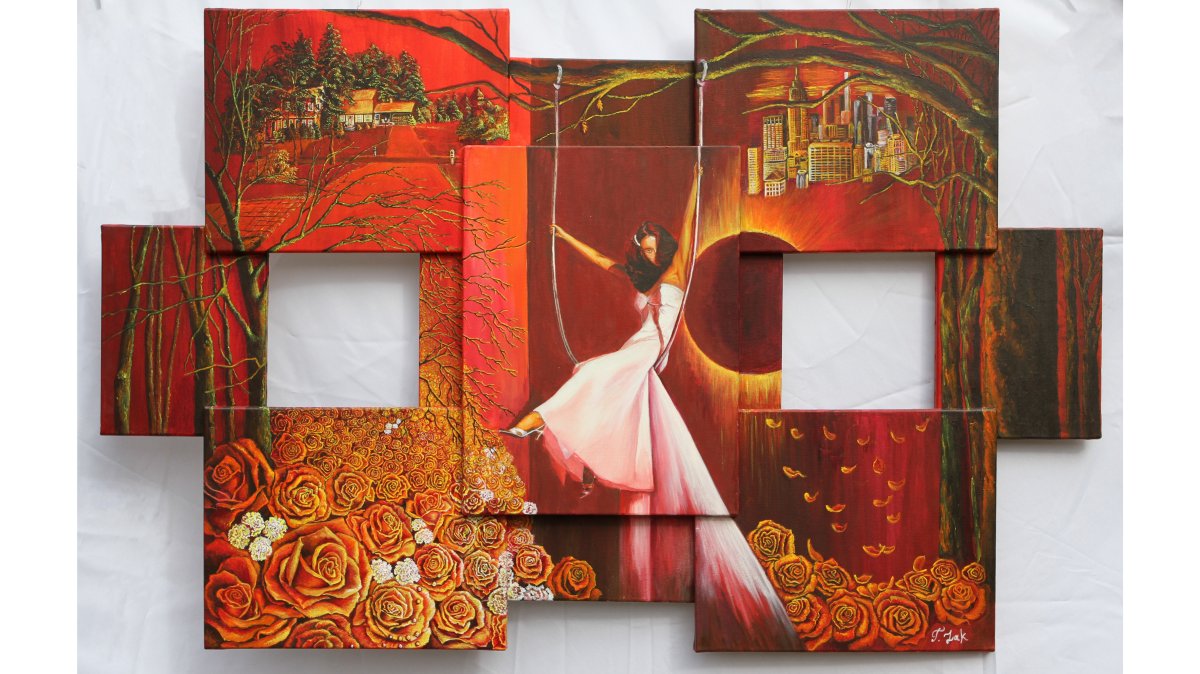
Swing of Life™- 42" x 66" Original Acrylic on Canvas Painting Installation →
Risk Management at Home: Climate, Security, and Transit
Loss prevention at home comes down to controlling three variables: climate, access, and movement. Art dislikes rapid swings in temperature and humidity more than it dislikes any single condition, so aim for stable indoor conditions and keep pieces off exterior walls and away from direct sun. UV-filtering glass on framed works is a cheap upgrade that slows fading considerably.
The Climate Thresholds Insurers Actually Look For
Fine art policies vary, but underwriters generally look for stable indoor conditions rather than wide swings in temperature and humidity. The key word is stability: a room that swings widely between day and night, or between seasons, stresses works more than a steady condition slightly outside the ideal band.
Practical measures that show up favorably in underwriting include:
- A calibrated hygrometer and thermometer in each room where art hangs, with readings you can show on request
- A whole-home or room-level humidifier and dehumidifier to hold the band through seasonal shifts
- Keeping works off exterior walls, away from radiators, vents, and direct sun
- UV-filtering glazing on framed works, which slows fading and is inexpensive relative to the art
For higher-value pieces, some insurers require or reward climate-controlled storage when works are not on display. That typically means a dedicated room or vault with monitored temperature and humidity, backup power for the climate equipment, and a log of conditions.
Security Measures That Affect Underwriting
Security measures that insurers look for include deadbolt locks, a monitored alarm, and motion-activated lighting near entry points. For higher-value pieces, a wall-mounted security hanger or a locked vitrine adds a layer that shows up favorably in underwriting. Some insurers may require alarm monitoring rather than an audible alarm alone, so confirm the requirement with your carrier.
Transit: Where Collections Take the Most Avoidable Damage
Transit is where collections take the most avoidable damage. Shipping damage can result from inadequate crating or a carrier without fine art experience. If a new piece is coming to you, read up on how to safely ship original artwork to your home before you approve a carrier, and confirm the piece is insured for the full transit window, not just while it sits in the truck.
Watch out: a gap between the seller's transit coverage and your own policy can leave a piece uninsured during the handoff, so confirm in writing who covers the work at each stage, from crate to wall.
Protecting Digital Art, NFTs, and Hand-Embellished Editions
Digital art and NFTs sit in an awkward spot for traditional insurers, and most standard fine art policies don't address them clearly. The practical approach is to ask your insurer directly whether blockchain-based works and their associated wallets are covered, and to document the wallet, transaction history, and any smart contract terms as part of your proof-of-ownership file.
Hand-embellished editions deserve a mention because they blur the line between print and original. A hand-enhanced collector edition, where the artist adds acrylic paint to each piece individually, isn't a reproduction in the ordinary sense. Our first-time collector's guide to buying original art covers buying original art.
Insuring Your Next Acquisition from the Studio
Insuring a new acquisition starts before the piece arrives, not after it's on the wall. The moment you commit to a purchase, confirm three things: that transit is covered, that the piece will be added to your policy or scheduled separately, and that the certificate and appraisal paperwork are in hand before the crate is opened.
For a significant original, ask the studio about provenance documentation and insured shipping up front. Our original installation, Swing of Life™, is available by private studio inquiry with a certificate of authenticity, provenance documentation, and insured shipping and delivery arranged individually. If you're starting smaller, a hand-enhanced collector edition like Early Roses arrives signed, numbered, and certified, so it slots into your inventory file without guesswork.


The real challenge for new collectors isn't finding coverage. It's building the habit of documentation from the very first purchase, so that every piece you bring home is protected the day it arrives.
Frequently Asked Questions
Does my standard homeowners insurance cover fine art?
Usually only partially. Homeowners policies often cap coverage for fine art at a sublimit, and some exclude certain losses, so check your policy's terms. A single hand-embellished collector edition from Tatyana Zak's Swing of Life™ Collection at $999 could approach that cap on its own. If your collection is worth more than the sublimit, a scheduled or standalone art policy closes the gap. Ask your agent for the exact sublimit in writing before you assume you are covered.
How is the value of fine art determined for insurance purposes?
Insurers rely on an appraisal report that documents market value, provenance, and condition. For living artists, the appraiser reviews recent sale prices, gallery pricing, and edition size. Agreed value policies lock in a stated amount at underwriting, while actual cash value policies pay replacement cost minus depreciation. Keep your appraisal current, since most carriers recommend updating every three to five years or after a significant purchase.
Do I need a professional appraisal to insure my art?
Not always. Some carriers accept a purchase receipt and certificate of authenticity for lower-value pieces. For higher-value pieces, carriers may request a formal appraisal from an independent appraiser. A middle path works well for new collectors: start with receipts, signed certificates, and good photographs, then commission a professional appraisal once the collection grows or a single piece carries meaningful value.
What specific risks does fine art insurance cover?
A broad all-risks policy typically covers theft, fire, water damage, accidental breakage, transit and shipping damage, and mysterious disappearance. Many policies also pay for restoration by a qualified art conservator after a covered loss. Standard exclusions include gradual deterioration, inherent vice, and damage from neglected climate control. Review the exclusions list carefully, because that is where most claim disputes begin.
How much does fine art insurance typically cost?
Premiums generally run a small fraction of the collection's insured value, and the exact rate depends on where the art lives, how it is secured, and the carrier's underwriting. A collection kept in a climate-controlled home with a monitored alarm prices lower than one in a high-traffic office. Ask for quotes on both a blanket policy and scheduled property so you can see which fits your collection's size and how often pieces move.
Are hand-embellished limited edition prints insured differently from originals?
They can be. Insurers may classify hand-embellished editions differently from unique originals, so ask your carrier how they treat them. Because every Tatyana Zak collector edition is individually hand-enhanced with acrylic and signed and numbered, document the edition number and the hand-painted details in your inventory. That record supports the agreed value if you ever file a claim.