How to Spot Fake Art Prints?
Last Updated: October 25, 2026
Quick Summary
To spot fake art prints, examine the surface texture for authentic brushstrokes and hand-embellishment, verify the signature matches authenticated examples of the artist's work, and confirm edition numbers exist in official records. Check for red flags like vague descriptions, missing certificates of authenticity, and sellers who avoid questions about production details.
- Genuine hand-embellished prints show selective acrylic paint layered over a flat printed base with clean, intentional brushwork transitions.
- Printed brushstrokes reveal halftone dot patterns under magnification, while real brushstrokes display actual paint texture and variation.
- Legitimate limited editions always include specific edition numbers like 5/250, artist proof designations, and verifiable records with galleries or the artist.
- Authentic certificates of authenticity contain edition information, dimensions, certificate number, artist signature, and issuing organization details.
- Forgers use predictable techniques including mass-produced prints sold as hand-embellished, photocopied signatures, and counterfeit certificates lacking verification details.
Table of Contents
- Why Spotting Fake Art Prints Matters to Collectors
- How to Tell If Art Is a Print or Original Artwork
- Fake Art Print Signs to Watch For
- Inspecting Signatures, Edition Numbers, and Print Details
- How to Authenticate a Limited Edition Print
- Art Print Certificate of Authenticity: What It Means
- Reviewing Provenance and Ownership History
- What to Do If You Suspect a Fake Art Print
- Frequently Asked Questions
Why Spotting Fake Art Prints Matters to Collectors
Counterfeit art prints flood the market. They damage your investment and undermine the artist's work.
Collectors invest thousands in limited edition prints expecting authenticity. A fake destroys that value instantly. Beyond money, buying counterfeit art supports fraud networks and cheats the original artist out of recognition and income.
The difference between a genuine limited edition and a clever forgery often comes down to small details most buyers miss.
How to Tell If Art Is a Print or Original Artwork
The first question collectors ask: is this a print at all, or an original painting? Understanding this distinction matters because it changes how you authenticate and what you should expect to pay.
Surface texture and layering differences
An original painting has physical paint layers built up over time. Run your finger gently across the surface (with permission).
A standard print is flat. The image sits on paper or canvas with no raised texture. But hand-embellished prints blur this line completely.
Here's what sets hand-embellished prints apart:
- Original paintings: Thick paint application, visible brushstrokes, uneven surface
- Standard prints: Completely flat, uniform surface, no texture variation
- Hand-embellished prints: Flat base print with selective acrylic paint added by hand, creating texture only in certain areas
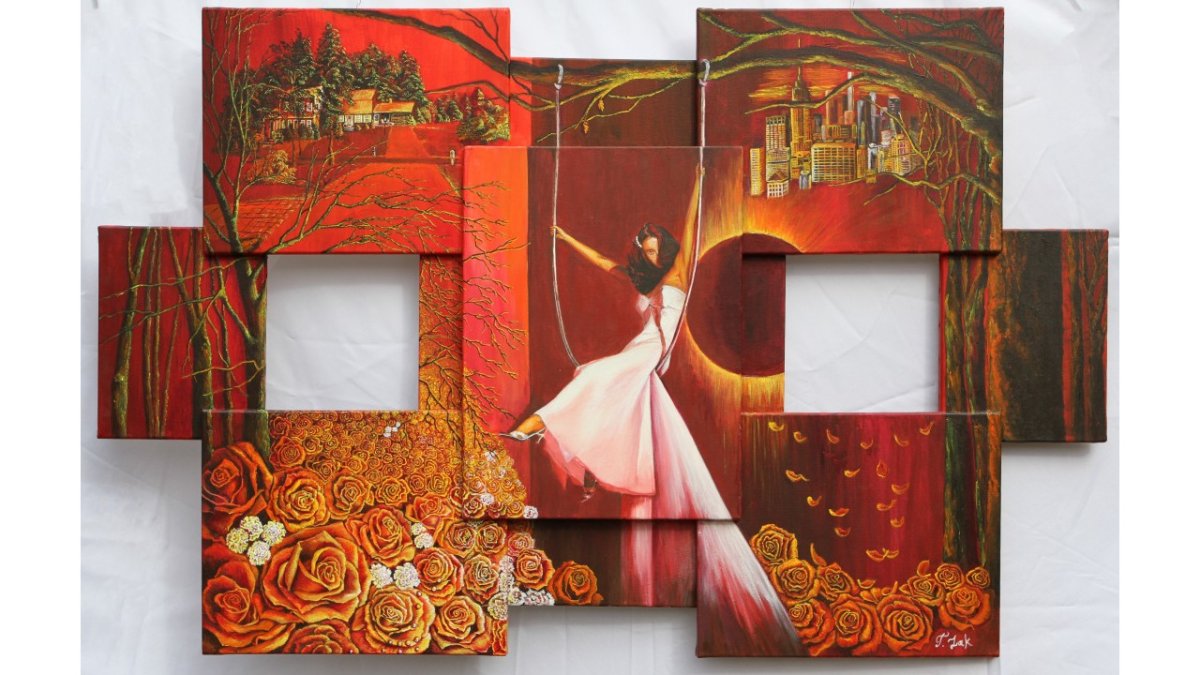
When you examine a hand-embellished piece like those from Tatyana Zak, you'll notice acrylic paint layered selectively over the printed base.
Brushstrokes and hand-embellished details
Look closely at the brushwork. Original paintings show consistent hand technique throughout. The artist's style appears everywhere.
Hand-embellished prints show brushstrokes only in specific areas. The rest of the image remains the flat print base.
Forgeries often try to fake this. They'll add random brushstrokes to make a cheap print seem hand-enhanced.
Examine the edges of painted areas. In genuine hand-embellished work, the transition from print to paint is clean but natural.
Fake Art Print Signs to Watch For
Red flags exist at every stage of the buying process. Learn to recognize them before you commit money.
Red flags in seller behavior and listings
The seller's practices reveal a lot. Legitimate artists and galleries operate transparently. Scammers hide details.
Watch for these warning signs:
- Vague descriptions: Seller won't specify if it's a print, original, or hand-embellished. They use phrases like "artwork" without clarifying the format.
- No edition information: Authentic limited editions always state the edition number and total edition size. "Only one available" doesn't mean limited edition, it might mean one fake they made.
- Pressure to buy quickly: "This won't last long" or "Multiple buyers interested" creates urgency. Legitimate sellers let you inspect and verify.
Common forgery techniques and how to spot them
Forgers use predictable methods. Knowing these techniques helps you spot fakes immediately.
Technique 1: Mass-produced print sold as hand-embellished
The scammer buys cheap bulk prints and claims they're hand-enhanced.
How to spot it: Examine multiple areas.
Technique 2: Printed brushstrokes
Modern printers can print images that look like brushstrokes.
How to spot it: Use a magnifier.
Technique 3: Fake edition numbers and signatures
Scammers photocopy signatures or print fake edition numbers.
Technique 4: Counterfeit certificates
A forger creates a fake certificate of authenticity.
| Forgery Technique | How It Works | How to Spot It |
|---|---|---|
| Mass-produced print sold as hand-embellished | Scammer buys cheap bulk prints and claims they are hand-enhanced | Enhancement looks random or minimal, not consistent with artistic vision |
| Printed brushstrokes | Modern printers create images that look like brushstrokes | Magnifier reveals halftone dot patterns; real brushstrokes show paint texture |
| Fake edition numbers and signatures | Scammers photocopy signatures or print fake edition numbers | Printed signatures look flat and uniform; real signatures show natural line variation |
| Counterfeit certificates | Forger creates fake certificate of authenticity lacking verification details | Legitimate certificates include edition number, dimensions, date, and unique certificate number |
Inspecting Signatures, Edition Numbers, and Print Details
The details authenticate a piece. Spend time examining them carefully.
What authentic signatures and inscriptions reveal
An artist's signature is a personal mark. It should match their authenticated work.
Start by researching the artist's signature. How does the artist typically sign? Some sign in the corner, others on the back. Some use full names, others initials.
Compare the signature on your print to verified examples. Look for:
- Line quality: Real signatures show natural variation in line weight. Printed or photocopied signatures look uniform and flat.
- Ink consistency: The signature ink should match the print's ink or be clearly hand-applied. Mismatched inks suggest forgery.
- Pressure variation: Handwritten signatures show natural pressure changes. Printed signatures don't.
Inscriptions tell stories too. Some artists add dates, edition numbers, or personal notes. These should be legible and consistent with the artist's documented practice.
Understanding limited edition, artist proof, and open edition terminology
Edition terminology matters because it affects value and authenticity.
Limited edition: The artist produces exactly X copies. Once sold out, no more are made.
Artist proof (AP): The artist keeps a small number of prints for personal use or gifting.
Swing of Life™ - Hand-Embellished Collector Edition Installation →
Open edition: No limit on production. The artist can print as many as they want, whenever they want.
Forgers often mislabel edition types. They'll sell an open edition print as "limited" or invent fake edition numbers.
How to Authenticate a Limited Edition Print
Authentication requires research and comparison. Follow these steps systematically.
Researching the artist and cross-referencing records
Start with the artist's official channels. Visit their website, social media, and gallery representations. Legitimate artists maintain records of their editions.
Look for:
- Edition catalogs: Many artists publish complete lists of their works with edition numbers, sizes, and dates.
- Gallery records: Galleries representing the artist keep authentication records. Contact them directly.
- Artist statements: The artist's documentation should match your print's details.
Cross-reference every detail. Limited Edition Prints vs Mass Produced: What Collectors Need to Know helps you understand how authentic limited editions differ from mass-produced fakes. Does the edition number exist in official records?
Contact the artist or their representative directly if you're uncertain.
Verifying print dimensions and production details
Dimensions matter because they're specific and verifiable. A fake often gets this wrong.
Measure your print carefully. Include the paper or canvas size, not just the image area. Compare to official specifications. Even small discrepancies (half an inch) suggest a problem.
Check the production details:
- Paper or canvas type: What material is the print on? Official documentation should specify.
- Printing process: Is it inkjet, lithography, screen printing, or something else? The process affects how the print looks and feels.
- Ink type: Some artists use specific inks for color accuracy. Verify this matches.
Production details aren't random. They're chosen deliberately by the artist to achieve a specific look and feel. Forgers often skip this step or get it wrong.
Art Print Certificate of Authenticity: What It Means
A certificate of authenticity (COA) is documentation, not a guarantee. It's only as good as the source issuing it.
How to evaluate and verify a certificate
A legitimate COA includes specific information:
- Artist name and signature: The artist or their authorized representative signed it.
- Artwork title and date: Exact identification of the piece.
- Edition information: Number and total edition size (e.g., "5/250").
- Dimensions: Exact measurements of the print.
Vague certificates lack these details. "This certifies that this artwork is authentic" without specifics is worthless.
Verify the certificate through the issuing source. How to Care for Acrylic Embellished Prints: A Collector's Guide provides guidance on preserving authenticated hand-embellished and acrylic-enhanced pieces. If it claims to come from a gallery, contact the gallery directly. If it's from an authentication service, check that service's credentials.
When certificates alone are not enough
A certificate is only one piece of evidence. Don't rely on it exclusively.
A forger can create a convincing certificate. It looks official but lacks verification. That's why you inspect the physical print too. The certificate supports your findings, but the print itself must authenticate.
Use the certificate as one data point among many:
- Does the physical print match the certificate's description?
- Does the signature match authenticated examples?
- Does the edition number exist in official records?
- Does the seller's story check out?
When all pieces align, you have confidence. When something contradicts, investigate further before buying.
Reviewing Provenance and Ownership History
Provenance is the documented history of who owned the print and when. Strong provenance builds confidence in authenticity.
Ask the seller: Where did this print come from? Who owned it before? Can they document this history?
Legitimate sellers maintain records. They know the print's journey. Forgers often can't explain the history or give vague answers.
Strong provenance includes:
- Original purchase receipt: When and where was it bought?
- Previous owner information: Who owned it? Can they be contacted?
- Gallery or exhibition history: Was it displayed anywhere notable?
- Condition history: How has it been stored and maintained?
Gaps in provenance don't automatically mean fake, but they warrant caution.
What to Do If You Suspect a Fake Art Print
You've inspected the print and something feels wrong. Here's your action plan.
Step 1: Stop the transaction. Don't complete the purchase.
Step 2: Document everything. Take detailed photos of the print, signature, edition number, and certificate.
Step 3: Research the artist. Verify the piece through official channels.
Step 4: Get a professional opinion. If you've already purchased, consider professional authentication.
Step 7: Learn from it. Use this experience to strengthen your authentication skills.
Spotting fake art prints protects your collection and supports authentic artists. When you shop hand-embellished limited edition prints, you're investing in work where every piece is individually crafted with care.

Frequently Asked Questions
How can you tell if art is a print or an original?
Original artwork typically has visible brushstrokes, texture variations, and uneven paint application that create depth. Prints appear flat and uniform under magnification. Check for hand-embellished details like acrylic layering or paint that extends beyond the printed image. Authentic limited edition prints like those from Tatyana Zak combine a printed base with individually applied acrylic enhancements, creating texture that distinguishes them from mass-produced reproductions.
What details should you check to authenticate an art print?
Examine the signature carefully, it should match reference examples and be consistent with the artist's documented work. Verify the edition number format and size on the certificate. Inspect the paper or canvas for quality and age-appropriate condition. Check for halftone dots under magnification (a sign of commercial printing). Research the artist's production records and cross-reference the edition number. A genuine limited edition print will have consistent details across all verification points.
Can a certificate of authenticity alone prove an art print is genuine?
No. While a certificate of authenticity is important, it should be one part of a complete verification process. Forged certificates exist, so verify the issuing body's legitimacy and cross-check the certificate number with official records when possible. Combine certificate review with signature inspection, edition number verification, and provenance research. Reputable artists like Tatyana Zak include certificates with hand-embellished pieces, but always inspect the physical print itself to confirm authenticity.
What are the most common red flags when buying art prints online?
Watch for sellers offering multiple identical 'limited edition' pieces of the same number, prices significantly below market value, vague descriptions of the printing process, no certificate of authenticity, and reluctance to provide detailed photos or artist information. Be cautious of listings from unfamiliar sellers with no verifiable history. Authentic hand-embellished limited edition prints like Tatyana Zak's come with clear documentation, artist signatures, and edition details that sellers should explain openly.