Is Original Art Worth the Investment? A Collector's Guide
Table of Contents
- Is Original Art a Good Investment? The Honest Answer
- Original Art vs Prints: What You're Really Paying For
- How to Buy Original Art Without Overpaying
- How to Verify Art Authenticity Before You Pay
- The Real Costs of Owning Art: Total Cost of Ownership and Net Returns
- Art vs Stocks, Bonds, and Real Estate: A Realistic Comparison
- Liquidity, Resale, and Planning Your Exit
- Frequently Asked Questions
Last Updated: October 17, 2026
Is Original Art a Good Investment? The Honest Answer
Is original art worth the investment? The honest answer is that it depends on what you want back. Original art is a real, physical asset with resale value, but it rarely behaves like a stock or a bond. At Tatyana Zak, we tell collectors the same thing: buy the work because you want to live with it, then treat any financial return as a bonus.
That framing matters because the art market moves on taste, not spreadsheets. Demand shifts, galleries close, and an artist's reputation can rise or stall. So the question is not "will this go up?" It is "what am I getting for my money?"
Here is what the money actually buys:
- Aesthetic value: daily emotional impact you cannot get from a screen.
- A tangible asset: something you own outright, with no ticker.
- A story: provenance, an artist's hand, and a piece that is one of a kind.
Original Art vs Prints: What You're Really Paying For
The gap between an original and a print comes down to scarcity and the artist's hand. An original is one of a kind. A print is a reproduction, even when it is beautifully made.
That distinction drives the price. With an original, you pay for the artist's time, materials like artist-quality paints, and the fact that no one else owns that exact piece. With a print, you pay for printing inks and paper, plus the right to reproduce the image.
Hand-embellished prints sit in between. Each one starts as a print, then the artist adds acrylic paint by hand. No two pieces are identical, so you get a unique collector's edition without the full original price tag.
What most buyers miss is that the label matters for resale. Prints hold little resale value on their own. Originals and hand-finished editions carry more, because collectors are buying scarcity, not decoration.
How to Buy Original Art Without Overpaying
Buying your first artwork gets easier when you set a budget before you fall in love with a piece. Decide what you can spend, then shop inside that number. This one habit prevents most overpaying.
A practical approach looks like this:
- Set a hard budget and include framing and shipping.
- Follow a few artists for months before you buy, and watch how their work develops.
- Ask the gallery or artist directly about pricing, editions, and what is included.
- Compare the price to the artist's other work, not to random pieces online.
- Buy from a source that provides paperwork, not just a receipt.
Affordability is relative. A smaller original illustration can cost far less than a large canvas, and it still gives you a genuine piece of the artist's hand. At Tatyana Zak, our collection includes original works at very different price points, so first-time buyers are not forced into the deep end.
How to Verify Art Authenticity Before You Pay
Authenticity is the part buyers skip, and it is the part that protects your money. A genuine piece should come with proof of who made it and where it came from.
Use this due-diligence checklist before any purchase:
- A signature from the artist on the work itself
- A certificate of authenticity naming the piece and the artist
- Provenance, meaning a record of prior owners or the studio
- Clear edition size, if it is a print or limited edition
- The seller's contact details and a written receipt
- Photos of the work's condition, front and back
For a hand-embellished edition, ask how much of the surface the artist painted by hand. A serious seller will explain the process and show detail shots. If the answers stay vague, walk away.
The Federal Trade Commission's guidance on advertising claims is a useful reminder that sellers must be honest about what a product actually is. Apply the same skepticism to art.
The Real Costs of Owning Art: Total Cost of Ownership and Net Returns
The purchase price is only the start. Framing, shipping, insurance, and care all add to what you actually spend, and they shrink your net return if you ever resell. Most buyers underestimate this because they compare a sale price to a purchase price and ignore everything in between.
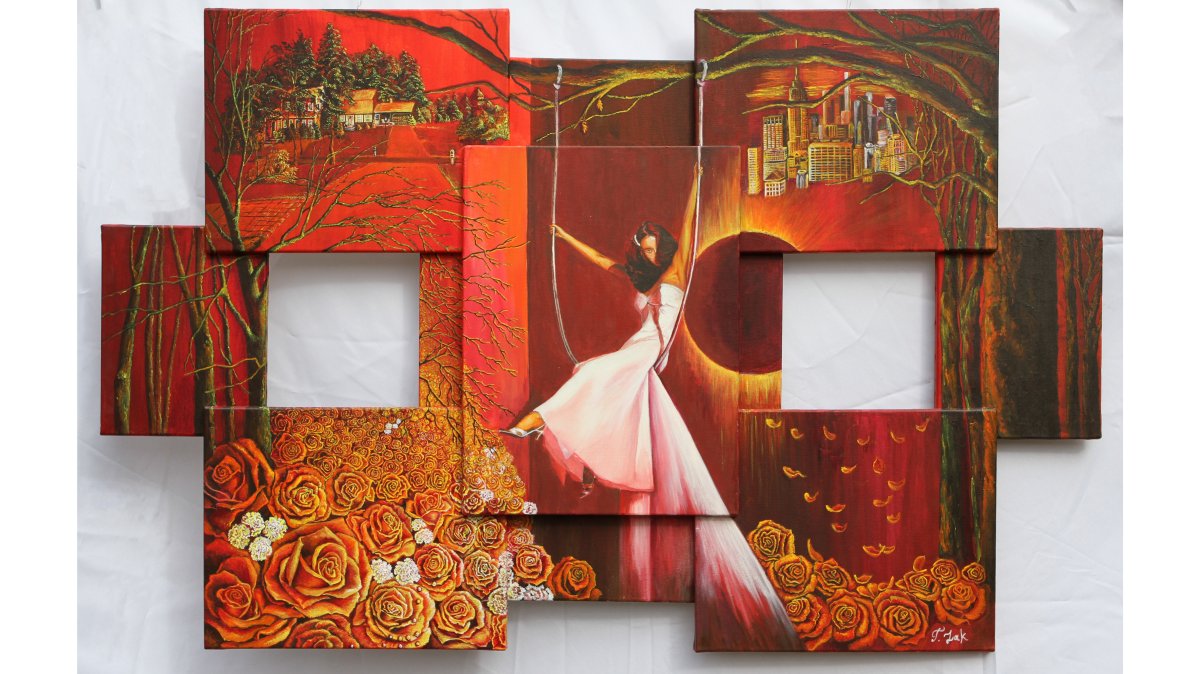
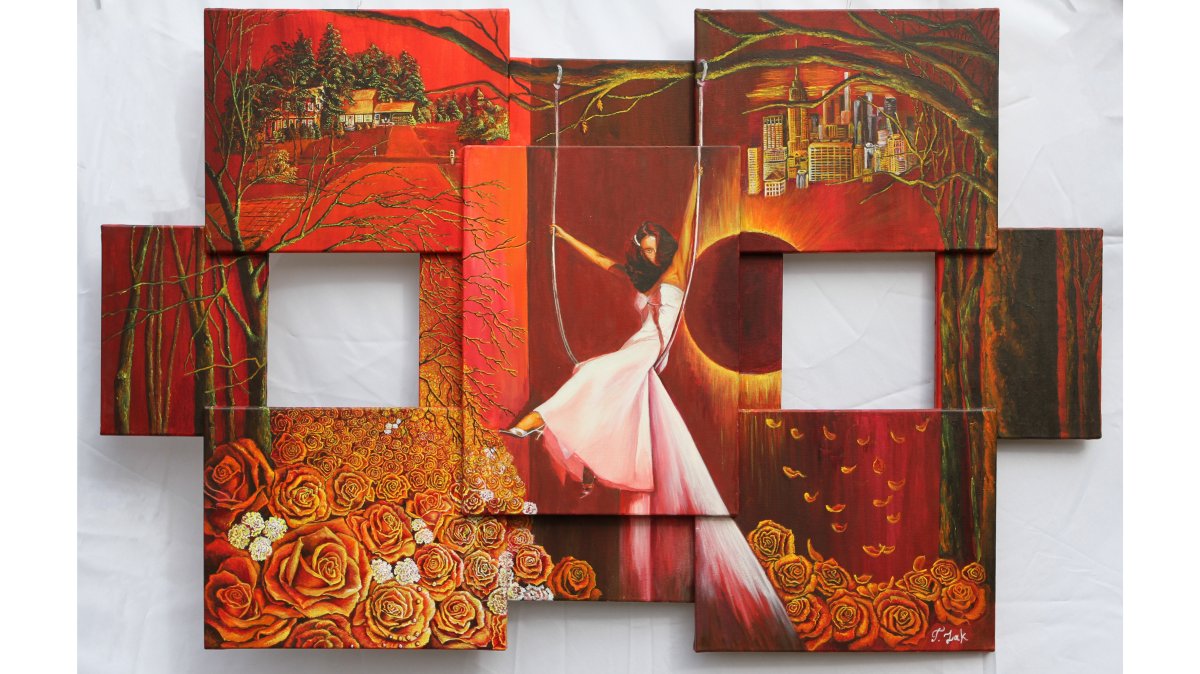
Swing of Life™- 42" x 66" Original Acrylic on Canvas Painting Installation →
Here is the honest cost picture, with the mechanisms that drive each line:
| Cost | When It Applies | Typical Range or Mechanism | Why It Matters |
|---|---|---|---|
| Purchase price | At sale | Negotiated; sales tax may apply depending on your state | Your starting number |
| Framing | Often after purchase | Custom framing commonly runs several hundred dollars and can exceed a small work's price | Pure sunk cost unless the frame adds resale appeal |
| Insured shipping | At delivery | Crating plus carrier insurance; higher for large or fragile works | Protects against damage in transit |
| Insurance | Ongoing | A scheduled rider on a homeowners or renters policy, priced as a small percentage of appraised value | Covers theft, fire, and accidental damage |
| Conservation | Occasional | Climate control, UV-filtering glazing, pest and humidity management | Prevents condition problems that destroy value |
| Resale fees | At exit | Auction house seller's commission plus buyer's premium dynamics, or a gallery consignment split | Directly reduces what you net |
Net return is what is left after you subtract all of these from the sale price. The math is unforgiving: a work bought for $2,000, framed for $400, insured for several years, and sold through a channel that takes a commission can net far less than the headline sale figure even when the price rose. Many collectors forget framing and fees, then feel shortchanged at resale. Track every cost from day one in a simple spreadsheet, purchase price, framing, shipping, insurance premiums, conservation, and exit fees, and you will always know your true number.
A useful habit is to calculate your break-even sale price before you buy. Add the purchase price to your expected ownership costs, then divide by the amount you would actually keep after resale fees. That number, not the sticker price, is what the work has to beat for the purchase to make financial sense. If the break-even figure looks unrealistic for the artist's market, buy the piece for enjoyment and stop treating it as an investment.
Art vs Stocks, Bonds, and Real Estate: A Realistic Comparison
Art behaves very differently from conventional investments, and that difference cuts both ways. Stocks, bonds, and real estate are liquid, priced daily, and easy to value. Art is none of those things. Most comparisons fail because they mix time horizons and lean on broad claims that art outperforms other assets. A fair comparison uses the same horizon for every asset and admits how limited the art data really is.
| Feature | Original Art | Stocks and Bonds | Real Estate |
|---|---|---|---|
| Pricing | Negotiated, private, often opaque | Public, daily | Market-based, comparable sales available |
| Liquidity | Slow, uncertain, buyer-dependent | Fast | Weeks to months |
| Income | None | Dividends, interest | Rent |
| Costs to hold | Insurance, framing, conservation | Low | Taxes, upkeep, insurance |
| Emotional value | High | None | Moderate |
| Risk profile | Taste-driven, artist-specific | Market-driven, diversified | Market and local |
| Return data quality | Thin, skewed by auction records | Deep, audited | Deep, recorded |
Over a consistent horizon, say ten years, stocks and bonds produce measurable total returns that include dividends and interest, and real estate produces rent plus price change. Art produces no income, so its entire return depends on the resale price, and that price is set by a small number of private transactions. Public art indices lean heavily on auction records, which overrepresent works that sold and underrepresent the many that did not. That survivorship bias makes art look more reliably profitable than it is for a typical collector.
For portfolio diversification, art is a tangible asset that does not move with the stock market. That can be useful. But it produces no income and can take months to sell, so it should be a small slice of a wider plan, not the whole thing. A realistic framing is to treat art as a consumption good with possible residual value, not as a substitute for an index fund.
Liquidity, Resale, and Planning Your Exit
Liquidity is the honest weak point of art investing. An original can sit unsold for a long time, because the buyer pool is small and personal. Plan your exit before you buy, not after.
Exit routes to know:
- Private resale: direct to another collector, often the fastest.
- Gallery consignment: the gallery takes a cut but brings buyers.
- Auction: good for known names, less so for emerging artists.
- Artist resale: some studios help place works with new owners.
Risk differs by artist stage. An established artist with steady demand and a track record is easier to resell. An emerging artist may appreciate more, but the resale market is thinner and slower. Neither is wrong. Just match the risk to your goals.
For a piece like our Swing of Life™ original acrylic on canvas installation, provenance and a certificate of authenticity come with the work, which is exactly what makes a future resale possible.

Buying original art is a decision about value, not just price. The challenge is separating what you love from what you can realistically resell, and most guides skip that step. Tatyana Zak helps collectors get both: emotionally driven originals and hand-embellished prints, each with a certificate of authenticity, insured worldwide shipping, and pieces where no two are identical. Start with our new arrivals and choose a work you will still want to live with in ten years.
Frequently Asked Questions
Is original art a good financial investment?
Original art can appreciate, but it is not a reliable financial instrument. Returns depend on the artist's career trajectory, market demand, and resale conditions, and selling can take months. Treat any appreciation as a bonus rather than a guarantee. Buy original art you genuinely want to live with, and size the purchase so it fits your budget without depending on a future sale to recover the money.
Does original art increase in value over time?
Some original art does increase in value, particularly work by artists whose recognition grows through gallery representation, museum exhibitions, or consistent collector demand. But plenty of artwork holds steady or loses value on the resale market. There is no guaranteed appreciation curve. Provenance documentation, a certificate of authenticity, and a documented exhibition history all support future resale value more than time alone does.
Is original art worth more than a print?
Original art is generally worth more than a reproduction because it is one of a kind, carries the artist's direct hand, and can hold resale value. Prints are more affordable and easier to replace, which makes them a lower-risk entry point. Hand-embellished limited editions sit between the two: they offer unique hand-painted details and a numbered edition, so each piece is distinct while staying more accessible than a full original.
How do you verify the authenticity of an original artwork?
Ask for a signed certificate of authenticity, provenance documentation showing the work's ownership history, and the artist's signature on the piece itself. For established artists, check catalogues raisonnés or gallery records. Buy from the artist's studio or a reputable dealer rather than an anonymous marketplace, and request detailed photographs of the signature, edition number if applicable, and any labels on the back of the work.