Tips for Buying Original Art: First-Time Collector Guide
Last Updated: October 22, 2026
Quick Summary
Successful buying original art starts with measuring your wall and setting a total budget that covers tax, shipping, framing, and insurance, not just the sticker price. Verify the medium, edition size, condition, and return terms in writing before you pay, and always use a payment method with buyer protection.
- Set your artwork ceiling at roughly two-thirds of your total budget to leave room for framing and delivery.
- An original is made by the artist's hand; a reproduction is a mechanical or digital copy.
- Ask for the edition size in writing, and assume a print is open if the seller cannot state it.
- Pay by credit card or an established platform, since wire transfers and gift cards offer no recourse.
- A common return window is 7 to 14 days from delivery, with the buyer covering return shipping.
Table of Contents
- Start With Your Space and Personal Taste
- Set a Realistic Budget for Buying Original Art
- How to Tell If Art Is Original
- Original Art vs Limited Edition Prints
- Questions to Ask When Buying Art
- Buying Art Online Tips for First-Time Collectors
- Care, Framing, and Long-Term Display
- Conclusion
- Frequently Asked Questions
Start With Your Space and Personal Taste
Most first-time buyers get this backwards. They browse art sites first, fall for a piece, then discover it doesn't fit anywhere in their home. Start with the wall instead.
Measure the space you have in mind. Note the light (direct sun fades pigment), the wall color, and the scale of nearby furniture. A small piece on a large wall looks lost. A large piece in a narrow hallway feels cramped.
Then ask yourself one question: what do you want to feel when you walk past this spot every day? Calm, energy, memory, quiet? That answer is your filter.
Personal taste is not a luxury here. It is the whole point. guidance from the American Alliance of Museums makes the case that emotional connection drives lasting collecting habits far more than resale logic.
- Measure the wall and note the light
- Decide the feeling you want
- Collect a folder of pieces you keep returning to
- Look for patterns in that folder
Those patterns reveal your art style. Trust them over what a trend report says is hot.
Set a Realistic Budget for Buying Original Art
Artwork pricing varies wildly, so build your budget from the total cost of ownership, not just the sticker price. Many first-time buyers plan for the artwork and forget everything around it.
Here is what to plan for, with realistic U.S. ranges to anchor your thinking:
| Cost | Typical Range | What Drives It |
|---|---|---|
| The artwork itself | $200 to $5,000+ for emerging artists; $5,000 to $50,000+ for established names | Artist reputation, medium, size, and whether it is an original or an edition |
| Sales tax | 0% to roughly 9%, depending on your state and the seller's nexus | Whether the seller has economic nexus in your state; original art is exempt in some states but not others |
| Shipping and insurance | $50 to $500+ for a framed piece; more for oversize or crated works | Size, weight, distance, and whether the carrier offers fine-art handling |
| Framing | $100 to $800+ for a mid-size piece | Conservation glass, museum matting, and custom vs. ready-made frames |
| Hanging hardware and lighting | $20 to $300 | Picture lights, security hangers, and wall anchors |
| Appraisal or insurance rider | $0 to a few hundred per year | Whether you add the piece to a homeowner or renter policy |
A common approach is to set your artwork ceiling at roughly two-thirds of your total budget, leaving room for framing and safe delivery. Ask any seller for an itemized quote before you commit, and confirm in writing who pays sales tax and who pays shipping.
Sales tax is the line item buyers miss most. Under the Supreme Court's *South Dakota v.
Payment terms matter too. Many galleries and online platforms offer installment plans, often through services like Affirm or Klarna, but the terms vary. Ask whether there is a deposit, when the balance is due, and whether the deposit is refundable if the piece arrives damaged or not as described.
How to Tell If Art Is Original
An original artwork is a one-of-a-kind piece created by the artist's own hand, while a reproduction is a copy made by mechanical or digital means. The distinction matters for value, documentation, and how the piece ages.
Here is how to check:
- Look at the surface up close. Brush texture, canvas weave, and paint ridges are hard to fake.
- Ask about the medium and materials in writing.
- Request a certificate of authenticity signed by the artist or gallery.
- Check the signature and compare it to the artist's documented body of work.
- Ask for provenance, meaning the piece's ownership history.
A hand-embellished print sits between the two categories. At Tatyana Zak, our limited edition prints carry hand-applied acrylic details, so no two pieces are identical. That is a different product from a flat reproduction, and it should be described that way.
Original Art vs Limited Edition Prints
Choosing between an original and a limited edition print comes down to budget, wall space, and what you want from the purchase. Neither is the "right" answer.
Originals carry the strongest investment potential and resale value, because there is exactly one. They also cost the most and need more careful handling.
Limited edition prints are made in a fixed run. Edition size is the number in the run, and artist proofs are extra copies outside the main count. A print numbered 3 of 25 is more collectible than one numbered 3 of 500.
- Original: one of one, highest price, strongest long-term value
- Limited edition: fixed run, moderate price, documented edition size
- Open edition: unlimited run, lowest price, little resale value
- Hand-embellished print: a hybrid, unique details on a printed base
Ask for the edition size in writing. If a seller cannot state it, assume it is open.
Questions to Ask When Buying Art
The right questions protect your money and your confidence. Ask them before you pay, not after.
About the artwork:
- What is the medium and exact material?
- What are the dimensions, framed and unframed?
- When was it created, and is it signed?
- Is a certificate of authenticity included?
- What is the provenance?
About the deal:
- What is the return policy, and how many days do I have?
- Who pays for return shipping?
- Is shipping insured, and who arranges it?
- Are there payment plans available?
About the artist:
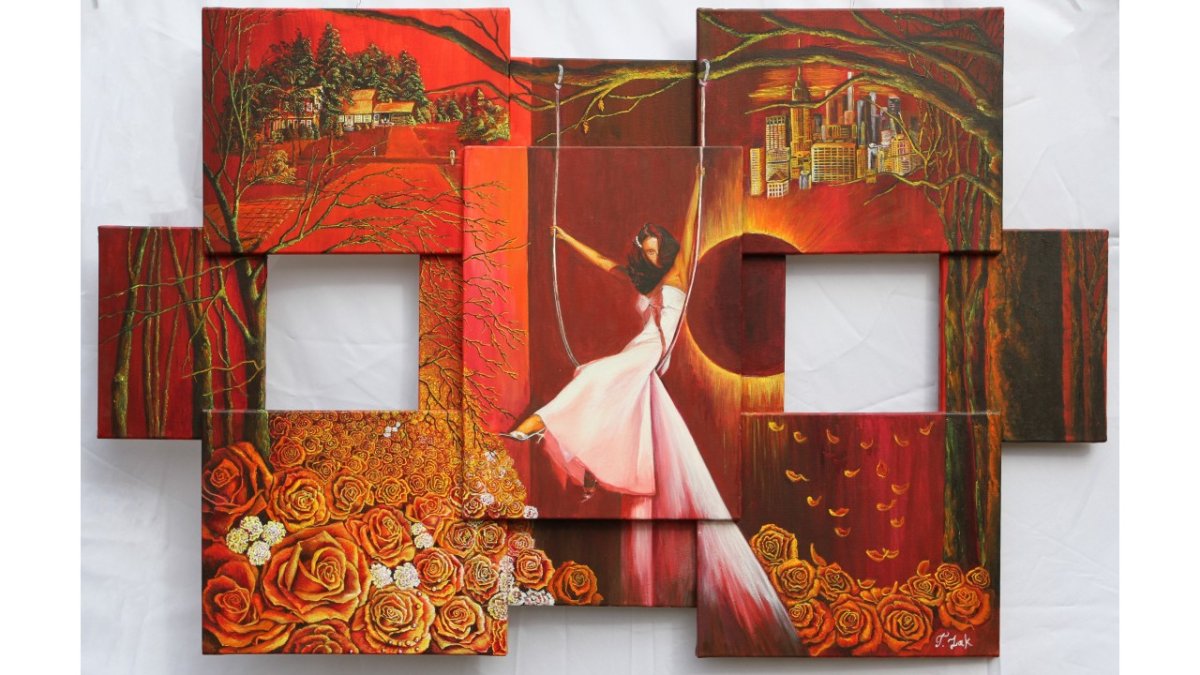
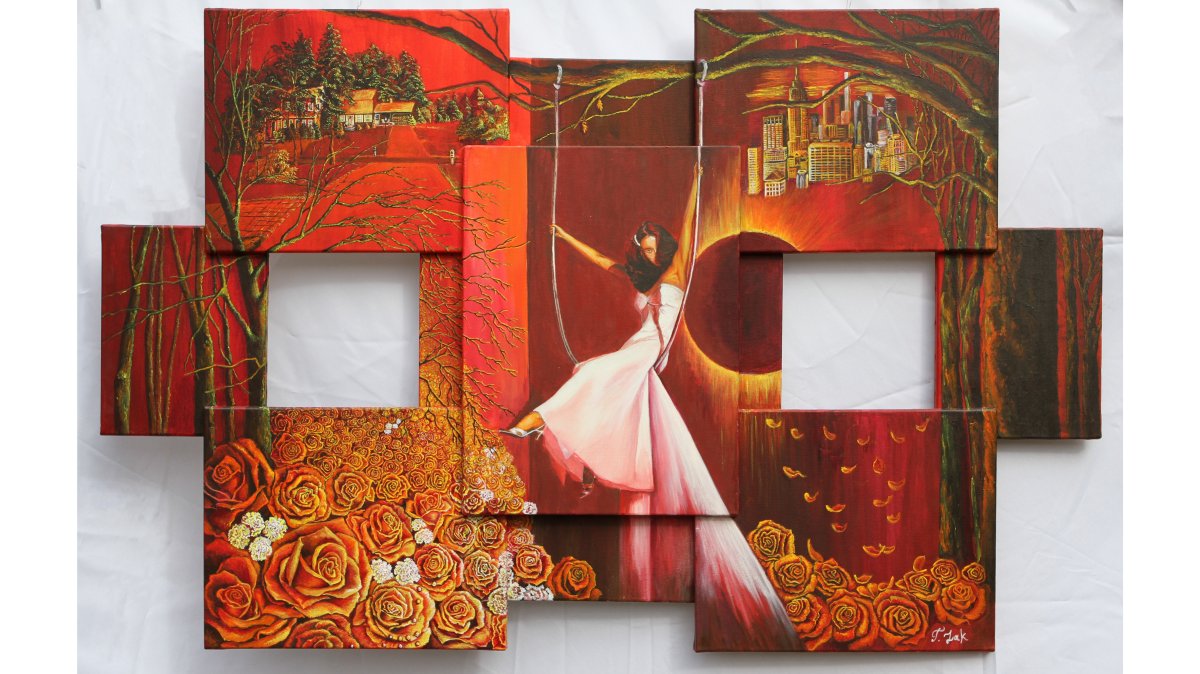
Swing of Life™- 42" x 66" Original Acrylic on Canvas Painting Installation →
- What is the artist's story and background?
- Can I see more of the artist's body of work?
That last question matters more than buyers expect. An artist with a consistent, documented body of work is easier to research and easier to trust.
Buying Art Online Tips for First-Time Collectors
Buying art online tips boil down to one principle: verify before you pay, and know your exit.
Color accuracy. Screens render color differently, and a piece that looks warm on your phone may read cool in person.
Scale. A 24-by-36-inch canvas looks large on a laptop and modest on a wall. Measure your wall, then tape a paper template of the listed dimensions to the wall and stand back.
Condition reporting. Request a written condition report covering surface scratches, frame wear, and any prior restoration.
Secure payment. Pay with a credit card or an established platform that offers buyer protection. Under the Fair Credit Billing Act, credit card purchases generally carry dispute rights for goods not received or not as described, which is a meaningful safety net for a first purchase (What To Do if You’re Billed for Things You Never Got, or You Get Unordered Products).
Shipping damage. Confirm the piece is insured for its full declared value during transit, and ask who files the claim if it arrives damaged.
Return terms. Read the return policy in full, including the window and who pays return shipping.
Work through this checklist:
- Read the return policy in full, including the window and who pays return shipping
- Confirm the piece is insured during transit and who files the claim
- Request extra photos of the surface, edges, signature, and a daylight color reference
- Check whether the certificate of authenticity ships with the work
- Verify the seller's contact details and physical address
- Pay with a method that offers buyer protection
- Save the listing, invoice, and all messages
Scam prevention starts with payment method. Wire transfers and gift cards offer no recourse. Credit cards and established platforms usually do.
Care, Framing, and Long-Term Display
Your artwork's condition decides its long-term value, so plan for care from day one. Framing and lighting choices matter more than most buyers realize.
Framing: Ask for conservation or museum-grade matting. Standard mats can discolor artwork over time. Keep the art from touching the glass.
Lighting: Hang away from direct sun. Ultraviolet light fades pigment, and no frame glass stops all of it. Picture lights should sit at a distance that avoids heat.
Humidity and temperature: Avoid bathrooms, kitchens, and spots above radiators. Steady conditions beat dramatic swings.
Handling: Hold framed pieces by the frame, never the art. Clean glass with a cloth, not a spray aimed at the surface.
Insurance: Add higher-value pieces to your homeowner or renter policy. Keep the certificate of authenticity and provenance documents together in one folder.
A fragile-feeling piece can still live in a busy home. Solid framing and a sensible wall spot handle kids and pets better than most people expect.
Conclusion
The hardest part of buying original art is not the price. It is trusting your own taste enough to commit.
Start with your wall and your budget. Verify the medium, the edition size, and the documentation. Ask the questions that feel awkward. Then buy the piece you keep coming back to.
At Tatyana Zak, we make emotionally driven original artworks and hand-embellished limited edition prints, each with hand-applied acrylic details so no two pieces are identical. Every piece ships with care, and our art sets and bundles suit a home, an office, or a meaningful gift. Explore the collection and find the piece that fits your space and your story.

Frequently Asked Questions
What should first-time art collectors look for?
Look for three things: a strong personal connection to the piece, clear documentation, and a reputable seller. Ask for a certificate of authenticity, provenance details, and the artist's signature. Check the medium, dimensions, and condition before you commit. If you are buying original art online, request additional photos and confirm the return policy. Trust your reaction to the work itself, because you will live with it every day.
How can you tell if artwork is original or a print?
Original art usually has visible texture, brushstrokes, or variations in the surface that a flat print cannot replicate. Look for the artist's signature and a certificate of authenticity. Limited edition prints are numbered and should state the edition size, while open edition prints are not numbered. Hand-embellished prints sit between the two: they are printed but finished with hand-painted details, so each piece differs slightly.
What questions should you ask before buying original art?
Ask about the artist's background and body of work, the materials and technique used, and whether a certificate of authenticity and provenance documentation are included. Confirm the exact dimensions and whether framing is included. Ask about shipping, insurance, and the return policy. If the piece is a limited edition, ask about edition size and whether artist proofs exist. These questions protect your purchase and clarify what you are getting.
Is buying original art a good investment?
Treat original art primarily as something you love, not a guaranteed financial investment. Resale value depends on the artist's market, provenance, and demand, which can change. Some pieces appreciate over time, but there is no certainty. Buy what you connect with first. If investment potential matters to you, research the artist's exhibition history and sales record, and keep all documentation, because a complete provenance file supports future resale.