Article: Why Buy Original Contemporary Art: A Collector's Guide
Why Buy Original Contemporary Art: A Collector's Guide
Table of Contents
- Original Contemporary Art Connects You to Authentic Artistic Expression
- Original Art vs. Prints: Understanding the Real Difference
- Five Reasons to Invest in Original Contemporary Art
- Benefits of Buying Art Directly From the Artist
- How to Start an Art Collection: A Practical Framework
- Navigating the Art Market: Primary vs. Secondary
- Frequently Asked Questions
Last Updated: September 26, 2026
Original Contemporary Art Connects You to Authentic Artistic Expression
When you acquire original contemporary art, you're acquiring a direct connection to the artist's vision, intention, and creative process. Unlike mass-produced prints, each original piece embodies the artist's hand, their choices, and the specific moment in time when they created it.
Collecting original contemporary art is fundamentally about authenticity. Every work tells a story of deliberate creation, emotional investment, and artistic integrity. Original art offers something prints cannot: the certainty that what you own is exactly what the artist intended.
This guide explores why collectors choose original contemporary art over alternatives, how to navigate the market with confidence, and how to build a collection that reflects your vision and values.
Original Art vs. Prints: Understanding the Real Difference
The distinction between original art and prints matters more than many first-time collectors realize. While both have merit, they serve fundamentally different purposes in a collector's journey.
What Makes Original Work Unique
An original artwork is a singular creation, the artist's direct hand on canvas, paper, or another medium. When you own an original, you own the authentic artifact created by the artist themselves, creating inherent scarcity and authenticity that cannot be duplicated.
Prints are reproductions created from an original. Even limited edition prints are mechanical or digital copies. The artist may have designed the image, but the print itself was not created by their hand, affecting both aesthetic and financial value.
Original works carry provenance, a documented history of creation, ownership, and care. Certificates of authenticity and documentation of the artist's process significantly impact the work's value in the secondary market.
The Hand-Embellished Bridge Between Originals and Prints
A middle ground exists between fully original works and standard reproductions: hand-embellished prints. These are printed reproductions that the artist then enhances by hand with paint, texture, or other materials. Each hand-embellished piece becomes unique because the artist's hand touches every copy differently.
Hand-embellished prints offer authenticity and artist involvement at more accessible prices than fully original works. No two pieces are identical, as the artist adds different layers, colors, or details to each one, creating a hybrid of reproducibility and uniqueness.
Tatyana Zak's hand-embellished collection exemplifies this approach, with each print enhanced with acrylic paint applied directly by the artist, transforming a reproduction into a singular work.
Five Reasons to Invest in Original Contemporary Art
1. Emotional Resonance and Personal Meaning
Original contemporary art connects to you emotionally in ways prints rarely achieve. The physical presence, texture, scale, and visible marks of creation generate emotional resonance that reproductions cannot match.
A piece that speaks to you during a difficult period becomes a companion through that time. Collectors report that original works provide comfort, inspiration, and clarity that mass-produced images do not, amplified by owning the actual object the artist created.
Pro Tip The emotional impact of original art intensifies over time. As you live with a piece, your relationship deepens and the work becomes woven into your personal history, which is why collectors rarely sell meaningful pieces.
2. Tangible Asset Value and Investment Potential
Original artwork functions as a tangible asset with genuine investment potential. Unlike prints, which depreciate as more copies enter the market, original works often appreciate as the artist's reputation grows.
The art market operates on scarcity and demand. As an artist gains recognition, earlier works become increasingly valuable. Collectors who purchased original contemporary art from emerging artists a decade ago often see significant appreciation today.
Investment in original art differs from financial markets. You hold a physical asset providing aesthetic enjoyment while potentially increasing in value, making it attractive for diversification.
| Consideration | Original Art | Limited Edition Prints | Standard Prints |
|---|---|---|---|
| Scarcity | Singular work | Limited copies | Unlimited copies |
| Appreciation potential | High | Moderate | Low |
| Authenticity | Direct artist creation | Hand-enhanced by artist | Mechanical reproduction |
| Emotional connection | Strong | Moderate | Mild |
| Price range | Higher investment | Mid-range | Accessible |
3. Support for Living Artists and the Creative Economy
When you purchase original contemporary art directly from the artist, money goes directly to them, enabling them to continue their practice, invest in materials, and develop their craft.
Buying directly from the artist ensures your investment supports their livelihood, particularly important for emerging and mid-career artists who depend on direct sales. Your purchase may enable an artist to take on new projects, travel for inspiration, or dedicate more time to their art.
Supporting living artists strengthens the creative ecosystem and encourages more people to pursue creative careers, contributing to cultural vitality in your community.
4. Aesthetic Transformation of Your Space
Original artwork transforms a room in ways prints cannot. The scale, texture, and presence create a focal point that anchors an interior space and elevates the aesthetic environment.
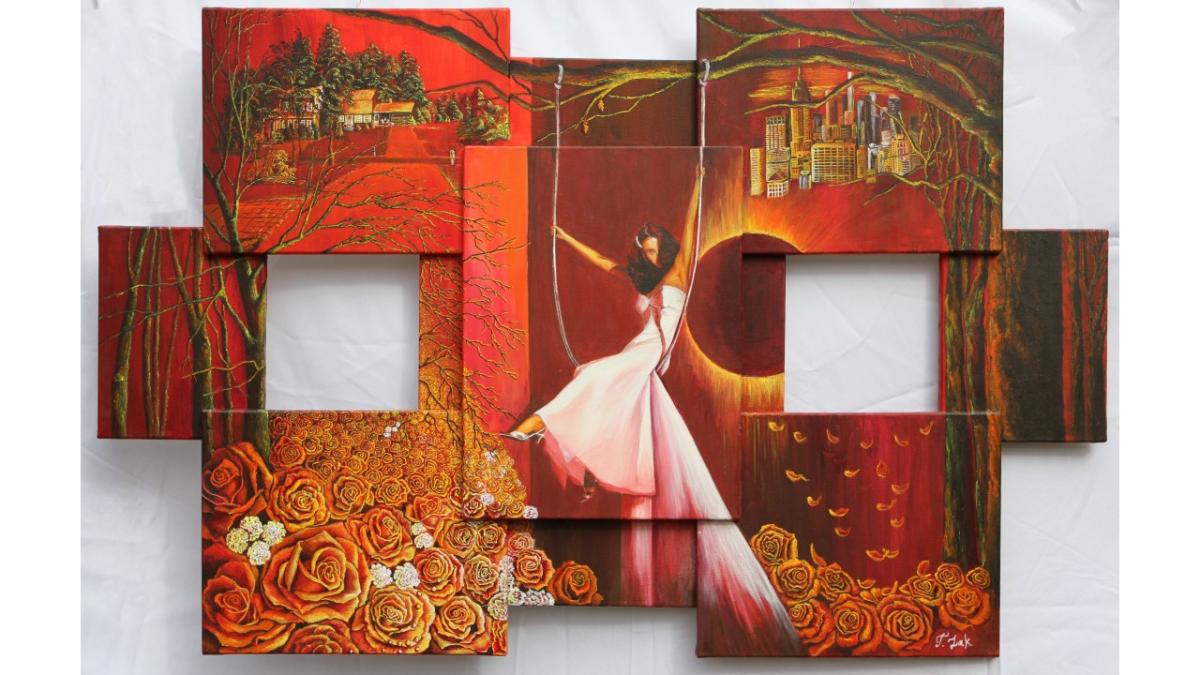
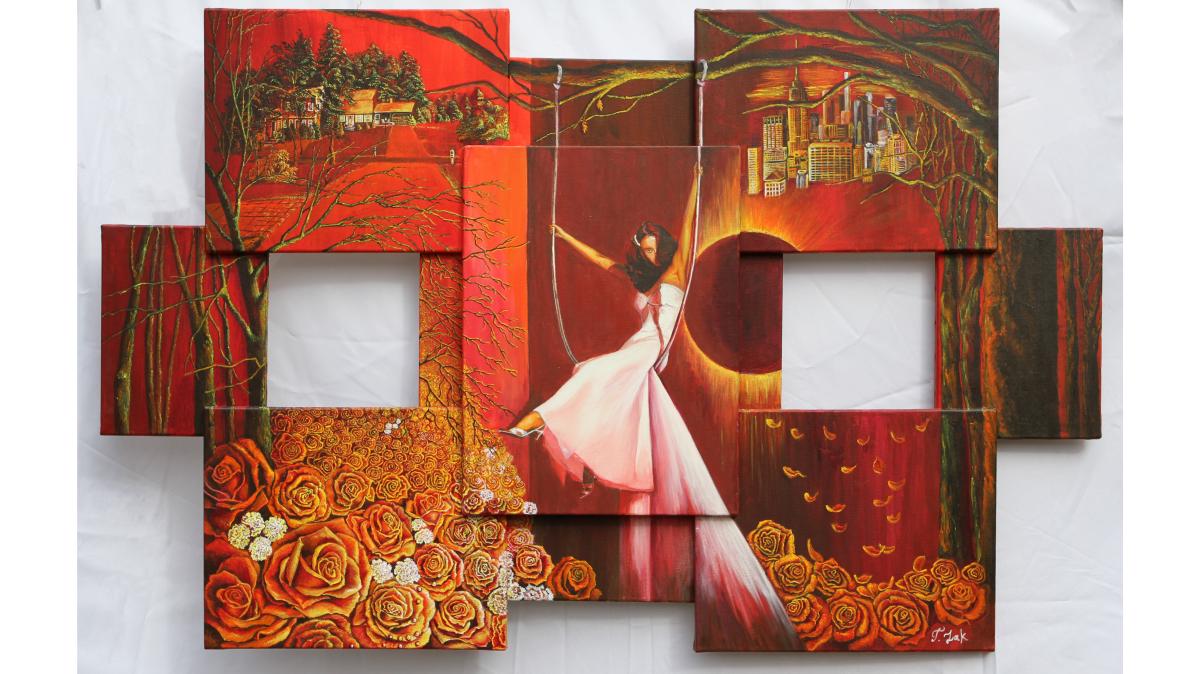
Swing of Life™- 42" x 66" Original →
The visual texture of original work, brushstrokes, layering, dimensional elements, creates depth that flat reproductions lack. Original paintings interact with light differently throughout the day, making them an active presence rather than static decoration.
A compelling original work often becomes the starting point for a room's color palette, style, and aesthetic direction, shaping the space around it.
5. Authenticity and Provenance You Can Trust
Authenticity and provenance are fundamental to art collecting. Original works come with documentation proving legitimacy and tracking history, including certificates of authenticity and creation process information.
Provenance establishes legitimacy, protects your investment, and increases a work's value. Original art purchased directly from the artist comes with the strongest possible provenance.
Provenance documentation is essential for insurance, loans, or resale. Original works with clear provenance command higher prices and sell more easily in secondary markets.
Benefits of Buying Art Directly From the Artist
Purchasing original contemporary art directly from the artist offers transparency, fair pricing, and deeper understanding of the work's creation and meaning.
Buying directly eliminates middleman markups, providing better value and more money to the artist. You also gain access to works before gallery representation, sometimes at lower price points.
Direct relationships create dialogue about the artist's process, inspiration, and vision, transforming the purchase into a meaningful exchange rather than a transaction.
Artists often offer customization or commission opportunities for collectors who purchase directly. This personalization creates a work uniquely suited to your space and vision. Tatyana Zak, for example, works with collectors to understand their needs and create or recommend pieces that resonate with their aesthetic and emotional requirements.
How to Start an Art Collection: A Practical Framework
Building an art collection requires intention, research, and patience. Whether you're purchasing your first original work or expanding an existing collection, a structured approach helps you make confident decisions and build a cohesive collection.
Define Your Vision and Aesthetic
Before purchasing any artwork, clarify what resonates with you. Spend time examining art in galleries, museums, and online. Notice which pieces capture your attention and why. Are you drawn to color, form, subject matter, emotional tone, or technical skill? Understanding your aesthetic preferences guides all future collecting decisions.
Consider also the practical context where art will live. How much wall space do you have? What lighting conditions exist in your home or office? What colors and styles already define your environment? Original contemporary art should enhance and inspire your space, not clash with it. Your aesthetic vision should account for both your personal preferences and the physical realities of your environment.

Research Artists and Understand Their Practice
Serious collecting requires knowing the artists whose work you acquire. Research their background, artistic philosophy, exhibition history, and critical reception. Understanding an artist's practice deepens your appreciation for individual works and helps you make informed investment decisions.
Look for artists whose work aligns with your vision and whose practice shows sustained development.
Care and Authentication Matter
Original artwork requires proper care to maintain its value and appearance. Understanding how to care for your pieces protects your investment and ensures they remain beautiful for decades. Different mediums require different approaches, acrylic paintings, watercolors, and mixed media each have specific care requirements.
Navigating the Art Market: Primary vs. Secondary
The art market operates on two levels: primary and secondary. Understanding the difference helps you make strategic collecting decisions and recognize value.
Frequently Asked Questions
What is the difference between original art and limited edition prints?
Original art is created directly by the artist, a one-of-a-kind or multi-panel work like the Swing of Life installation. Limited edition prints are reproductions made from an original, often hand-embellished to add uniqueness. While hand-embellished prints bridge the gap between pure reproductions and originals, each original artwork remains singular in its creation process, provenance, and investment value. The artist signs each original and provides a Certificate of Authenticity.
Why should I buy art directly from the artist?
Buying directly from the artist ensures authenticity, provides complete provenance documentation, and means your money supports the creative economy. You receive a Certificate of Authenticity, understand the work's full history, and often gain insight into the artist's vision and process. Direct purchases also offer insured shipping. You avoid gallery markups and build a direct relationship with the creator behind the work.
Is original contemporary art a good investment?
Original contemporary art can appreciate in value, particularly works by established or emerging artists with strong artistic merit and provenance. Investment potential depends on the artist's reputation, the work's cultural significance, condition, and documentation. Beyond financial return, original art provides emotional and aesthetic value that typically increases your connection to your space. Proper authentication, insurance, and care preserve both the work's integrity and its market value over time.
How do I know if hand-embellished prints are worth buying over standard reproductions?
Hand-embellished prints are enhanced by the artist with acrylic paint or other media, making each piece unique despite being based on the same image. This means no two pieces are identical, creating a collector's experience closer to original art. They offer authenticity and individuality at a more accessible price point than one-of-a-kind originals. The artist's direct involvement in embellishing each print adds value, meaning, and a personal touch that standard mass-produced prints cannot match.