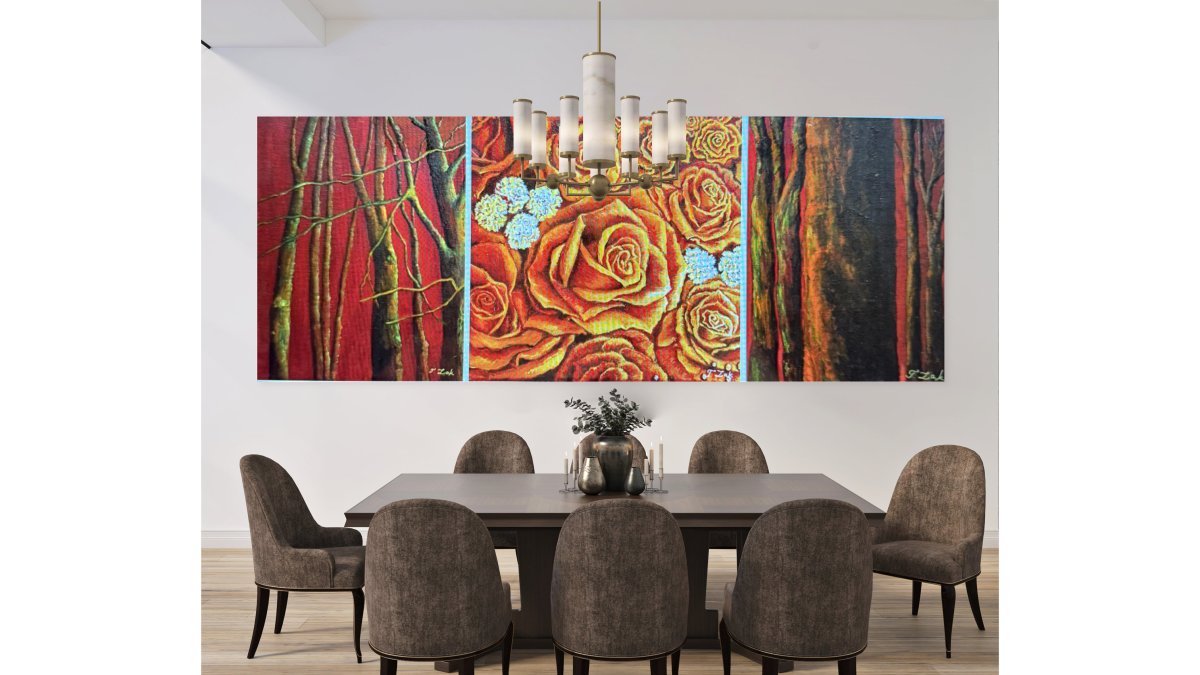
Wexel Art vs Ashley Salvatori: Which Prints Win?
Table of Contents
- Wexel Art vs Ashley Salvatori at a Glance: Price, Quality, and Style
- Wexel Art: Acrylic Display Frames Built for Modern Interiors
- Ashley Salvatori: Hand-Embellished Prints with a Personal Touch
- Limited Edition Prints vs Mass Produced: Why Rarity Changes Everything
- Benefits of Hand-Embellished Art: Texture, Value, and Emotional Connection
- Choosing the Right Piece for Your Space, Budget, and Collection
- Conclusion: Matching Your Priorities to the Right Artist
- Frequently Asked Questions
Last Updated: September 10, 2026
Wexel Art vs Ashley Salvatori at a Glance: Price, Quality, and Style
Choosing between Wexel Art vs Ashley Salvatori comes down to one question: do you want a frame system or a piece of art? Wexel Art sells acrylic display frames designed to hold and swap prints; Ashley Salvatori sells hand-embellished prints made to hang as finished work. They compete for the same wall but solve different problems.
This guide breaks down how each option works, where the money goes, and which buyer each one suits.
| Factor | Wexel Art | Ashley Salvatori |
|---|---|---|
| What you're buying | Acrylic display frame | Hand-embellished print |
| Core material | Acrylic panel, wall mounts | Pigment print, acrylic paint |
| Art included | No, sold separately | Yes, the print is the product |
| Edition status | Not applicable | Limited edition runs |
| Best for | Rotating a collection | Collecting a finished piece |
Wexel Art: Acrylic Display Frames Built for Modern Interiors
Wexel Art is a display system, not an art publisher. Its acrylic frames hold prints, posters, and photographs using a floating mount, so artwork appears to hover inside a clear panel with no visible hardware. For anyone who rotates prints seasonally, that design removes the most annoying part of hanging art: reframing.

Materials and Display Formats
Acrylic panels are lighter than glass and far more resistant to shattering, which is why museums and galleries have used acrylic glazing for decades (si.edu). The trade-off is surface softness: acrylic scratches more easily than glass, so dusting with a dry microfiber cloth matters more.
Wexel Art frames come in wall-mounted panels, tabletop stands, and larger statement sizes. The mounting systems allow easy print swaps without tools, which is the entire point. Buyers who want a clean, contemporary look and plan to change what's on display will get real value here.
Ashley Salvatori: Hand-Embellished Prints with a Personal Touch
Ashley Salvatori's work sits in a different category entirely. These are pigment-based prints on canvas or fine art paper, finished by hand with acrylic paint, so each piece carries brushwork no printer can reproduce. That combination of giclée reproduction and hand-applied paint is what collectors mean by hand-embellished.
The practical result: two prints from the same edition are not identical. Variations in brushstroke, texture, and paint density mean the piece you receive is genuinely one of a kind within its run, the appeal, and why these pieces cost more than a standard poster print.
Artistic Style and Collector Experience
Salvatori's work leans toward floral compositions and seascapes, with layered color and visible texture, contemporary but warm, closer to a painted canvas than a flat reproduction.
For collectors, the experience extends past the artwork. Hand-embellished pieces typically arrive signed, often in gold or metallic ink, and many editions are numbered. That documentation matters for authentication later and is the difference between owning a decoration and owning a collectible.
Limited Edition Prints vs Mass Produced: Why Rarity Changes Everything
The difference between limited edition prints vs mass produced artwork is structural: how the piece is documented, how supply is controlled, and how it behaves if you ever sell it.
A mass-produced print can be reprinted indefinitely, so the piece you bought is one of an unlimited number and will stay that way. There is nothing wrong with that if you want affordable wall decor.
A limited edition is capped. Once the run sells out, the artist stops printing that image, and the market for the remaining pieces is fixed. That cap is what gives a print a secondary market at all.
What Actually Makes an Edition "Limited"
A number on a print is not enough. Four things have to line up before a limited edition carries real collector weight:
- A stated edition size. "Limited edition of 150" is a commitment. "Limited edition" with no number is marketing.
- A signed and numbered impression. The artist signs and writes the impression number (for example, 12/150) on the piece itself, usually in the lower margin or on the back of a canvas.
- A certificate of authenticity. A separate document that names the artist, the title, the edition size, the medium, and the date. This is what a future buyer, insurer, or appraiser will ask for.
- A documented end to the run. Once the edition sells out, the image is retired. If the artist keeps printing it, the edition was never really limited.
A common pattern is the artist proof (AP), a small number of impressions pulled outside the main numbered run, marked "AP" instead of a number. Artist proofs are usually a fraction of the main edition and often the first impressions off the press, which is why collectors sometimes pay a premium.
How the Four Print Tiers Compare
| Print Type | Edition Cap | Hand Work | Documentation | Resale Potential |
|---|---|---|---|---|
| Mass produced poster | None | None | None | Minimal |
| Open edition giclée | None | None | None | Low |
| Limited edition print | Fixed run | Sometimes | Signed, numbered, COA | Moderate |
| Hand-embellished edition | Fixed run | Yes, by the artist | Signed, numbered, COA, unique surface | Stronger |
The pattern is consistent: the more hand work and the tighter the edition, the more the piece behaves like an asset rather than a purchase. That does not guarantee appreciation, but it does mean the supply side works in the collector's favor.
The Investment Value Question, Answered Honestly
Buyers searching for this comparison usually want to know whether a hand-embellished limited edition is worth more than a standard print. The honest answer: they are not on the same scale.
- Open edition prints are priced for decoration. They are not investments and should not be bought as one.
- Limited edition prints introduce scarcity, which is the minimum requirement for any secondary market.
- Hand-embellished limited editions add the artist's physical hand on top of the scarcity, which is the closest a print gets to an original work.
- Original paintings sit at the top of the ladder, with the highest price ceiling and the thinnest supply.
If the goal is a piece you will keep for decades, the middle rungs, limited edition and hand-embellished, are where most collectors start. If the goal is resale speculation, no print tier is a safe bet.
Benefits of Hand-Embellished Art: Texture, Value, and Emotional Connection
The benefits of hand-embellished art show up in three places: the surface, the resale story, and the owner's relationship with the piece. To judge them properly, it helps to know what is under the paint.
What "Hand-Embellished" Means Technically
A hand-embellished print starts as a giclée, a pigment-based inkjet reproduction printed at high resolution onto fine art paper or canvas. The base print is a reproduction; the embellishment changes its category.
After the print cures, the artist applies acrylic paint directly over the surface, usually where texture matters most: highlights, foreground florals, water, or sky. Applied by brush and sometimes palette knife, the surface carries real relief rather than a flat ink layer.
Two technical details separate a serious embellished edition from a decorated poster:
- Pigment inks, not dye inks. Pigment inks are the standard for fine art reproduction because they resist fading far longer than dye-based inks (wilhelm-research.com). Manufacturers of archival pigment inks commonly rate them for decades of display life under normal indoor conditions, though direct sunlight shortens that window regardless of ink type.
- Archival paper or canvas. Fine art papers are typically described by weight in GSM (grams per square meter). Lightweight papers sit around 120-200 GSM; heavier fine art and cotton rag papers commonly run 250-400 GSM or higher (loc.gov). Heavier stock holds up better under acrylic paint and resists cockling when the paint dries.
If you are comparing two embellished prints and one seller cannot tell you the ink type or the paper weight, that is a signal. Serious studios know their specs.
Texture: Why the Surface Reads Differently
A standard giclée print has a uniform, flat surface. Once acrylic paint is applied, the piece catches light differently across the canvas: brushstrokes create small ridges and variations that shift as you move past the work. That physical quality is the main reason collectors pay more for embellished editions, and something a photograph cannot fully convey.
The trade-off is care. Acrylic paint on canvas is durable but not indestructible. Keep embellished work out of direct sun, avoid humid rooms like bathrooms, and dust with a soft dry brush rather than a damp cloth.
Value: Where the Piece Sits on the Ladder
A hand-finished print sits between a reproduction and an original painting. It carries the artist's actual hand, giving it a stronger secondary-market position than an open edition print. For buyers thinking in terms of art investment rather than decoration, that middle ground is often the most sensible entry point.
Two things drive that value more than anything else:
- The artist's hand on the surface. Every piece in the edition is slightly different, which means no two buyers own the same object.
- The documentation. Signed, numbered, and accompanied by a certificate of authenticity, the piece can be identified and verified years later. Without that paperwork, resale gets harder regardless of how good the art is.
Emotional Connection: The Part That Does Not Show Up in a Spreadsheet
Owners of hand-embellished work tend to describe the piece as theirs in a way that owners of mass-produced prints do not. That emotional connection is not marketing language. It is the predictable result of owning something no one else has an exact copy of.
Choosing the Right Piece for Your Space, Budget, and Collection
Match the product to the job. A display frame solves a rotating collection. A hand-embellished print solves a finished wall.
- You change your art often: an acrylic display frame is the right tool. Swapping prints takes minutes, and the frame stays put.
- You want one piece that anchors a room: a hand-embellished limited edition does more work than a frame holding a poster.
- You are buying a gift for an art lover: hand-embellished work with signed documentation reads as a serious gift. A frame reads as a practical one.
- You are furnishing a rental or a staging project: frames plus affordable prints keep costs down and let you restyle between tenants or showings.
- You are starting a collection: begin with a limited edition from an artist whose work you actually want to live with, not one chosen purely on resale speculation.
For buyers comparing hand-embellished contemporary work directly, individually embellished prints finished with acrylic by the artist, with no two pieces identical and art sets available for home or office, offer a different proposition from a frame system, and it is the one to weigh if the goal is a collectible rather than a display tool.
One more consideration: framing. Acrylic display frames are self-contained, so there is no separate framing cost. A hand-embellished print on canvas is often gallery wrapped and ready to hang, while a paper edition needs professional framing, which adds to the total. Budget for that before comparing prices.
Conclusion: Matching Your Priorities to the Right Artist
The honest answer to Wexel Art vs Ashley Salvatori is that they are not competing for the same buyer. Wexel Art sells a display system for people who want flexibility; Ashley Salvatori sells finished, hand-embellished editions for people who want a collectible.
If you want a piece that carries the artist's hand, arrives signed, and belongs to a capped edition, that is the collector's path. Original artworks and limited edition prints hand-embellished with acrylic by the artist, with multi-layered compositions, worldwide shipping, and curated art sets for home or office, are built for exactly that buyer. Browse the new arrivals and find the piece that fits your space.
Frequently Asked Questions
What is the difference between mass-produced prints and hand-embellished art?
Mass-produced prints are typically offset or digital reproductions made in large batches with no individual variation. Hand-embellished art starts with a high-quality giclée print, but the artist adds acrylic paint, texture, or gold leaf by hand. That means every piece is slightly different. The embellishment adds depth, visible brushwork, and a tactile quality you cannot get from a flat print, making each work closer to an original.
How does hand-embellishment add value to fine art prints?
Hand-embellishment adds value in three ways. First, it makes each print unique, so you own a one-of-a-kind variation rather than one of hundreds identical copies. Second, the artist's direct involvement raises the piece from reproduction to original artwork. Third, embellished prints often hold better resale value because collectors prize the personal touch.
What should I look for when comparing limited edition prints vs. mass-produced art?
Check the edition size, the printing method, and the signature. Limited edition prints are numbered and signed, often capped at 50 to 150 pieces, and use archival pigment-based inks on museum-quality canvas or paper. Mass-produced art rarely has numbering or a signature, and it may fade within a few years. Ask the artist or gallery for edition size, ink type, and whether the piece comes with a certificate of authenticity.
Are floating acrylic frames better for modern home decor?
Floating acrylic frames give artwork a clean, contemporary look because the print appears to hover inside the frame with no visible mat. They work especially well in modern interiors, offices, and gallery walls. However, if your piece is hand-embellished with thick acrylic texture, a traditional frame or gallery-wrapped canvas may suit it better. Match the frame to the artwork's style and the room's overall design.