Best Art for Healing Spaces: 7 Calming Wall Art Ideas
Table of Contents
- Why Art for Healing Spaces Matters More Than Decor
- Quick Comparison: Art for Healing Spaces at a Glance
- 1. Lavender Mist Lilies: Serene Florals for Quiet Reflection
- 2. Swing of Life Installation: A Narrative of Resilience and Hope
- 3. Night Blues of the Suburbs: Finding Calm in the Familiar
- 4. Therapeutic Wall Art for Anxiety: Choosing Calming Color Palettes
- 5. Biophilic Art for Healthcare Design: Bringing Nature Indoors
- 6. Meaningful Gifts for Art Collectors in 2026: Art That Heals
- Frequently Asked Questions
Last Updated: September 9, 2026
Why Art for Healing Spaces Matters More Than Decor
Art for healing spaces is a deliberate tool for emotional regulation, not just an aesthetic afterthought. The right piece can transform a clinical or personal setting into a genuine therapeutic environment. This guide from Tatyana Zak explores how choosing art for healing spaces goes beyond wall decor to support mental health and patient well-being.
Research in environmental psychology consistently shows that what we look at shapes how we feel (apa.org). A calming atmosphere supports recovery, which is why evidence-based design now prioritizes visual stimulation that soothes rather than agitates.
Below, we break down calming wall art ideas. You will find specific pieces and practical guidance on color and subject matter.

Quick Comparison: Art for Healing Spaces at a Glance
| Art Piece | Format | Best For | Price |
|---|---|---|---|
| Lavender Mist Lilies | Original painting | Meditation spaces, serene interiors | $5,000.00 |
| Swing of Life Installation | Hand-enhanced print | Wellness studios, reflection | $999.00 |
| Night Blues of the Suburbs | Hand-enhanced print | Quiet contemplation, familiar comfort | $595.00 |
| Set of 3 Canvases | Print on canvas | Budget-friendly nature-inspired sets | $84.49 |
1. Lavender Mist Lilies: Serene Florals for Quiet Reflection
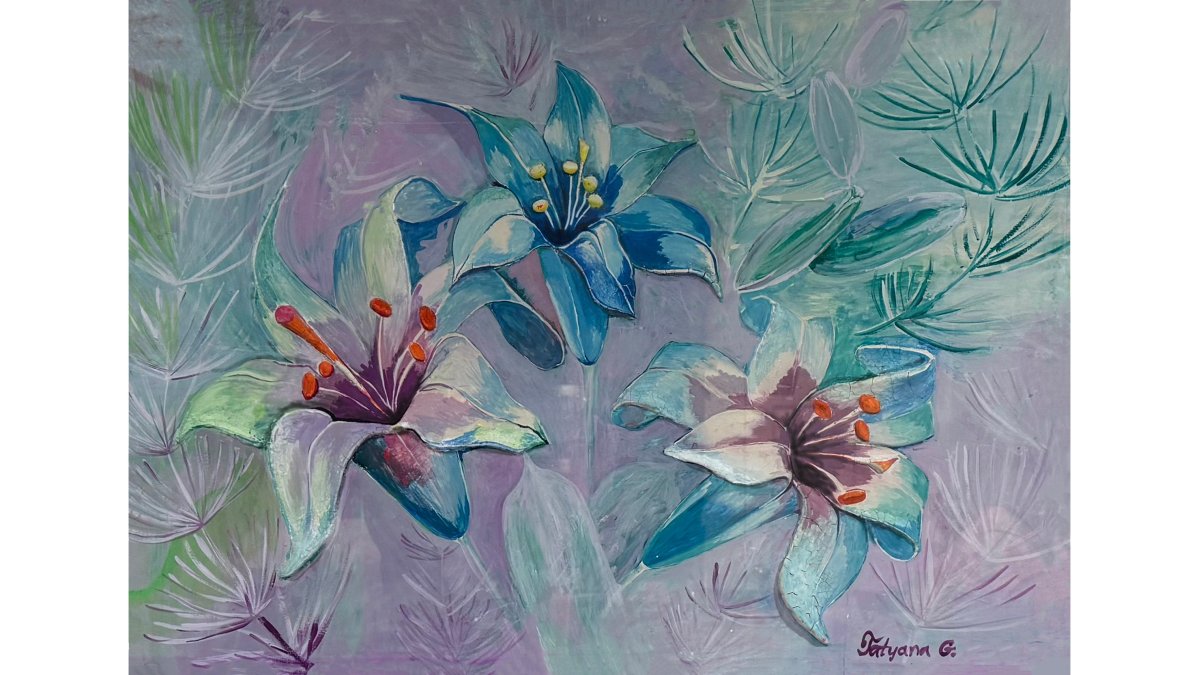
Lavender Mist Lilies is the top pick for anyone seeking original art for healing spaces that radiates tranquility. This serene, atmospheric floral composition blends calming greens, blues, and lavender tones into a misty, dreamlike palette that invites peace and introspection.

The lilies emerge softly from the haze, delicate and graceful, symbolizing purity, renewal, and calm. This piece is ideal for bedrooms, meditation spaces, and wellness studios where quiet reflection matters. As an original acrylic painting, it carries the texture and presence that only an artist's hand can deliver.
The soft edges and muted palette give the eye nowhere to rush, encouraging a more grounded state.
2. Swing of Life Installation: A Narrative of Resilience and Hope
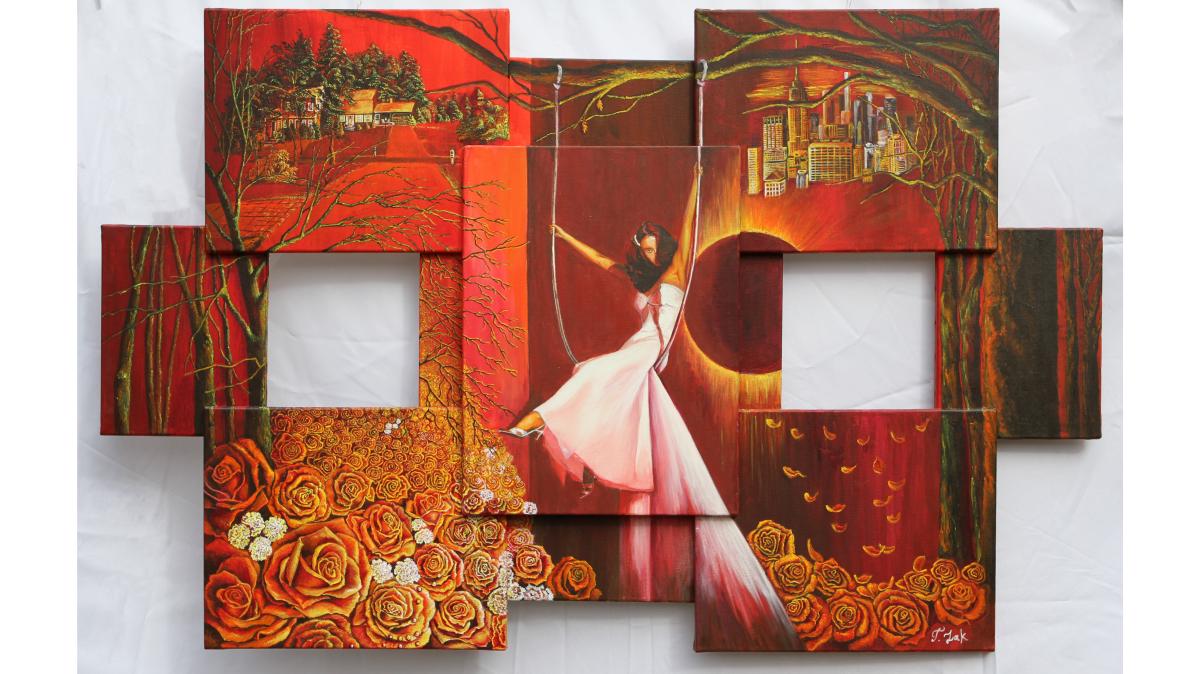
The Swing of Life™ Installation offers something most calming wall art does not: a layered narrative that speaks to life's complexity. This multi-panel hand-embellished collector edition explores fragility, strength, and the complexity of living.

Each piece is individually hand-enhanced with acrylic paint by the artist, making every edition unique. The composition includes a bride on a swing, a fragile dry branch, two enduring oak leaves, and blooming roses, a meditation on uncertainty and beauty that resonates deeply with individuals moving through life transitions.
This is not a standard print. The artist's hand becomes part of every surface, bridging the gap between reproduction and original artwork. For therapeutic environments and creative spaces where presence matters, this installation holds space rather than merely filling a wall.
"Life is a swing, uncertain, fragile, and yet so full of beauty. I hope this painting speaks to anyone who has ever felt both the fragility and the joy of being alive.", Tatyana Zak
3. Night Blues of the Suburbs: Finding Calm in the Familiar
Night Blues of the Suburbs proves that healing imagery does not always require nature scenes. This contemporary piece captures the quiet charm of a small New England town after dark, using cool layers of blue and muted tones to evoke the stillness of a peaceful evening.

A softly illuminated house emerges from behind expressive trees, while a winding road guides the viewer through the subdued landscape. The familiar suburban setting feels personal, comforting, and gently mysterious, offering what environmental psychology calls a positive distraction rooted in recognizable reality.
For healthcare facilities or home offices where patients or residents may feel displaced, familiar imagery can reduce anxiety more effectively than abstract concepts. This hand-enhanced limited edition print is signed and numbered, with a Certificate of Authenticity included.
4. Therapeutic Wall Art for Anxiety: Choosing Calming Color Palettes
Therapeutic wall art for anxiety relies less on subject matter and more on color psychology. High-saturation, high-contrast hues like pure red or bright yellow increase visual processing load (peer-reviewed research). In contrast, low-saturation, low-luminance colors, muted sage, dusty blue, warm taupe, soft lavender, require less cognitive effort to process.
When selecting art for healing spaces, consider these specific color parameters rather than just the general hue:
- Saturation matters more than hue. A deep forest green at 80% saturation can feel more agitating than a muted terracotta at 30% saturation. Look for colors that appear "grayed down" or dusty.
- Value (lightness) affects energy. Mid-to-dark values with soft contrast between adjacent colors create a lower-stimulation environment than high-contrast black-and-white or complementary color pairings.
- Warm neutrals are underrated. Greige, warm cream, and soft oatmeal tones provide the visual warmth of beige without the clinical sterility of pure white, making them excellent background colors for art in shared healing spaces.
A common pattern in evidence-based design is the use of nature-derived palettes that mimic the low-arousal color schemes found in dense forests or overcast coastal scenes. These palettes typically feature analogous color harmonies (colors adjacent on the color wheel) rather than complementary harmonies (colors opposite each other).
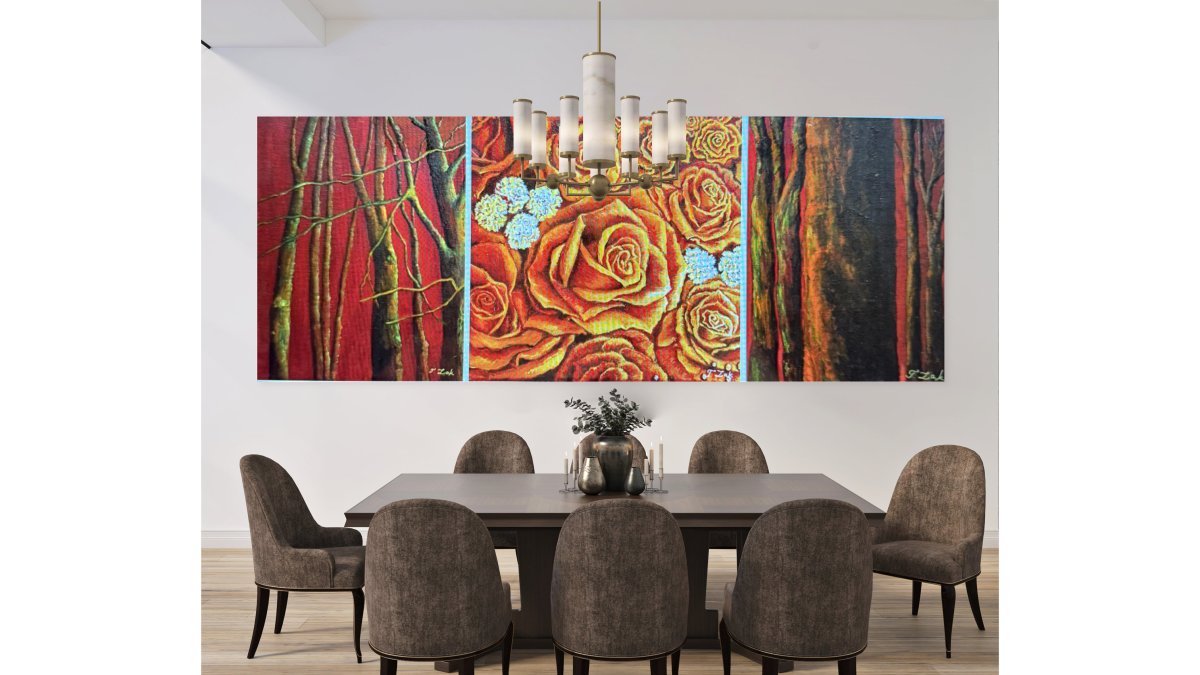
The Set of 3 Canvases, Roses and Trees demonstrates an important exception: it uses a rich red ground with dark silhouettes, showing that even warmer palettes can feel grounded when the composition remains simple and the contrast is managed. The key is not avoiding warm colors entirely but ensuring the overall piece has a unified, low-contrast value structure.
For practical application, test any potential art piece under the actual lighting conditions of the room. A piece that feels serene in a gallery with warm spotlights may feel stark and harsh under cool fluorescent clinical lighting. Similarly, a dim hallway can muddy the subtle value differences that make a muted palette effective. If you cannot view the piece in situ, request a digital mockup or use a color-matching app to compare the artwork's dominant tones against your wall color.
5. Biophilic Art for Healthcare Design: Bringing Nature Indoors
Biophilic art for healthcare design is rooted in the human need to connect with nature, a principle now central to evidence-based design. What separates effective biophilic art from merely decorative landscapes is the degree to which it satisfies specific biophilic design patterns.
Three biophilic patterns are particularly relevant for healthcare settings:
-
Visual connection with nature: Images of water, dense vegetation, or open skies trigger the same parasympathetic response as actual nature views. Research on hospital recovery rooms has shown that patients with window views of trees required fewer pain medications and had shorter stays than those facing brick walls (PubMed). Art that mimics these views can extend this benefit to rooms without windows.
-
Prospect and refuge: The most restorative nature scenes offer both a sense of openness (prospect) and a protected vantage point (refuge). A landscape with a clear foreground element, a tree trunk, a fence line, a porch, and a distant horizon provides this dual sense, which reduces the vigilance response that keeps stress levels elevated.
-
Fractal patterns: Natural scenes that contain mid-complexity fractal patterns (like branching trees or flowing water) occupy the visual system without overwhelming it. These patterns fall in the "Goldilocks zone" of visual complexity, not too simple to be boring, not too complex to be stressful.
The A Four-Panel Journey in Balance collection partially addresses these patterns, moving from a suburban home through rose compositions to a New York City skyline. However, for healthcare designers, the more critical consideration is how the art integrates with the clinical environment's functional requirements.
The maintenance and infection control angle that most biophilic design guides miss: In sterile environments like hospitals, clinics, and dental offices, art must meet the same infection control standards as every other surface. This means:
- Cleanability: Framed prints behind glass or acrylic are the most practical choice for high-touch areas. Unframed canvas collects dust and cannot be wiped down with hospital-grade disinfectants without damaging the surface. If canvas is preferred, it should be placed in low-touch zones at least six feet from patient seating.
- Material selection: Avoid art with deep textures, fabric elements, or three-dimensional components in patient care areas, as these create harborage points for pathogens. Smooth, sealed surfaces are the standard for clinical environments.
- Placement relative to cleaning protocols: Art should not interfere with the cleaning of walls, floors, or equipment. Wall-mounted pieces should be flush or have minimal protrusion to avoid catching cleaning cloths or equipment.
For healthcare facilities, the most effective approach is to work with a qualified art consultant who understands both biophilic design principles and the facility's infection control policies.
6. Meaningful Gifts for Art Collectors in 2026: Art That Heals
Meaningful gifts for art collectors in 2026 are those that carry emotional weight, not just decorative appeal. The Bride on the Swing hand-enhanced print, part of the Swing of Life Collection, embodies this shift toward art as a tool for reflection.
Priced at $495.00, this 24-inch by 18-inch piece features a bride in a flowing satin gown swinging beneath a dramatic sunset. The deep reds and warm golds balance passion and hope, while the hand-enhanced acrylic details make each collector edition unique.
Gifting art requires understanding the recipient's current life context. A piece symbolizing resilience and courage may resonate deeply with someone navigating illness or transition, while serene florals better suit a space dedicated to rest and meditation.

Choosing the best art for healing spaces means moving beyond surface-level aesthetics to consider color psychology, narrative depth, and practical maintenance. The pieces highlighted here, from the serene Lavender Mist Lilies to the narrative-rich Swing of Life Installation, offer meaning and beauty for homes, offices, and healthcare facilities. Explore the Tatyana Zak collection to find hand-embellished prints and original works that support emotional clarity, individual interpretation, and lasting connection. Shop new arrivals and bring meaningful art into the spaces where healing happens.
Frequently Asked Questions
What makes art therapeutic in a healing space?
Art with soft, flowing forms and familiar subjects like florals or landscapes helps create a calming atmosphere. When selecting art for healing spaces, prioritize pieces that evoke personal peace and connection, rather than abstract or jarring compositions.
What color palettes are best for healing environments?
Cool tones like soft blues, greens, and lavenders are often chosen for healing environments. These colors mimic natural settings. Artwork featuring misty florals or twilight suburban scenes in muted blues and greens works well. Avoid high-contrast reds and aggressive geometric patterns that increase visual stimulation. A serene palette of nature-inspired hues can support emotional regulation.
Can abstract art be effective in calming spaces?
Yes, abstract art can be effective when it uses soft, flowing forms and a muted color palette. Gentle curves and layered washes of color provide visual stimulation without overwhelming the viewer. Abstract pieces that evoke natural elements like water or air support a therapeutic environment. However, highly chaotic or high-contrast abstract works may increase anxiety. For spaces dedicated to healing, choose abstract art with a serene, meditative quality that invites contemplation.
How does hand-embellished art add value to a therapeutic environment?
Hand-embellished art adds a layer of human presence and authenticity that standard prints lack. The visible brushstrokes and subtle texture from acrylic paint offer a unique collector experience. This tactile quality bridges the gap between reproduction and original art. In healing spaces, the knowledge that an artist's hand touched the piece adds emotional resonance.