How to Gift Original Art: A Complete Guide
Table of Contents
- Understanding Original Art vs. Limited Edition Prints
- How to Choose Art for Someone Else's Space
- Meaningful Gifts for Art Collectors in 2026
- Selecting the Right Medium: Works on Paper vs. Canvas
- Certificate of Authenticity and Provenance Documentation
- Shipping, Handling, and Presentation
- The Etiquette and Emotional Impact of Gifting Original Art
- Frequently Asked Questions
Last Updated: September 23, 2026
Understanding Original Art vs. Limited Edition Prints
Original art is a one-of-a-kind piece created directly by the artist. When you gift original art, you're giving something that exists nowhere else in the world.
Limited edition prints are reproductions made in a specific, fixed quantity, each numbered (like 1/100 or 50/250). Hand-embellished prints blur this line, they start as reproductions but become unique when the artist adds acrylic paint, texture, or details by hand.
Original art carries more weight and represents a significant investment. Limited edition prints, especially hand-enhanced ones, offer beauty and artistry at a more accessible price point while still feeling personal. At Tatyana Zak, our hand-embellished prints become individual pieces through the artist's direct involvement, letting you gift meaningful, collectible art without the five-figure price tag of a full original.
How to Choose Art for Someone Else's Space
Start with what you know about them: Do they prefer calm or bold spaces? What colors dominate their home? What mood do they need? Consider the room's function, bedrooms need restful art, offices need inspiring work, living rooms can be bolder.
Ask indirect questions if possible: "What colors make you feel calm?" or "Do you prefer landscapes or abstract work?" If unsure about their taste, choose art that's emotionally resonant rather than trend-driven. Pieces exploring themes of growth, healing, resilience, or beauty tend to connect across different preferences because they speak to universal human experiences.

Meaningful Gifts for Art Collectors in 2026
Collectors notice quality, provenance, and uniqueness. Focus on pieces with depth that explore meaningful themes and reveal new layers over time. Hand-embellished original pieces are ideal, they're more affordable than major paintings but carry the artist's direct involvement and genuine uniqueness.
Consider the artist's body of work: Does this piece fit into a series or theme? Does it represent growth in their practice? For 2026, collectors are drawn to art addressing emotional and psychological themes, work exploring resilience, transformation, and healing that appreciates in both emotional and financial value.
Selecting the Right Medium: Works on Paper vs. Canvas
Works on paper (drawings, watercolors, pastels) feel intimate and personal but require careful handling, they're sensitive to light, humidity, and temperature, and need archival framing. Canvas pieces feel more substantial and permanent, handle casual display better, and work for bold, dramatic work.
For gifting, consider the recipient's lifestyle: Canvas suits homes with kids and pets; paper works in carefully curated spaces; canvas is easier to transport if they move frequently. Tatyana Zak's hand-embellished prints are available on canvas.
Certificate of Authenticity and Provenance Documentation
Always include documentation when gifting original art or hand-embellished limited editions. A certificate of authenticity confirms the piece is genuine and includes title, date, materials, edition number, and artist signature. Provenance documentation traces the piece's history and adds emotional and financial value.
These documents protect your investment, prove authenticity, and tell the piece's story. When you acquire original art from Tatyana Zak, you'll receive a Certificate of Authenticity and provenance documentation. Keep them safe and pass them along with the gift, they enhance the recipient's connection to the piece and its significance.
Shipping, Handling, and Presentation
Packing for transit: Wrap the piece in acid-free tissue or kraft paper first. For canvas, use corner protectors on all four corners. For works on paper, sandwich between rigid backing boards with protective paper between art and boards. Never use direct contact with bubble wrap or plastic. Use a box 2-3 inches larger than the artwork on all sides, filled with packing peanuts or foam sheets so the piece cannot shift.
Choosing a carrier and insurance
UPS Fine Art Shipping covers original art up to $100,000 with declared value insurance, signature on delivery, and tracking, best for pieces under $5,000. FedEx offers similar coverage with stricter packing requirements and longer claims windows (up to 60 days), preferred for pieces over $10,000. USPS Registered Mail works for smaller pieces under 70 pounds but is slower.
Always declare the full retail value of the piece. Underinsuring to save on premiums means you'll only recover the declared amount if damage occurs.
Temperature and humidity control
Documentation and condition reporting
Photograph the piece from multiple angles in natural light before shipping, including close-ups of any imperfections, frame, back, and packaging. Request signature-required delivery so the recipient can inspect immediately and note any damage before signing. Include a packing slip listing the piece's title, artist name, edition number, certificate of authenticity number, and care instructions.
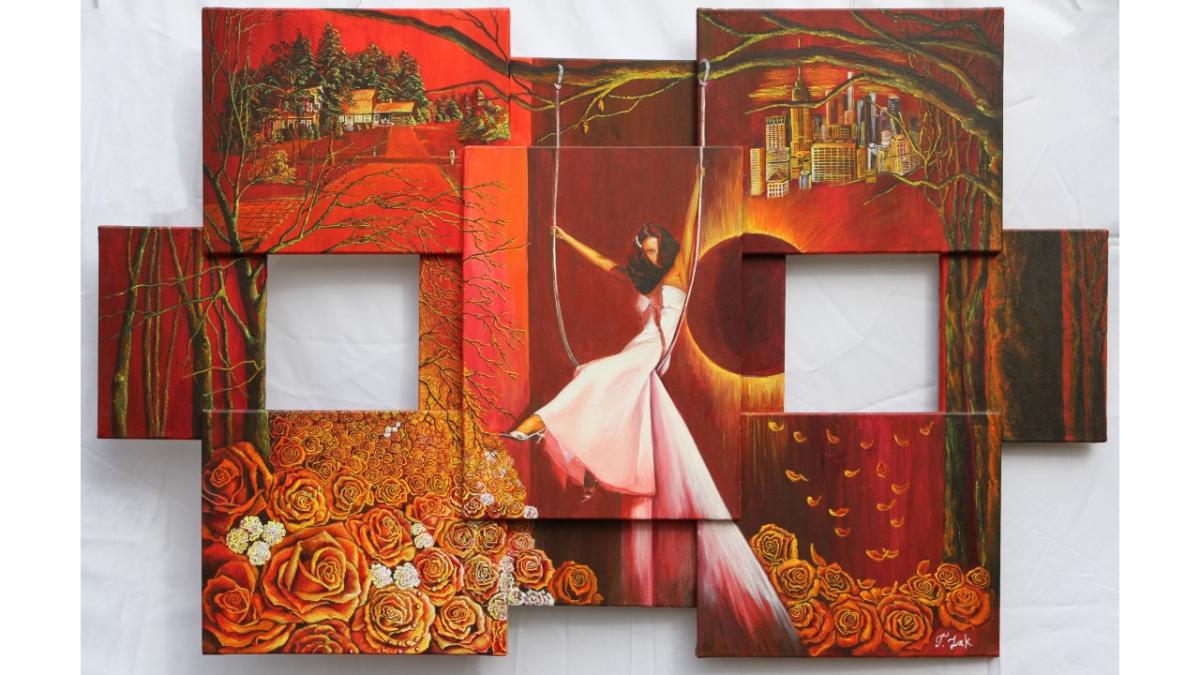
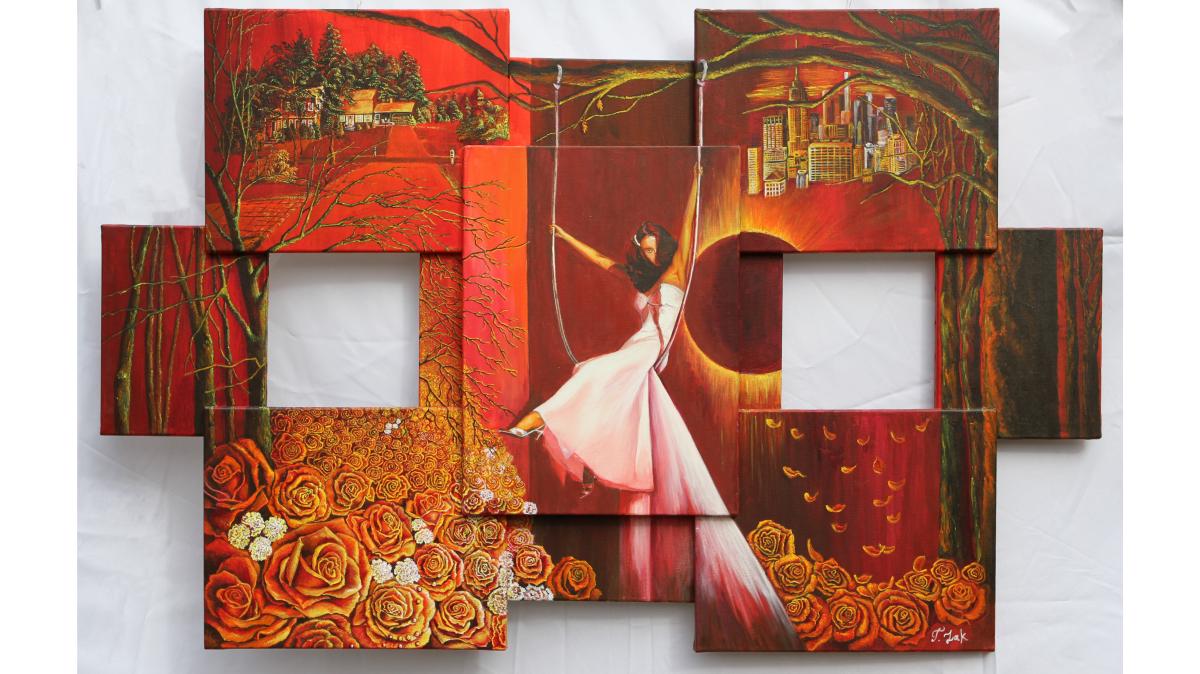
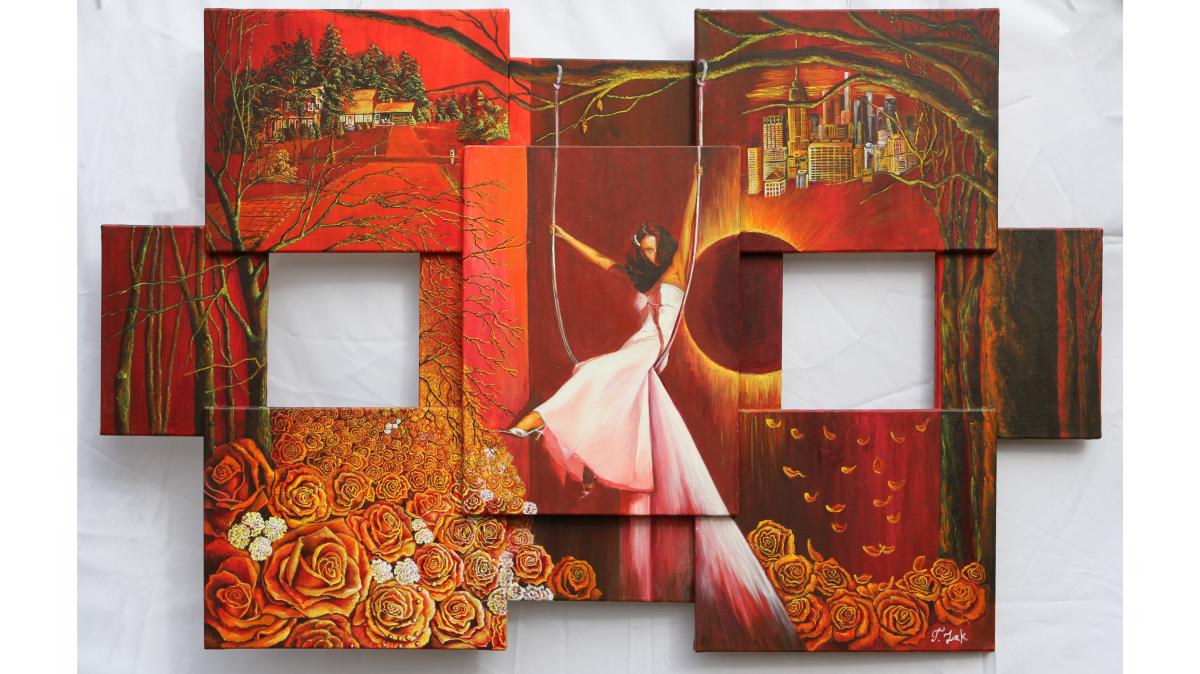
Swing of Life™- 42" x 66" Original →
What to do if damage occurs
If the piece arrives damaged, the recipient should: (1) Document immediately with photos of damage and packaging; (2) Contact the carrier within 24 hours with tracking number, declared value, and photos; (3) Keep all packaging for inspection; (4) Notify the sender. Most carriers process claims within 30-60 days. For hand-embellished pieces or originals, insurance at full retail value is essential.
Presentation and unboxing
Include a handwritten note explaining why you chose this piece and what you hope it brings to their space. Reference the artist's inspiration or themes. If framing is needed, offer to arrange it or recommend UV-protective glass and archival materials for paper, or a complementary frame for canvas. Include care instructions: keep paper out of direct sunlight and humidity; dust canvas gently with a soft, dry cloth. Never use water or cleaning solutions on original art.
The Etiquette and Emotional Impact of Gifting Original Art
Gifting original art is intimate, but recipients may feel overwhelmed by value, pressured to display it immediately, uncertain about their taste, or burdened by care requirements. Address these directly: "I chose this because I thought it would speak to you. There's no pressure to display it right away. Live with it for a few weeks and see how you feel. If it doesn't resonate, we can talk about that." This removes pressure and makes the gift feel collaborative rather than obligatory.
What to do if the recipient doesn't like the piece
Art is subjective, a piece that moves you may not resonate with someone else, and that's okay. If the recipient expresses hesitation, listen without taking it personally.
Tax and legal considerations for high-value art gifts
Gift tax implications:
Valuation for tax purposes:
Provenance and authenticity for high-value pieces:
When you gift original art, ensure the recipient receives:
- Certificate of authenticity signed by the artist or issued by the gallery
- Provenance documentation showing the piece's history and ownership chain
- Appraisal (optional but recommended for pieces over $10,000)
- Insurance documentation showing the declared value
Gifting art to someone navigating difficult transitions
When gifting art to someone in this position:
- Choose pieces that acknowledge their experience without being dark. Avoid art that feels depressing or hopeless. Look for work that explores resilience, growth, or quiet beauty.
- Explain why you chose it. Reference the themes or emotional resonance. Help them see what you saw.
- Offer to help with placement. Suggest a space where they'll see it daily, a bedroom, office, or reading nook. The placement matters.
- Follow up. After a few weeks, ask how they're feeling about the piece. This shows you care about their response, not just the gift itself.
Frequently Asked Questions
What should you include when gifting original artwork?
Always include a certificate of authenticity, provenance documentation, artist biography, and care instructions. For hand-embellished pieces like those from Tatyana Zak, include details about the hand-applied acrylic enhancements and why each piece is unique. Provide shipping insurance documentation and contact information for the artist or gallery in case questions arise later. This documentation protects the gift's value and helps the recipient understand the piece's significance.
How do you choose art for someone else's home?
Start by observing their existing décor, color preferences, and emotional resonance. Consider their lifestyle, a family with children needs durable framing, while a collector values provenance and medium. Ask subtle questions about subjects they're drawn to: florals, portraits, abstracts, or figurative work. Visit their space to understand lighting and wall space. For meaningful gifts, choose pieces that reflect their values or life journey. Hand-embellished original artwork works well for collectors seeking unique, investment-quality pieces.
Is it better to gift art or a gift card for an art gallery?
A curated original artwork shows personal thoughtfulness and commitment, making it more meaningful for serious collectors. A gift card offers flexibility but removes the personal selection element. For someone with specific taste or anxiety about receiving art, a gift card works better. For collectors seeking meaningful gifts, original artwork demonstrates you've invested time understanding their aesthetic. Consider offering both: a hand-embellished piece paired with a gift card for future additions to their collection.
How do you wrap original art for a gift?
Use archival-quality paper to protect the surface without damaging the artwork. For framed pieces, wrap in kraft paper with bubble wrap padding at corners and edges. For unframed canvas or works on paper, use glassine or acid-free tissue, then wrap in kraft paper. Never use plastic wrap directly on artwork, it traps moisture. Secure wrapping with acid-free tape. Include a card explaining the piece's provenance and care instructions. For valuable original artwork, consider professional shipping services that include insured, climate-controlled transport.