How to Choose Art for Emotional Healing: A 2026 Guide
Table of Contents
- Start With the Feeling, Not the Painting
- Art Therapy for Emotional Healing: What It Is and What It Is Not
- A Step-by-Step Framework for Choosing Your Medium
- Calming Art for Anxiety: Colors, Motion, and Composition
- How to Choose Meaningful Artwork You Will Not Outgrow
- Healing Art for Home: Practical Rules for Real Rooms
- Trauma-Informed and Culturally Sensitive Selection
- When Art Is Not Enough: Limits and Professional Support
- Frequently Asked Questions
Last Updated: October 5, 2026
Start With the Feeling, Not the Painting
Most people choose art for emotional healing backwards: they browse, spot something pretty, and hope it does something.
Art supports emotional healing when it gives a feeling somewhere to live, mirroring what you carry, or gently pointing toward calm.
A common mistake is buying for the room instead of the person. You match the couch, not your mood.
Below: picking a medium, matching color and scale to how you feel, and avoiding pieces you outgrow in a season.
Name What You Want the Art to Hold
Before you look at anything, write down one word for how you feel right now. Grief. Restlessness. Hope. Anxiety. That word is your filter.
Then ask: should the art match that feeling or move you past it? Both are valid. Some need "I know." Others need "not forever."
Try this quick exercise:
- Write your feeling in one word.
- Write the feeling you want in one word.
- Note whether those two words are the same or different.
That small list turns a vague search into a clear target.
Art Therapy for Emotional Healing: What It Is and What It Is Not
Art therapy for emotional healing is a mental health profession where a trained therapist uses art-making within a clinical relationship.
A licensed art therapist holds specific credentials and works toward clinical goals. Choosing a painting for your living room is a personal practice, not therapy, though it can still support your wellbeing.
What art does well on its own:
- Gives difficult emotions a safe outlet
- Slows racing thoughts through focused attention
- Creates a record of where you were and how far you have come
What art does not do:
- Diagnose or treat a mental health condition
- Replace medication, therapy, or medical care
- Work the same way for everyone
Many people find pairing a self-guided practice with professional support works best. The art carries the feeling between sessions; the therapist helps you understand it.
A Step-by-Step Framework for Choosing Your Medium
Three decisions shape everything else: make or buy, which medium, and what size and place. Work through them in order. Each one narrows the next.
Step 1: Decide Whether You Want to Make Art or Live With It
Ask whether you want to be active or receptive. Making art suits people who need to move energy out of the body. Living with art suits people who need a steady presence in a room.
Choose making if you:
- Feel stuck and need to move
- Want privacy for messy feelings
- Prefer process over a finished object
Choose buying or displaying if you:
- Want comfort without effort
- Need something stable to return to
- Feel drained and want to receive, not produce
Neither is better; they meet different needs on different days. You can do both: make in one corner of your week, display in the room where you rest.
Step 2: Run the Medium Through Four Filters
Filter 1, Comfort and access. Can you physically do this today?
Filter 2, Cost and replenishment. Some media are one-time buys; others drain a budget.
Filter 3, Mess, space, and cleanup. Where will you work, and who else uses that space? Oil paint needs ventilation; pastels dust; glitter travels.
Filter 4, Desired experience. Ask what you want the session to feel like.
Step 3: Match the Medium to the Emotion
With the filters applied, use this as a starting point, a prompt, not a prescription.
| If you feel | Try making | Or display |
|---|---|---|
| Anxious, racing | Repetitive drawing, knitting, weaving | Soft, slow abstract work |
| Grieving | Collage, journaling, layered watercolor | Warm, quiet landscape |
| Angry | Clay, large brushwork, tearing and reassembling paper | Bold, high-contrast piece |
| Numb | Texture play, finger paint, blind contour drawing | Layered, tactile canvas |
| Hopeful | Watercolor, light color, botanical studies | Bright, open composition |
| Overwhelmed | Single-color mark-making, one-line drawing | Minimal, low-detail work |
Notice what draws your eye. That pull is information. If two rows fit, start with the one whose supplies you already own.

Step 4: Low-Pressure and Low-Cost Alternatives
You do not need an art store to begin. Low-cost options:
- A pencil and the back of an envelope
- A phone camera and a walk to photograph textures, shadows, or color
- A stack of old magazines and a glue stick for collage
If drawing feels loaded, skip it. Collage, photography, and fiber work are legitimate expressive practices. The point is contact with the material, not skill.
Step 5: Choose the Scale and Placement Before You Fall in Love
Scale changes how a piece feels. A small work invites you close. A large one holds the room. For emotional support, place art where you already pause: a bedside wall, a desk corner, a hallway you pass slowly.
Measure the wall. Tape the outline with painter's tape. Live with the shape for a day before you commit.
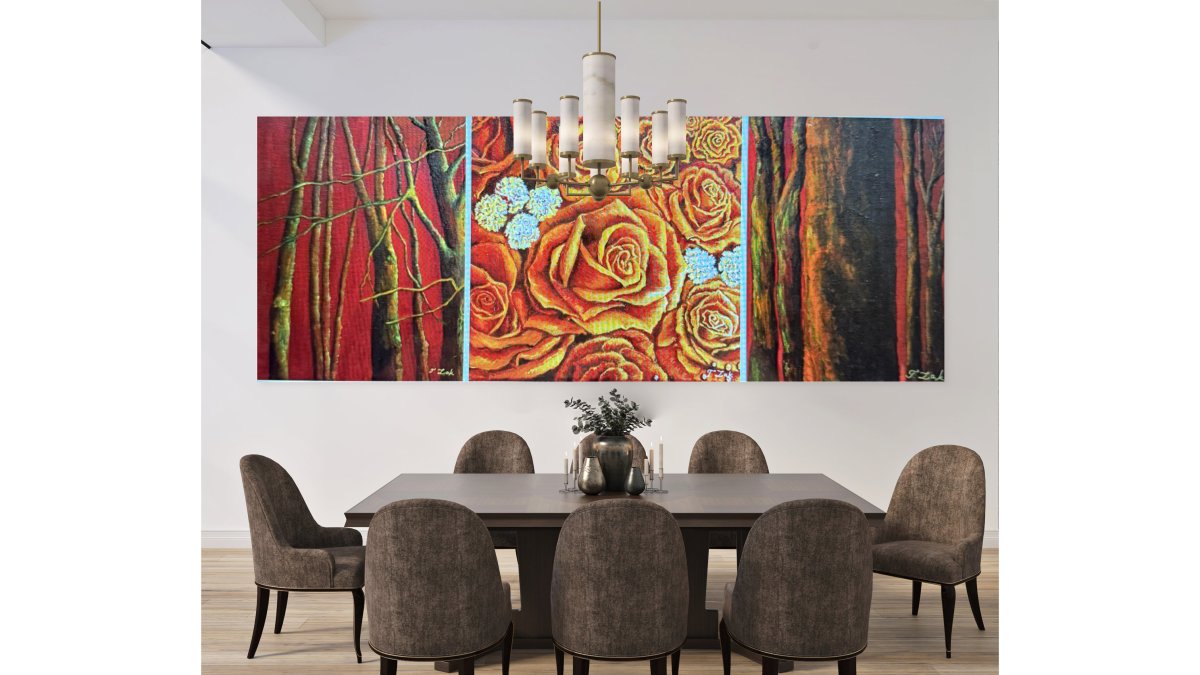
Set of 3 Canvases- Roses and Trees →
Calming Art for Anxiety: Colors, Motion, and Composition
Calming art for anxiety tends to share a few traits: soft color, slow or still motion, and open space, giving a racing mind somewhere to rest.
Look for:
- Cool and muted tones: blues, greens, soft grays
- Gentle curves over sharp angles
- Room to breathe within the frame
Be careful with high-contrast, busy work during anxious periods. It can amplify the feeling instead of settling it.
Placement matters too. Keep calming work where you need to settle, like the bedroom or home office, and save bolder pieces for spaces where energy helps.
How to Choose Meaningful Artwork You Will Not Outgrow
Meaningful art connects to a story you tell about yourself. To choose artwork you will keep, pick pieces tied to memory, place, or a value you hold, not just a trend.
Read the Piece Before You Buy It
Stand in front of the work, or open it full-screen, and run a short read:
- Subject. What is depicted, a figure, landscape, abstraction, pattern? Notice whether your eye returns to one area or roams.
- Color temperature. Warm tones (reds, oranges, yellows) energize; cool tones (blues, greens, grays) settle. Mixed palettes can feel restless or alive depending on contrast.
- Composition. Where is the weight? A centered, symmetrical piece feels stable; an off-balance piece feels active. Open space inside the frame gives the eye rest.
Match the Piece to the Emotional Job
Different rooms and moments ask for different work:
- For rest and sleep: low-contrast, cool or neutral palettes, still or slow imagery, open composition. Avoid high-contrast or busy work near the bed.
- For focus and work: structured composition, limited palette, minimal subject matter. A single strong shape or quiet abstract holds attention without pulling it.
- For grief: warm, quiet imagery, soft edges, landscapes with horizon lines, or abstract work with layered color. Avoid imagery tied to a specific personal loss unless you are ready for it.
Questions That Predict Staying Power
Ask three questions before you commit:
- Does this piece remind me of something real, a place, a person, a period of my life?
- Would I still want it if no one else saw it?
- Does it say something I would struggle to say out loud?
If the answer is yes to two of the three, it has staying power. Trendy work fades fast. A piece tied to your own life keeps its charge.
Choose the Object, Not Just the Image
Art you live with is not only a picture. Consider:
- Originals versus reproductions. An original carries the artist's hand, texture, variation, small imperfections. A reproduction is flatter but far more affordable. Neither is wrong; know which you are buying.
- Hand-embellished prints. Some artists add paint or texture by hand to a printed base, so each piece differs slightly. This sits between a print and an original in both price and presence.
- Framing. Glass over a textured surface flattens it and blocks touch. A floater frame or open display lets texture read.
Test Before You Commit
If you can, live with the image for a few days. Save it as a phone wallpaper, print a small version, or tape a paper mockup to the wall. Notice how you feel on a hard morning, not just a good one. The piece that still works when you are tired is the one you keep.
Healing Art for Home: Practical Rules for Real Rooms
Healing art for home works best when it fits the way you actually live. A piece you worry about is not calming. A piece you enjoy daily is.

Start with the room's job. Bedrooms want quiet. Entryways want welcome. Workspaces want focus. Then apply a few simple rules:
- Match the piece to the light. Bright rooms suit warm tones.
- Leave breathing room. Crowded walls feel loud.
- Group small works in odd numbers for balance.
If you have kids or pets, choose durable surfaces and secure hanging. Meaningful art can live in a busy home. It just needs to be hung well.
Trauma-Informed and Culturally Sensitive Selection
Art can hold heavy material, so choose with care. A trauma-informed approach means you stay in control of what you look at and when. If a piece stirs more than you can carry, look away, there is no obligation to sit with discomfort.
A few guiding points:
- Notice your body's response, not just your taste.
- Avoid imagery tied to a personal wound unless you are ready.
- Respect the culture a piece comes from. Learn its story.
Cultural sensitivity is not about avoiding difference but honoring it. When you know where a motif or symbol comes from, the piece deepens instead of misleads.
When Art Is Not Enough: Limits and Professional Support
Art supports emotional wellbeing, but it has limits. If you cannot sleep, eat, or function, art is not the answer on its own.
Signs it is time to seek help:
- Sadness that does not lift for weeks
- Loss of interest in things you loved
- Thoughts of harming yourself
If you are in crisis, contact the 988 Suicide and Crisis Lifeline for free, confidential support.
For general guidance on how creative practices fit into mental health care, the American Art Therapy Association explains what credentialed art therapists do and how to find one. The National Institute of Mental Health also outlines when to seek professional care.
Art and professional support are not rivals. They work well side by side. The art holds the feeling. The therapist helps you understand it.
Frequently Asked Questions
Can art therapy help with emotional healing?
Art therapy for emotional healing can help when it is guided by a trained therapist and used as part of a broader plan. The American Art Therapy Association describes it as a mental health profession that uses active art-making and the creative process within a therapeutic relationship. It is not a replacement for psychotherapy or medical care, but many people find that making or living with art gives them a safe outlet for stress relief, reflection, and emotional balance between sessions.
What kind of art calms anxiety?
Calming art for anxiety tends to share a few traits: slower visual rhythm, softer edges, open space, and colors that do not compete for attention. Cool greens and blues, muted earth tones, and gentle gradients often feel settling, while high-contrast, fast, or crowded compositions can feel activating. The most reliable test is physical. Look at a piece for two full minutes and notice your breathing, jaw, and shoulders. If they soften, that is useful information about how the artwork affects you.
How do I choose artwork that feels comforting?
Start with the feeling you want in the room, not the style. Write down three words, such as steady, quiet, or hopeful, then look for work that matches those words in color, scale, and subject. Size matters more than most people expect: a piece that is too small for the wall can feel lost, while an oversized work in a small room can feel heavy. Also decide whether you want to make the art yourself or live with finished work, since both are valid paths to comfort.
Should I choose art based on its colors or its meaning?
Both matter, but they do different jobs. Color affects mood quickly and physically, so it shapes how a room feels the moment you walk in. Meaning affects staying power, which is why a piece tied to a memory, a transition, or a value tends to hold your attention for years rather than months. Choose color first if you are solving a room that feels tense or flat. Choose meaning first if you are marking a life change, and let color guide you among the meaningful options.
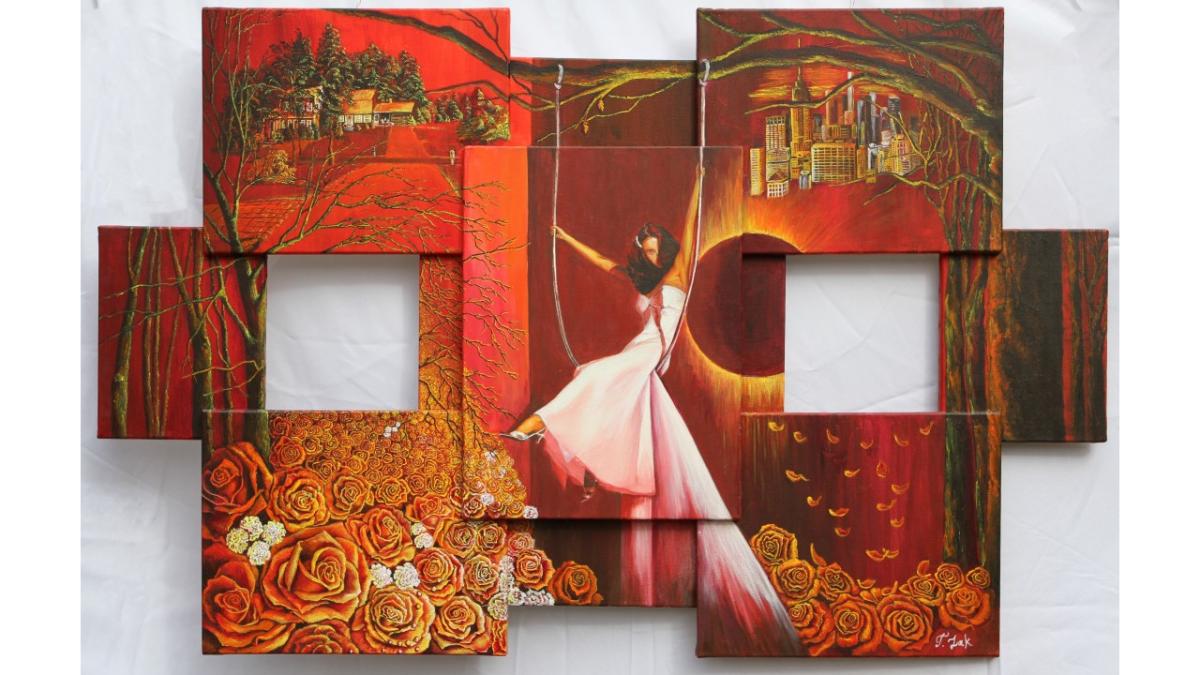
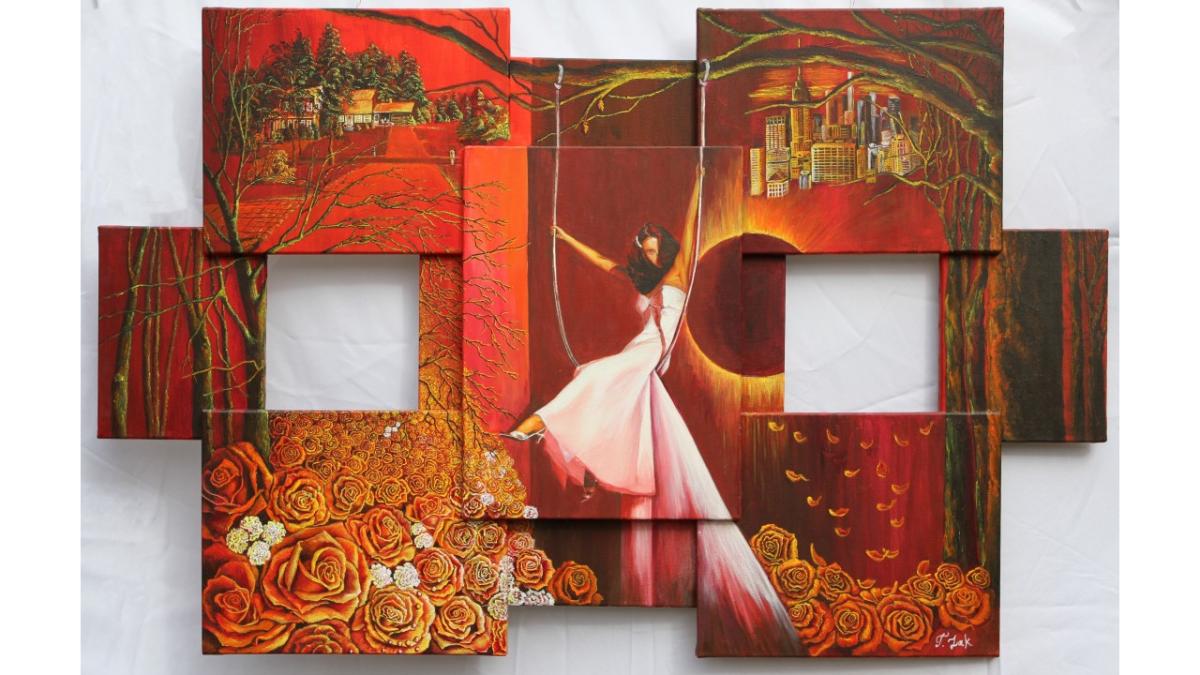
Choosing art for emotional healing takes a little honesty and a clear process. Name the feeling, pick the medium, then match the piece to your space and your life. If you want work that carries real presence, Tatyana Zak offers hand-embellished limited edition prints, art sets, and the Swing of Life™ collector installation, each one individually finished with acrylic so no two are alike. Shop new arrivals and find the piece that holds your space.