How to Buy Art for Healing: A Step-by-Step Guide
Table of Contents
- Step 1: Define Your Emotional Goal Before You Buy Art for Healing
- Step 2: How to Choose Art for Emotional Well-Being
- Step 3: Match Art Type to Your Space and Budget
- Step 4: The Therapeutic Benefits of Art in the Home
- Step 5: Choosing Art for Clinical and Professional Environments
- Step 6: Meaningful Gifts for Art Collectors 2026
- Step 7: Maintenance, Longevity, and Accessibility Considerations
- Conclusion
- Frequently Asked Questions
Last Updated: September 16, 2026
Step 1: Define Your Emotional Goal Before You Buy Art for Healing
Before you buy art for healing, name the feeling you want the room to hold. That decision narrows thousands of options to a handful.

Most buyers start with color matching or wall measurements, but intent comes first: do you want a space that calms you, lifts your energy, or helps you process grief or transition? Art chosen with a clear emotional goal tends to stay on the wall for decades.
A practical exercise: write one sentence describing how you want to feel in the room, then list three words that capture it. "I want to feel settled and unhurried" might produce stillness, softness, breath, your filter for every piece.
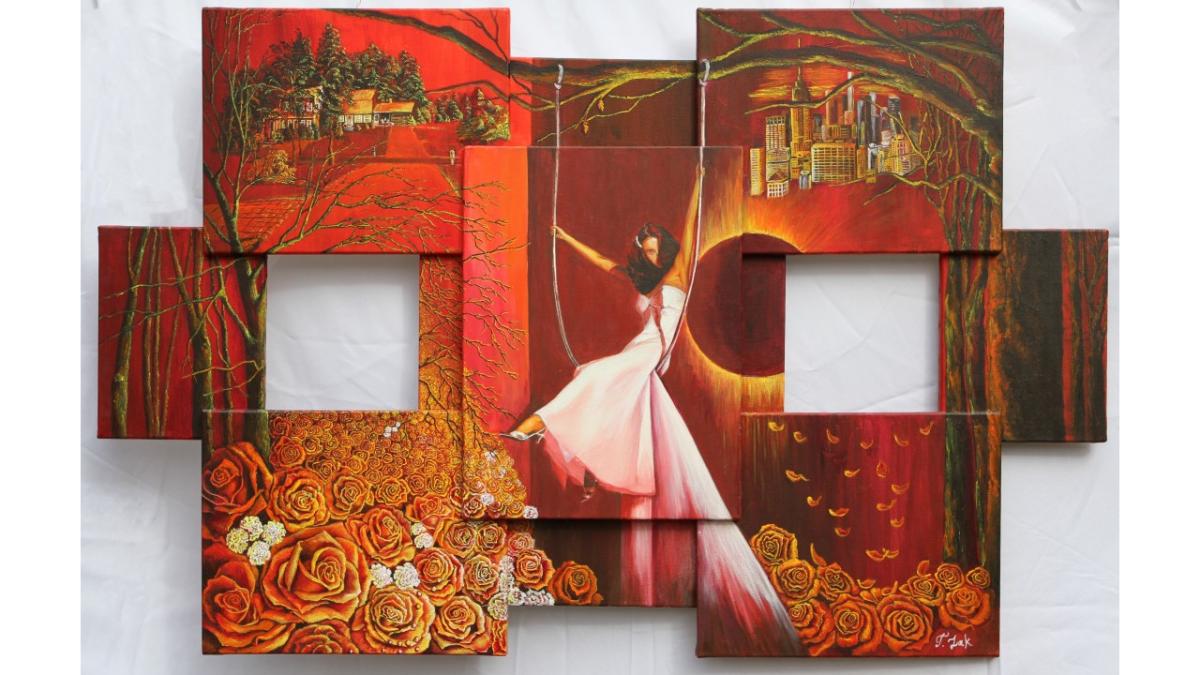
At Tatyana Zak, the studio's Swing of Life™ collection was built around exactly this idea, pairing images of stability and movement so collectors can choose the emotional register that fits their space.
Step 2: How to Choose Art for Emotional Well-Being
To choose art for emotional well-being, prioritize how a piece makes you feel in your body before analyzing technique, artist, or price. Emotional response is data.
A useful framework groups candidate pieces into three categories:
- Anchors: grounded, symmetrical compositions that create steadiness
- Openers: airy, expansive work with lots of negative space that invites reflection
- Movers: dynamic, textured pieces with visible gesture that suggest momentum
Buyers navigating a life transition often do best with openers; someone recovering from burnout usually needs anchors; someone starting a new chapter responds to movers.
Color Psychology and Visual Compositions That Promote Calm
Color psychology points toward cool, muted palettes for restorative spaces. Greens and blues at lower saturation read as calm; warm reds and oranges raise arousal, suiting social spaces but feeling activating in a bedroom.
For a restorative environment, look for:
- Muted greens, blues, and lavenders
- Soft edges rather than hard geometric contrast
- Plenty of negative space
- Organic, nature-based imagery
Step 3: Match Art Type to Your Space and Budget
Match the art type to the room's function and your budget before falling in love with a specific piece. The right format in the wrong space creates daily friction.
Original Art, Hand-Enhanced Prints, and Canvas Prints Compared
| Format | Typical Price Range | Best For | Uniqueness |
|---|---|---|---|
| Original painting | $500-$5,000+ depending on size and artist | Collectors, statement walls | One of one |
| Hand-enhanced limited edition | $150-$800 | Buyers wanting original character | Small edition, each unique |
| Standard canvas print | $40-$200 | Renters, first-time buyers | Reproduced |
| Open-edition poster or paper print | $15-$60 | Dorm rooms, rotating displays | Reproduced |
These ranges reflect what most independent artists and print studios charge for wall-ready work in common sizes (16" x 20" to 30" x 40"). Gallery markups and framing push originals higher.
Budget-Friendly Healing Art You Can Source or Make
If your budget is tight, you have a few paths to consider.
Step 4: The Therapeutic Benefits of Art in the Home
Art in the home can offer therapeutic benefits through daily contact with imagery that can regulate mood.
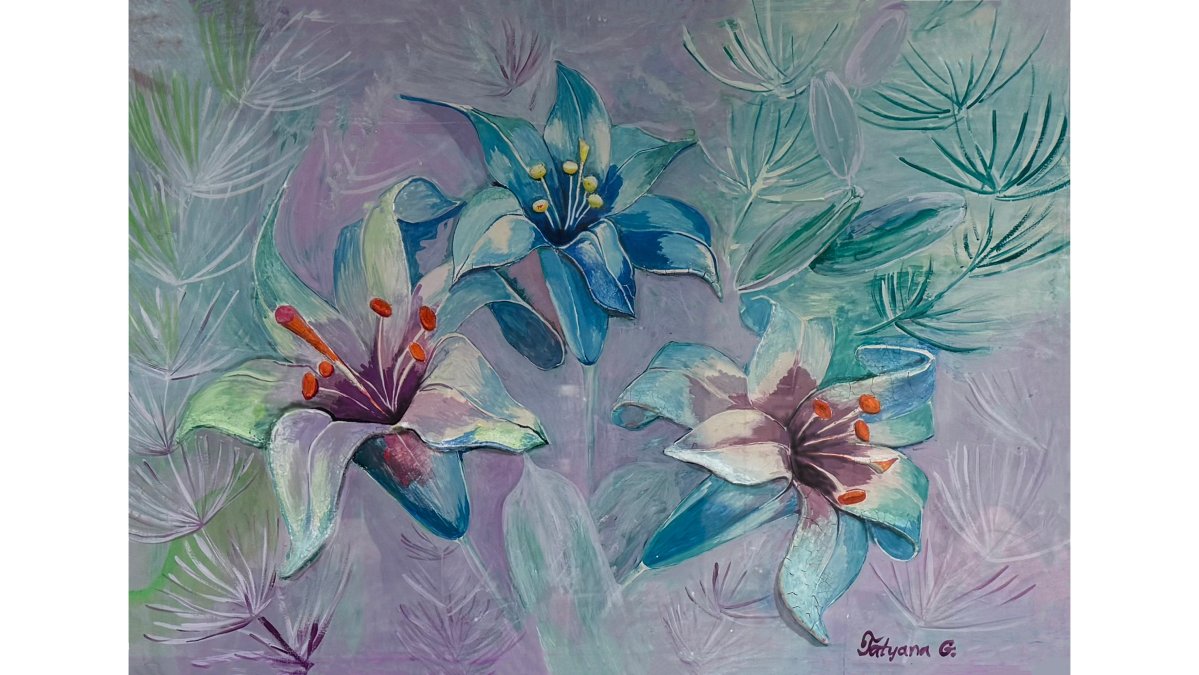
Lavender Mist Lilies Acrylic on Canvas →
Step 5: Choosing Art for Clinical and Professional Environments
Clinical and professional spaces need art that works for everyone in the room, not just the person who chose it. That constraint changes the selection criteria.
What Evidence-Based Healthcare Design Actually Specifies
Healthcare design research has identified practical considerations for facilities.
- Subject matter: Nature scenes with visible depth (a path, a horizon, a shoreline) outperform flat patterns. Patients may prefer scenes with a clear focal point and a sense of safe distance.
- Color: Muted greens, blues, and earth tones dominate. High-saturation reds and oranges are often avoided in patient rooms.
- Scale: Art should be large enough to read from the patient's bed or chair, but not so large it dominates the wall. A common guideline is that the image should occupy roughly 60-75% of the wall width above the headwall or seating area.
- Placement: Hang at seated eye level (roughly 48-60 inches from the floor to the center of the piece) so it is visible to people who are seated, in wheelchairs, or lying in bed.
- Framing: Avoid glass in patient-accessible areas. Acrylic glazing, canvas, or unframed panels reduce breakage risk and glare.
- Lighting: Indirect, even lighting reduces glare. Avoid spotlights that create hot spots on glossy surfaces.
Matching Art to Specific Clinical and Professional Settings
Different rooms carry different emotional jobs; the art should follow the job.
- Patient rooms and exam rooms: Calm nature imagery, low contrast, no figures making eye contact. The goal is often to promote a sense of calm.
- Waiting rooms: Slightly more visual interest is fine, but avoid busy patterns that increase perceived wait time. A single large piece beats a scattered gallery wall.
- Procedure and treatment rooms: Distraction imagery works here, scenes with depth that the eye can wander into. Many facilities place these on the ceiling or opposite the chair.
- Behavioral health and memory care: Simpler subjects can be beneficial. Familiar, unambiguous subjects (a single tree, a clear horizon) may reduce confusion. Abstract work that can be misread is often avoided.
- Corporate and hospitality lobbies: The priorities shift toward durability, neutral emotional register, and scale large enough to be read from across the space. Nothing should dominate the room.
Durability and Cleanability in Shared Spaces
Shared spaces are hard on art; the materials that survive are designed for it.
- Canvas and hand-enhanced canvas tolerate wiping with a soft, slightly damp cloth and have no glass to shatter.
- Acrylic-faced prints resist moisture and can be cleaned with a non-ammonia glass cleaner, but the surface scratches more easily than glass.
- Framed paper under glass is the least durable option in high-traffic areas and is best reserved for offices and administrative spaces.
- Sealed or varnished originals hold up better than unvarnished work in humid or frequently cleaned rooms.
Step 6: Meaningful Gifts for Art Collectors 2026
Meaningful gifts for art collectors can prioritize emotional resonance and provenance. A piece with a story may be more impactful than a pricier piece without one.
Step 7: Maintenance, Longevity, and Accessibility Considerations
Maintenance and accessibility decide whether a piece stays beautiful and whether everyone in the household can enjoy it. Both are easy to plan for and easy to overlook.
For longevity:
- Keep art out of direct sunlight, which fades pigments over time
- Dust canvas with a dry, soft brush rather than a damp cloth
- Avoid hanging above heat sources or in humid bathrooms unless the piece is sealed
- Use proper hanging hardware rated for the weight
Conclusion
Choosing art that genuinely supports your emotional life can take more thought than picking a color that matches the sofa. Buyers who define their emotional goal first, then match format, palette, and placement to it, may find work they continue to enjoy.
Frequently Asked Questions
Can original art provide more healing benefits than prints?
Original art and hand-enhanced prints can offer a deeper sensory experience because of visible texture, brushwork, and slight variations that engage the eye more actively. However, the potential therapeutic benefits of art in the home come primarily from the emotional connection you feel with the piece, not its price tag. A limited edition print that resonates with you personally can support emotional restoration just as meaningfully as an original. The key is choosing imagery that evokes calm, comfort, or reflection for you specifically.
How do I choose art that promotes a sense of calm?
Start by identifying colors and themes that feel soothing to you. Cool tones like blues, greens, and lavenders are often associated with quiet reflection, while nature-based imagery such as florals, trees, or misty landscapes can contribute to a restorative environment. Look for visual compositions with open space and gentle movement rather than harsh contrasts. Before buying, sit with an image for a few minutes and notice how your body responds. If your breathing slows and your shoulders relax, that piece may be a strong candidate.
What types of art are best for emotional healing?
Art that reflects your personal experience can be effective for emotional healing. Nature-based imagery, abstract compositions with soft transitions, and pieces that symbolize renewal or resilience are common choices. For collectors drawn to depth, multi-layered works that reveal new details over time can support ongoing self-awareness and mindfulness. There is no single correct style; the best piece is one you return to repeatedly and still find something new in each time you look at it.
How can I incorporate healing art into my home or office?
Place art where you naturally pause: above a desk, beside a reading chair, or in a hallway you walk daily. In workspaces, hang pieces at eye level in areas where you take breaks or make phone calls. For a cohesive effect, consider a curated art set or multi-panel collection that creates a visual rhythm across a wall. Rotating pieces seasonally keeps the sensory experience fresh. If you share a space, choose non-controversial themes like landscapes or florals that invite calm and comfort for everyone.