Choosing Notebooks for Creative Journaling: A Tested Buying Guide
Quick Summary
The best creative journaling notebooks take wet and dry media without damage, lie flat while you work, and hold up to daily handling. Check the stated page weight in gsm, the binding, and the page count before you compare covers. Test a page with your own pens and paints before you commit.
- Heavier paper, stated in grams per square metre, reduces bleed-through, feathering and ghosting.
- Spiral and wire-o bindings open flat, which helps when you work across a spread.
- Test each notebook with ballpoint, gel, fine liner, markers and a small wash on a spare page.
- The two matte hardcover journals share identical paper and binding, so choose between them by cover design.
- Start with how you work, since the right notebook depends on whether you write, sketch or paint.
Table of Contents
- What Makes a Notebook Good for Creative Journaling
- Paper Weight and Thickness: Why Grams per Square Metre Matter
- Preventing Ink Bleed-Through, Feathering and Ghosting
- Binding, Covers and Lay-Flat Performance
- Tatyana Zak Notebooks Compared for Creative Journaling
- Best Notebook for Junk Journaling and Collage-Heavy Practice
- Choose Your Creative Journal and Start Filling Pages
- Frequently Asked Questions
What Makes a Notebook Good for Creative Journaling
A good creative journal does three things well: it takes wet and dry media without damage, it lies flat while you work, and it holds up to daily handling. Among creative journaling notebooks, these traits separate the books you keep filling from the ones that end up unused. Most journal buyers focus on cover design first, but the paper and binding decide whether a page is still usable after a few weeks of use.
Start with the page. Look for a stated page weight, a clear count of pages, and a surface that suits your media. Smooth paper suits fine liners and gel pens. Lightly textured or thicker stock handles markers and light washes better. The second question is binding. Spiral and wire-o notebooks open flat, which helps when you work across a spread. Casewrap and sewn hardcovers feel more permanent but may fight you if you press hard near the spine.
Finally, consider how you actually use the book. A daily journal needs portability and a size that fits a bag. A mixed-media sketchbook needs more paper and more tolerance for paint. A junk journal needs room for glued-in ephemera. Matching the notebook to the practice, rather than chasing the prettiest cover, is the fastest route to a journal you keep filling. Choosing among creative journaling notebooks works the same way: start with how you work, then pick the cover.
Paper Weight and Thickness: Why Grams per Square Metre Matter
Paper weight is the number that most reliably predicts how a notebook will handle ink and paint, but the number only helps if you know what it means in practice. In the listings below, weights appear both in pounds and in grams per square metre (gsm), so you can compare them directly. The conversion is not exact across every mill, but as a working rule, 1 lb of text paper is roughly 1.48 gsm, which is why a 70 lb sheet lands near 104 g/m² and an 89 g/m² sheet sits near 60 lb.
Weight and thickness are related but not identical. A sheet can be dense and thin or bulky and light depending on how it is calendered and whether it contains cotton or recycled fiber. That is why a stated gsm is more useful than a feel-based guess in a store: two notebooks that feel equally thick can behave very differently under a wet brush.
Use the following bands as a starting point, then confirm with a test page.
A second specification matters as much as weight: page count. A 150-page notebook at 104 g/m² gives you more usable spreads than an 80-page notebook at the same weight, and the Hardcover bound notebook in the lineup lists 80 lined pages with no stated weight, so treat it as a writing-first book until you test it. When two notebooks share a weight, compare page count, binding, and ruling before price.
Preventing Ink Bleed-Through, Feathering and Ghosting
These three problems look similar but have different causes, and most notebook reviews blur them together. Bleed-through is ink soaking entirely through the sheet and appearing on the reverse. Feathering is ink spreading into the paper fibers and blurring the line edge. Ghosting is the faint shadow of the other side showing through without full penetration. Heavier paper reduces all three, and so does a more tightly sized surface, but the only reliable way to compare notebooks is to test them the same way.
Use the same pens, the same wait time, and the same lighting for every notebook so the results are comparable.
- Set up a test page. On a spare page near the front, draw a labeled row for each tool you use most: ballpoint, gel pen, fine liner, alcohol marker, water-based marker, and a small watercolor wash. Write the tool name in pencil so the label does not interfere with the result.
- Apply consistent strokes. Make one firm line and one light line per tool, plus a small filled square for markers and a one-inch wash for watercolor. Keep pressure and volume the same across notebooks.
- Wait a full minute. Drying time varies with humidity and paper sizing. A full minute gives slow-drying inks a fair chance to reveal bleed-through.
- Inspect the reverse side under good light. Hold the page up to a window or a desk lamp. Record whether the ink penetrated fully (bleed-through), partially (ghosting), or not at all.
- Check the edge quality. Look at the line under a raking light. A crisp edge passes; a fuzzy halo indicates feathering.
- Check the next sheet. Flip one page and confirm the ink did not strike through to the sheet below, which matters if you write on both sides.
- Record the result. Note the notebook, paper weight, tool, and outcome. Over time this becomes a personal reference that outperforms any general review.
For watercolor and heavy markers, add a saturated wash and let it dry fully before judging. Even a well-sized paper can cockle or lift when fully saturated, and a paper that passes a marker test can still fail a wash test. If the wash buckles the sheet, note whether the binding still lets the book lie flat afterward.
A practical habit: keep this test page at the front of each new journal and date it. When you switch pens or try a new medium, add a row rather than starting over. The record tells you which notebooks deserve a repeat purchase and which ones should stay in the writing-only pile.
Watch out: testing on the very first page can spoil a spread you wanted to keep. Use a page near the back or a removable perforated sheet if the notebook has one, and label it clearly so you do not mistake it for finished work.
Binding, Covers and Lay-Flat Performance
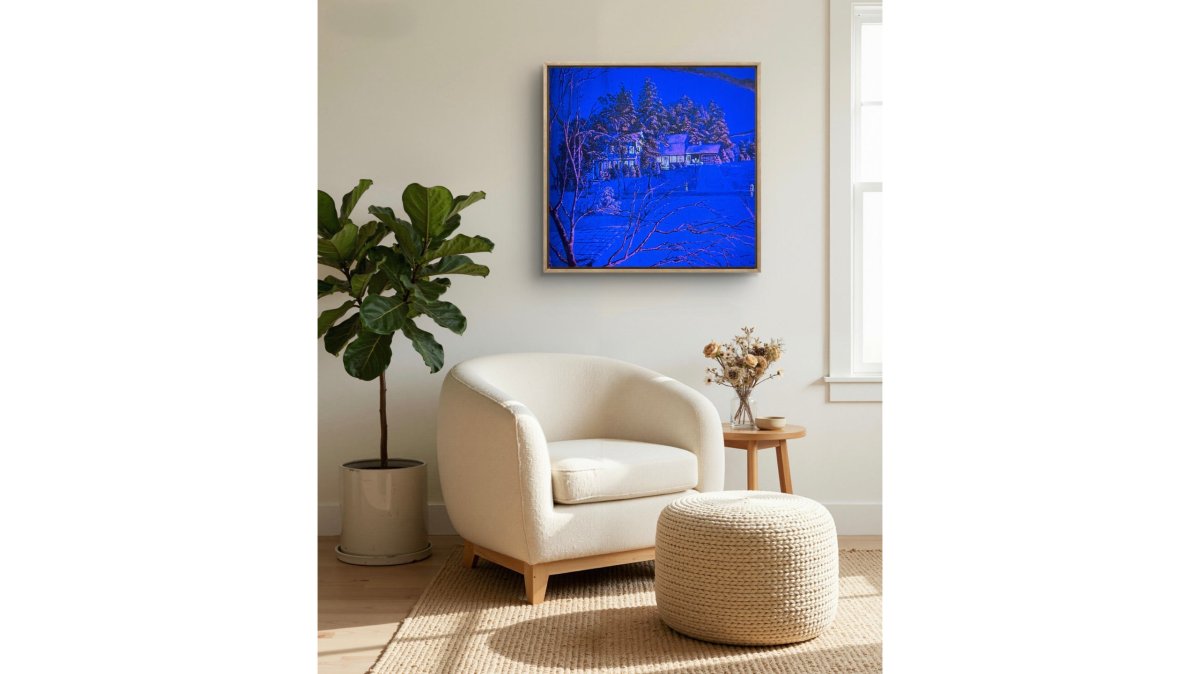
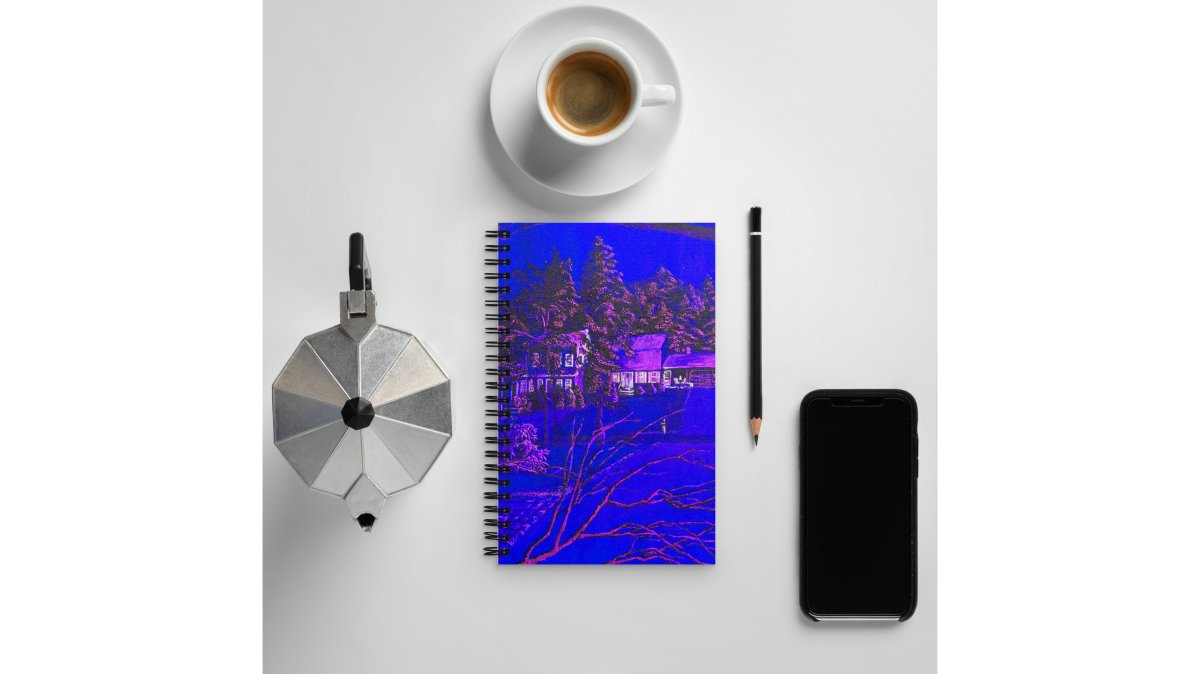
Binding decides how the book behaves on your desk. The Suburbs at Night spiral notebook uses a metal wire-o binding with a soft-touch cover, a combination that suits frequent flipping.
The Hardcover journal matte has a flexible sewn spine and a matte laminated cover. Its pages are perforated for easy tear-out. The Hardcover bound notebook adds an elastic closure, a ribbon marker and an expandable inner pocket, useful if you store loose notes or cards in the book.

Tatyana Zak Notebooks Compared for Creative Journaling
The five notebooks below are the brand's current options for creative journaling. Prices are the listed starting prices.
| Notebook | Price | Binding | Pages | Page weight | Best for |
|---|---|---|---|---|---|
| Suburbs at Night Spiral (dotted) | $14.99 | Metal wire-o | 140 dotted | 89 g/m² | Dot grids, lay-flat sketching |
| Hardcover journal matte | $14.50 | Casewrap, sewn spine | 150 lined | 104 g/m² | Daily journaling, tear-out pages |
| Hardcover bound notebook | $22.50 | Hardcover, elastic closure | 80 lined | Not stated | Notes with loose-paper storage |
| Suburbs at Night Hardcover journal matte | $14.50 | Casewrap, sewn spine | 150 lined | 104 g/m² | Daily journaling with a darker cover |
| Ruled Line Spiral (The Bride on the Swing) | $13.50 | Metal spiral | 118 ruled | Not stated | Lists, notes, light sketching |
Price
The two matte hardcovers share identical specifications, so the choice between them is a matter of cover design. The Lavender Mist Lilies Acrylic edition carries the same paper and binding at the same price, which means you can pick by design without giving up any performance. The Suburbs at Night ruled spiral is the cheapest option and works well for everyday notes, though its page weight is not listed, so test it before a paint-heavy project. You can review its full specifications on the Suburbs at Night ruled line spiral notebook page.
Best Notebook for Junk Journaling and Collage-Heavy Practice
Junk journaling depends on a binding and paper that can take glue, tape and bulk. A spiral notebook usually suits this best, because it opens flat and the pages can be built up without the spine straining. For a ruled option, see the ruled line spiral notebook from The Bride on the Swing, which is designed for mixed-media and collage-heavy pages.
Choose Your Creative Journal and Start Filling Pages
Begin with the question that matters most: what will you put on the page? A dotted spiral suits sketching and bullet-style planning. A lined matte hardcover suits daily writing and occasional painting. A spiral ruled notebook suits lists and notes on a budget. The hardcover bound notebook suits anyone who keeps loose notes or cards in the book.
Explore the Suburbs at Night spiral dotted notebook if you want a dotted grid for sketching, or see the matte hardcover journal if daily writing with paint is your main use. Whichever you choose, fill the first page with a test, then start your practice.


Frequently Asked Questions
What should I look for in a notebook for creative journaling?
Look at paper weight, page coating, binding and page format. Heavier, uncoated paper handles wet and mixed media better, while lined or dotted layouts suit writing plus sketching. A lay-flat binding helps when you work across a spread. Tatyana Zak's spiral notebook uses 89 g/m² page stock with a dotted layout, and the matte hardcover journal uses 104 g/m² uncoated pages with 150 lined pages at $14.50, so you can match the format to how you actually work.
What paper weight is best for art journaling?
For light media such as pencil, ballpoint and fine liner, paper around 70 to 90 g/m² is usually enough. For markers, watercolor or heavier mixed media, look for heavier stock. The matte hardcover journal's pages are 104 g/m², while the spiral notebook's pages are 89 g/m². Test a corner of a page with your own media before committing to a full journal.
Are spiral-bound or hardcover notebooks better for journaling?
Tatyana Zak's spiral notebook, at $14.99 with metal wire-o binding and a soft-touch cover, favors flexibility, while the hardcover bound notebook at $22.50 favors protection and includes an expandable inner pocket for loose notes.
What is the best notebook for junk journaling?
Junk journaling works best in notebooks with sturdy, flat pages that can take glue, tape and layered ephemera. The matte hardcover journal is priced at $14.50 and has perforated, uncoated pages.