Hand Embellished vs Mass Produced Prints: 2026 Guide
Table of Contents
- What Is a Hand-Embellished Print?
- What Is a Giclee Print and How Does It Relate to Embellishment?
- Hand-Embellished vs Mass Produced Prints: Side-by-Side Comparison
- Benefits of Artist Enhanced Prints for Collectors and Spaces
- Art Investment for Beginners: Where Hand-Embellished Prints Fit
- Resale, Authentication, and Archival Standards
- DIY vs Professional Embellishment: What You Should Know
- Caring for Embellished Art in a Real Home
- Frequently Asked Questions
Last Updated: October 1, 2026
What Is a Hand-Embellished Print?
In the hand embellished vs mass produced prints question, a hand-embellished print is a reproduction the artist has painted over by hand after printing, adding real acrylic brushwork, texture, and dimension to a printed base. At Tatyana Zak, every collector edition is individually hand-embellished with acrylic, so no two are identical.


What Is a Giclee Print and How Does It Relate to Embellishment?
A giclee print is a high-resolution reproduction made with pigment-based inks on archival media, typically canvas or fine art paper. It is the foundation most hand-embellished editions start from, because it holds color and detail well enough to paint on.
Hand-Embellished vs Mass Produced Prints: Side-by-Side Comparison
Hand-embellished prints differ from mass produced prints in three ways that affect what you pay and what you own: texture, edition size, and price.
Texture and Surface Detail
Mass produced prints have a flat, uniform surface: what you see in the photo is what arrives, every time.
Edition Size and Uniqueness
Mass produced prints are open editions: the seller can reprint indefinitely, with no numbering.
Price and What You're Paying For
| Factor | Mass Produced Print | Hand-Embellished Print |
|---|---|---|
| Surface | Flat, uniform | Textured, painted by hand |
| Edition | Open, unlimited | Limited and numbered |
| Uniqueness | Identical copies | No two pieces alike |
| Artist time | None after printing | Hours of painting per piece |
| Documentation | Usually none | Signed, numbered, COA |
| Price | Low | Reflects artist labor |
The hand embellished vs mass produced prints price gap reflects hours of handwork, a closed edition, and documentation that supports future resale.
Benefits of Artist Enhanced Prints for Collectors and Spaces
Artist enhanced prints give collectors original-level presence at a fraction of original pricing: the composition stays true to the source work, while the hand-painted layer adds depth, texture, and a personal mark from the artist.
Art Investment for Beginners: Where Hand-Embellished Prints Fit
Hand-embellished prints sit between open-edition posters and original paintings, a reasonable starting point for beginners who understand what they are buying.
Three things support value over time:
- A closed edition. A numbered edition of 35 behaves differently from an open run that can be reprinted forever.
- The artist's hand. Hand-painted surface detail ties each piece to the artist's own work, not a print shop.
- Documentation. A signature, edition number, and Certificate of Authenticity give future buyers something to verify.
Resale, Authentication, and Archival Standards
Resale value rests on authentication, and authentication rests on paperwork. Keep the Certificate of Authenticity, the original invoice, and any gallery or studio correspondence in one file. Buyers and appraisers look for three things to match: the signature on the piece, the edition number on the certificate, and the edition number on the artwork itself.
Building a Resale File From Day One
Most collectors never think about resale until they want to sell, and by then the paperwork is scattered. A simple file, physical or digital, should contain:
- The Certificate of Authenticity, stored flat and out of heat
- The original purchase invoice showing date, price, and seller
- Any studio or gallery correspondence, including emails confirming the edition size
- A dated photograph of the piece in your home, which establishes provenance and condition at purchase
- The artist's current biography or exhibition history, updated as it changes
How Embellishment Affects Archival Life
A giclee print alone is a known quantity: pigment-based inks on archival canvas or paper, with a published display life under controlled conditions. Add acrylic paint, gel medium, or varnish, and you introduce a second material with its own aging behavior, and the two do not always age at the same rate.
A few practical points most practitioners agree on:
- Acrylic over pigment ink is generally stable. Acrylics cure into a flexible film that adheres well to properly prepared canvas, and they do not typically attack pigment inks the way solvent-based paints can.
- Varnish is not optional on embellished canvas. A protective varnish layer shields both the printed ink and the acrylic from UV, dust, and handling. Unvarnished embellished pieces fade and scuff faster.
- Thick gel or impasto layers are the weak point. Heavy texture traps dust in the valleys and can crack if the canvas flexes, so pieces with deep impasto need rigid backing and stable humidity.
- Humidity swings are the real enemy. Acrylic and canvas expand and contract at different rates. A room that swings from dry winter air to humid summer air stresses the bond between paint and print over years.
What an Appraiser Actually Checks
One more point most guides skip: if you ever sell, disclose the embellishment in writing. Hand-painted surface detail is a feature, not a flaw, but a buyer who discovers it after the fact will question everything else, including the certificate.
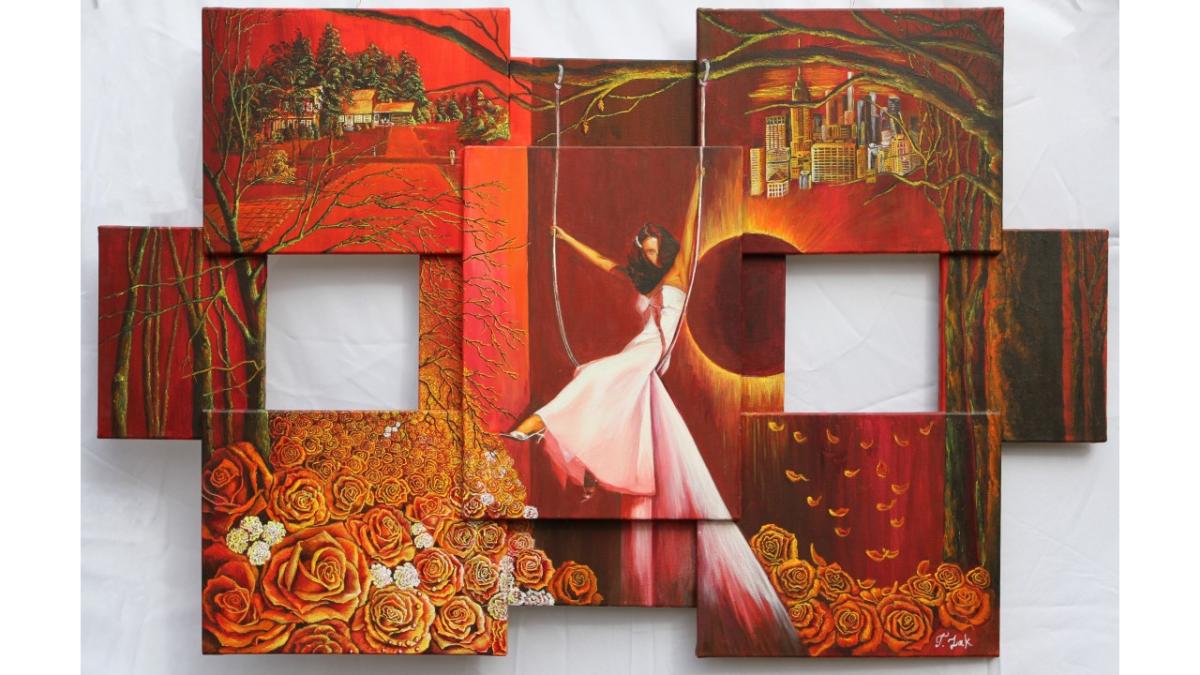
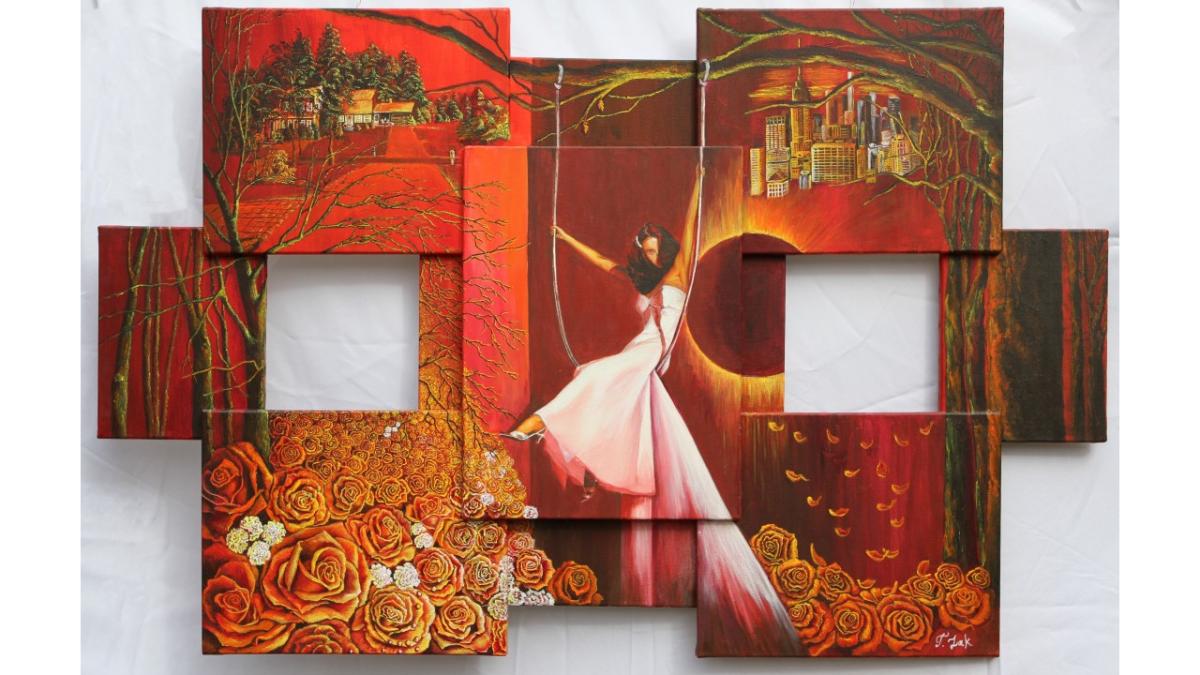
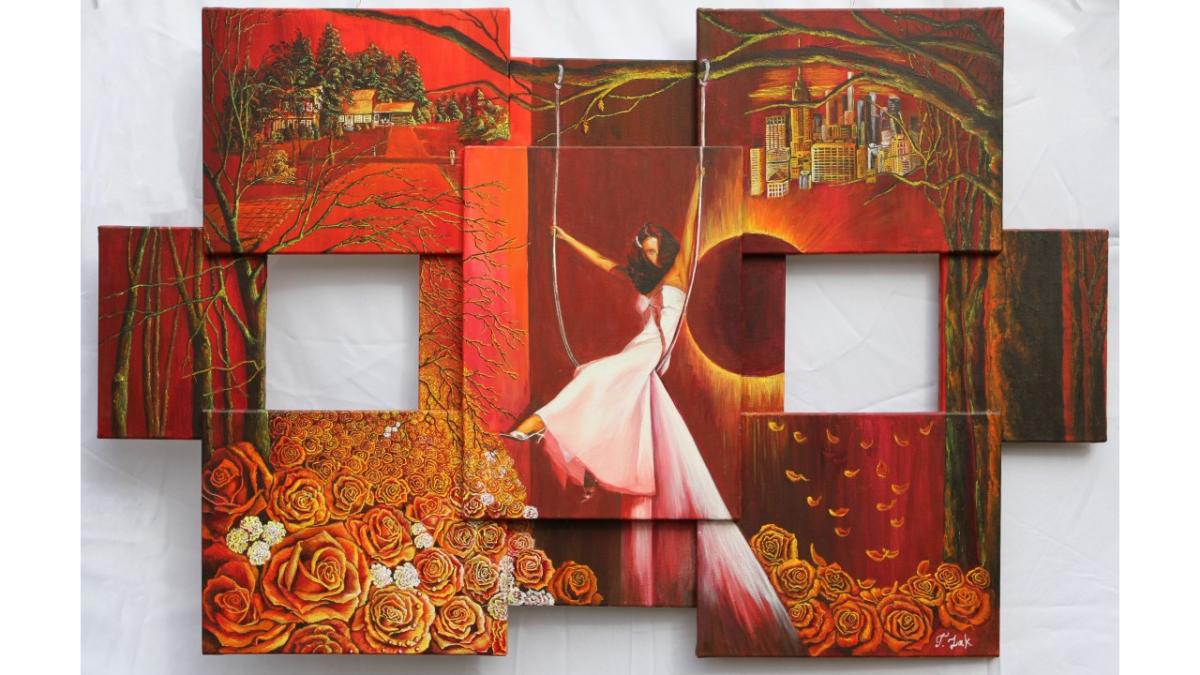
Swing of Life™ - Hand-Embellished →
DIY vs Professional Embellishment: What You Should Know
A listing that says "hand-embellished" can mean three different things, and only one is what the term should mean. Understanding the difference is the most useful thing you can learn before spending money here.
1. True Hand Embellishment
The artist paints over the printed surface by hand after the print is produced. Brush marks vary from piece to piece, paint sits on top of the ink layer with visible height, and the edition is signed, numbered, and documented.
2. Faux Embellishment (Printed or Machine-Applied Texture)
A mass-produced print can be given the appearance of texture without any artist involvement:
- Embossed prints are pressed with a textured roller or die, creating raised patterns that mimic brushwork but repeat identically across every copy.
- Textured canvas prints use a pre-textured canvas or a clear gel coating applied by machine, which adds surface relief but no paint and no variation.
- Printed "brushstroke" overlays are digital files designed to look like impasto, printed flat onto the surface.
3. DIY Embellishment
Painting over a print yourself is possible, and almost always a mistake if resale matters. DIY embellishment voids the edition documentation, you end up with a decorated print, not a collector edition.
How to Tell Them Apart
The test is simple and takes about ten seconds in person:
- Look at the surface in raking light, light coming from the side, not straight on. True hand embellishment shows irregular peaks, brush marks, and slight color variation across the piece. Faux texture repeats in a pattern.
- Compare two copies of the same edition. If a seller has more than one, the hand-painted areas should differ noticeably between them. Printed texture will be identical.
- Check the edges of the painted areas. Hand-applied acrylic has soft, slightly uneven boundaries where the brush lifted. Printed texture has hard, consistent edges.
- Ask for the certificate. A true embellished edition comes with a signed, numbered Certificate of Authenticity. Faux-embellished mass prints almost never do.
Why the Distinction Matters Financially
A faux-embellished print is a mass-produced print with a marketing upgrade: no closed edition, no artist signature, no resale market as an artist edition. Pay a limited-edition price for one and you have paid for texture a machine applied.
Caring for Embellished Art in a Real Home
Embellished art can live in a normal home with kids and pets. The acrylic layer is cured and stable, so the main risks are direct sunlight, moisture, and physical contact.
Practical care:
- Hang out of direct sunlight to slow pigment fading
- Keep away from bathrooms and kitchens where humidity swings
- Dust with a dry, soft cloth rather than sprays or solvents
- Avoid touching the painted surface with bare hands
- Store the Certificate of Authenticity flat, away from heat
- Rehang using the included mounting hardware rather than new fixings
Frequently Asked Questions
Do hand-embellished prints hold their value better than mass-produced prints?
Hand-embellished prints typically hold value better because each piece is part of a numbered limited edition, often with a Certificate of Authenticity and the artist's signature. Mass-produced prints are open editions with no scarcity or documentation, so they rarely appreciate. That said, value depends on the artist's reputation, edition size, and market demand. A hand-embellished print from a small edition of 35 carries more collector interest than an unlimited reproduction, but it is not a guaranteed financial return.
How can you tell the difference between a giclee and a mass-produced print?
A giclee print uses pigment-based inks on archival canvas or paper, producing deep color and fine detail that holds up over decades. Mass-produced prints usually rely on dye-based inks on thinner paper, and the colors fade faster. Check the surface: giclee prints on canvas show a visible weave and slight texture. Mass-produced posters feel smooth and flat. Also look for a certificate, edition number, or artist signature, which mass-produced items almost never include.
Are hand-embellished prints considered original art?
Hand-embellished prints sit between reproduction and original art. The base image is printed, but the artist adds acrylic paint, brush strokes, and surface detail by hand, making each piece unique. They are not one-of-a-kind originals like a fully hand-painted canvas, but they carry the artist's direct touch, a signature, and a limited edition number. Many collectors treat them as accessible entry points into owning work the artist has personally handled.
Why do artists choose to embellish their limited edition prints?
Artists embellish prints to add texture, visual depth, and individuality that a flat reproduction cannot offer. Adding acrylic gel or paint creates peaks and valleys on the surface, so light interacts with the piece differently depending on where you stand. It also lets the artist revisit the composition and give each collector a bespoke experience. For buyers, this means no two pieces in the edition are identical, even though they share the same printed foundation.
How do I care for a hand-embellished print so it lasts?
Keep the piece out of direct sunlight, since UV exposure fades pigment over time. Avoid hanging it near heat sources, bathrooms, or kitchens where humidity swings. Dust with a dry, soft brush rather than a damp cloth, which can damage acrylic texture. If framing, ask for UV-filtering glass or acrylic and archival matting. Most hand-embellished canvas prints ship ready to hang with mounting hardware, so you can display them without extra framing.